
Industrial facilities face unique tornado risks: large workforces, fixed operations, heavy equipment, and limited evacuation options. Our industrial tornado shelters are engineered to protect personnel during extreme wind events while supporting operational safety, compliance, and risk-management requirements.
Designed specifically for manufacturing plants, utilities, and industrial sites, these shelters provide EF-5–rated, code-compliant protection without disrupting production workflows or future facility expansion.
I am test text for CALL TO ACTION. Click edit button to change this text.
What Is an Industrial Tornado Shelter?
An industrial tornado shelter is a purpose-built, engineered structure designed to provide near-absolute protection for workers during tornado events at industrial and critical infrastructure sites.
Unlike commercial or residential solutions, industrial shelters are engineered to address:
- Large employee concentrations
- Continuous operations
- High-risk geographic locations
- Regulatory and insurance scrutiny
These shelters are designed to function as part of a facility’s emergency preparedness and safety program, not as an afterthought.
Industrial Applications and Use Cases
Industrial tornado shelters are commonly installed at:
- Manufacturing plants
- Utilities and substations
- Power generation facilities
- Warehouses and logistics hubs
- Processing plants and refineries
- Distribution and fulfillment centers
Shelters can be placed strategically across a site to minimize response time and ensure workforce access during rapidly developing severe weather events.



Compliance, Codes, and Engineering Standards
Industrial tornado shelters are often driven by regulatory guidance, insurance requirements, and corporate risk policies.
Our shelters are engineered in alignment with nationally recognized standards, including:
- Federal Emergency Management Agency (FEMA) P-361 guidance
- International Code Council ICC-500 storm shelter standards
- EF-5 wind speed and debris-impact criteria
- “Near-absolute protection” performance objectives
These standards are routinely referenced by:
- Engineers and AHJs
- Insurance underwriters
- Corporate safety and EHS teams
- Risk-management consultants
Why Industrial Facilities Require Specialized Shelter Design
Workforce Safety at Scale
Industrial facilities often house large crews working across multiple shifts. Shelters must be sized, located, and designed to accommodate real occupancy loads, not theoretical minimums.
H3: Risk Mitigation and Liability Reduction
A properly engineered shelter demonstrates due diligence and supports:
- Worker safety programs
- Insurance compliance
- OSHA and EHS initiatives
- Emergency response planning
Operational Continuity
Shelters allow employees to remain on-site and protected, reducing confusion, evacuation risk, and downtime during severe weather events.
Engineered for Industrial Environments
Industrial tornado shelters differ significantly from lighter-duty solutions. They are designed with:
- Heavy-duty welded steel construction
- Impact-tested wall and door assemblies
- Site-specific anchoring systems
- Clear ingress and egress planning
- Compatibility with industrial site logistics
Each shelter design is evaluated based on:
- Facility layout
- Occupant load
- Site conditions and foundations
- Local code and compliance requirements
Permanent and Modular Industrial Shelter Options
Depending on facility needs and timelines, industrial tornado shelters may be delivered as:
- Permanent, fixed installations for long-term protection
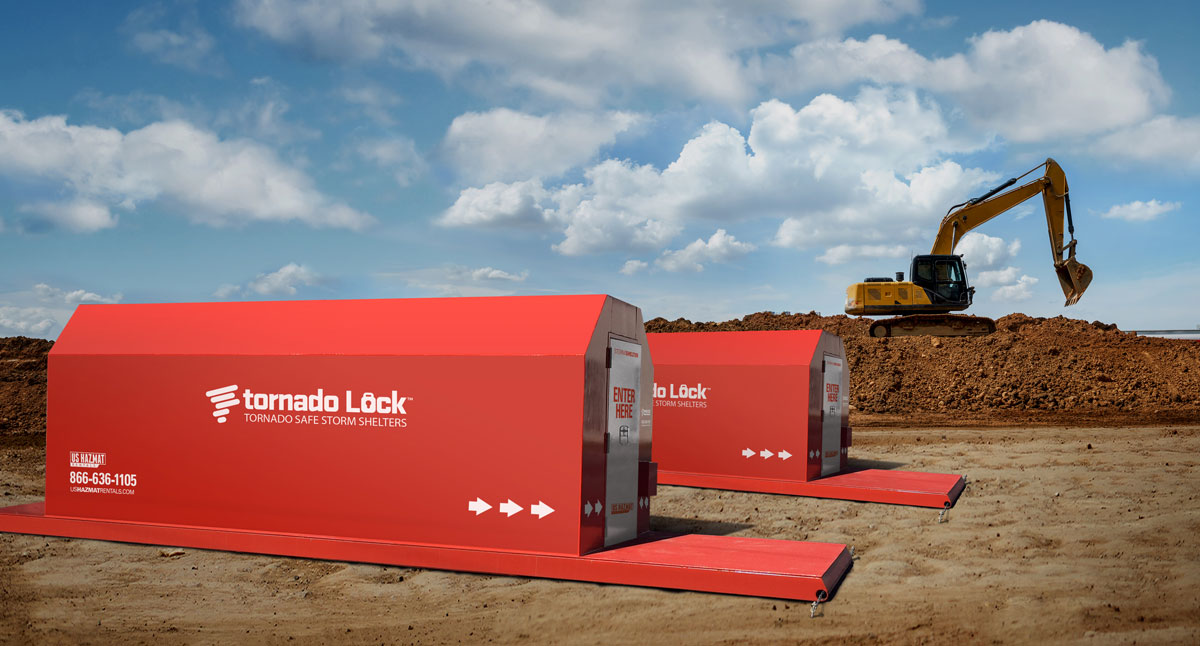
- Modular or prefabricated units for faster deployment
- Surface-mounted designs to minimize construction impact
Shelters can be configured for centralized or distributed placement across large industrial campuses.
Who Specifies Industrial Tornado Shelters?
Industrial shelters are typically specified or approved by:
- Plant and facility managers
- Corporate safety and EHS professionals
- Engineers and design consultants
- Risk-management and insurance teams
- Operations leadership
Early coordination helps ensure shelters align with both safety objectives and operational constraints.
Industrial Tornado Shelter Planning and Evaluation
A proper evaluation considers:
- Workforce size and shift patterns
- Shelter access time during warnings
- Facility layout and hazards
- Compliance documentation requirements
- Long-term operational impact
Our team works directly with industrial stakeholders to support planning, documentation, and deployment.
Request Industrial Shelter Specifications or Engineering Support
Every industrial site has unique safety and compliance requirements. We provide:
- Engineering-driven guidance
- Occupancy and placement recommendations
- Code and compliance documentation
- Deployment and installation planning
Request specifications or speak with an industrial shelter specialist to evaluate options for your facility.
Industrial Tornado Shelters – FAQ
Industrial tornado shelters are engineered specifically for manufacturing plants, utilities, and critical facilities. They are designed for larger workforce loads, harsher environments, and stricter compliance and risk-management requirements than typical commercial shelters.
While OSHA does not mandate shelters outright, FEMA P-361 and ICC-500 are widely referenced by building officials, insurers, and corporate safety programs. Many industrial facilities install shelters to meet insurance, risk-mitigation, and duty-of-care expectations.
Industrial tornado shelters are engineered to withstand EF-5 tornado wind speeds, including extreme debris impact, in accordance with FEMA P-361 and ICC-500 design criteria.
Occupancy varies by design. Industrial shelters are sized based on:
- Workforce size
- Shift schedules
- Shelter access time
- Facility layout
Shelters can be designed for small crews or large, multi-shift workforces.
Yes. Many industrial shelters are designed for surface mounting or modular installation, allowing deployment with minimal disruption to facility operations and production schedules.
Both options are available. Industrial facilities commonly choose:
- Permanent shelters for long-term protection
- Modular or prefabricated shelters for faster deployment or phased expansion
The choice depends on site conditions, timelines, and capital planning.
Foundations are engineered based on:
- Shelter size and weight
- Soil conditions
- Local codes
Some shelters can be installed on existing concrete slabs, while others require engineered foundations.
Shelters are designed to meet recognized engineering standards. Documentation may include:
- Engineering calculations
- Compliance references (FEMA / ICC)
- Installation and anchoring details
These documents support AHJ review, insurance audits, and internal safety programs.
Timelines vary by size and configuration. Many industrial shelters can be:
- Manufactured in advance
- Delivered as prefabricated units
- Installed in days rather than months
Specification and approval often involve:
- Facility or plant managers
- EHS and safety teams
- Engineers or consultants
- Risk-management and insurance representatives
Early coordination helps streamline approvals and deployment.
Proper sizing considers:
- Workforce count by shift
- Maximum expected occupancy
- Shelter access distance and time
- Facility emergency procedures
A shelter specialist can help evaluate these factors and recommend appropriate configurations.