
Why Rent Chemical & Hazardous Material Storage Buildings
Compliant in Days, Not Years — for One Monthly Fee Instead of a Six-Figure Capital Project
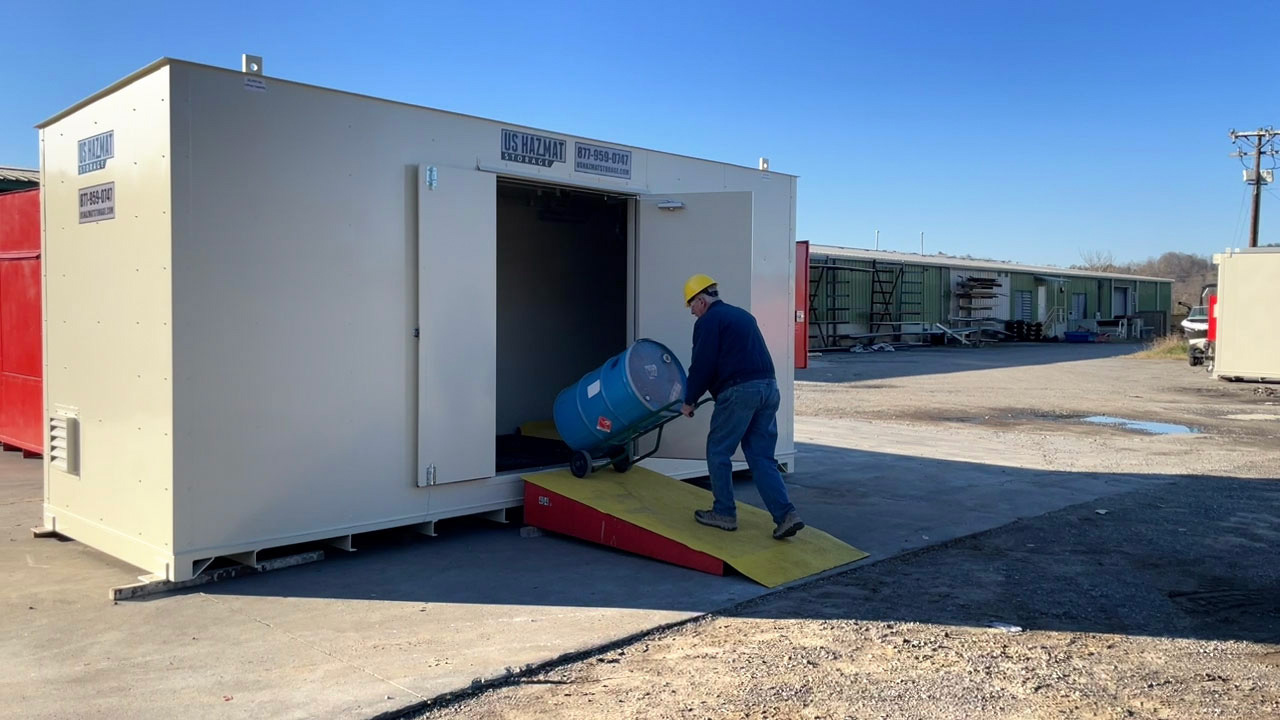
Building a code-compliant chemical storage facility the traditional way means site-specific engineering, fire-protection design, permitting, an AHJ approval cycle, and construction management — a process that routinely runs months to years and hundreds of thousands of dollars before you can store a single drum.
Renting collapses that. Our buildings are pre-engineered, in-stock, and ready to ship — from secondary spill containment pallets to full 4-hour fire-rated, climate-controlled, fire-suppressed vaults — so you reach compliance in days, not years, for one simple monthly rental fee. No loans. No capital-budget fight. No stranded asset when your needs change.
Rent vs. Build: The Honest Comparison
Permanent construction looks attractive until you price the whole project — not just the structure, but the engineering, fire-protection design, permitting, inspections, and the months of downtime while it all happens.
| Rent from US Hazmat | Custom Build | |
|---|---|---|
| Time to compliance | Days to weeks | Months to years |
| Upfront cost | One monthly fee | Six figures in design, engineering & construction |
| Engineering & permitting | Already done — pre-engineered to code | Your responsibility, your timeline |
| AHJ / fire marshal approval | Purpose-built to pass | Design-and-hope, then inspect |
| Flexibility | Scale, relocate, or return | Fixed asset, fixed location |
| Accounting treatment | Operating expense, tax-deductible* | Capital asset, depreciated |
| Obsolescence risk | Provider's, not yours | Yours — retrofit or write off |
| Maintenance & liability | Largely shifts to provider | Ongoing, in-house |
*Consult your tax advisor; rental payments are generally deductible as an operating expense.
For a growing number of organizations, the question is no longer can we build — it's whether ownership is the most responsible use of time, capital, and risk.
Renting looks like the right call? Get pricing before you read further.
Request a Quote Call 888-264-2449Speed to Compliance Is Usually the Reason People Call
Most organizations rent because they need to act now. The trigger is almost always time-sensitive: a fire-marshal citation, an OSHA finding, a new insurance requirement, a fast-tracked expansion, or an emergency relocation of materials.
Traditional construction can't move at that speed — engineering reviews, permitting cycles, and build schedules stack up into months. A pre-engineered rental building can be on your site and in service in days to weeks. When a compliance deadline is real, speed isn't a convenience. It's the whole point.
Compliance Without Reinventing the Wheel
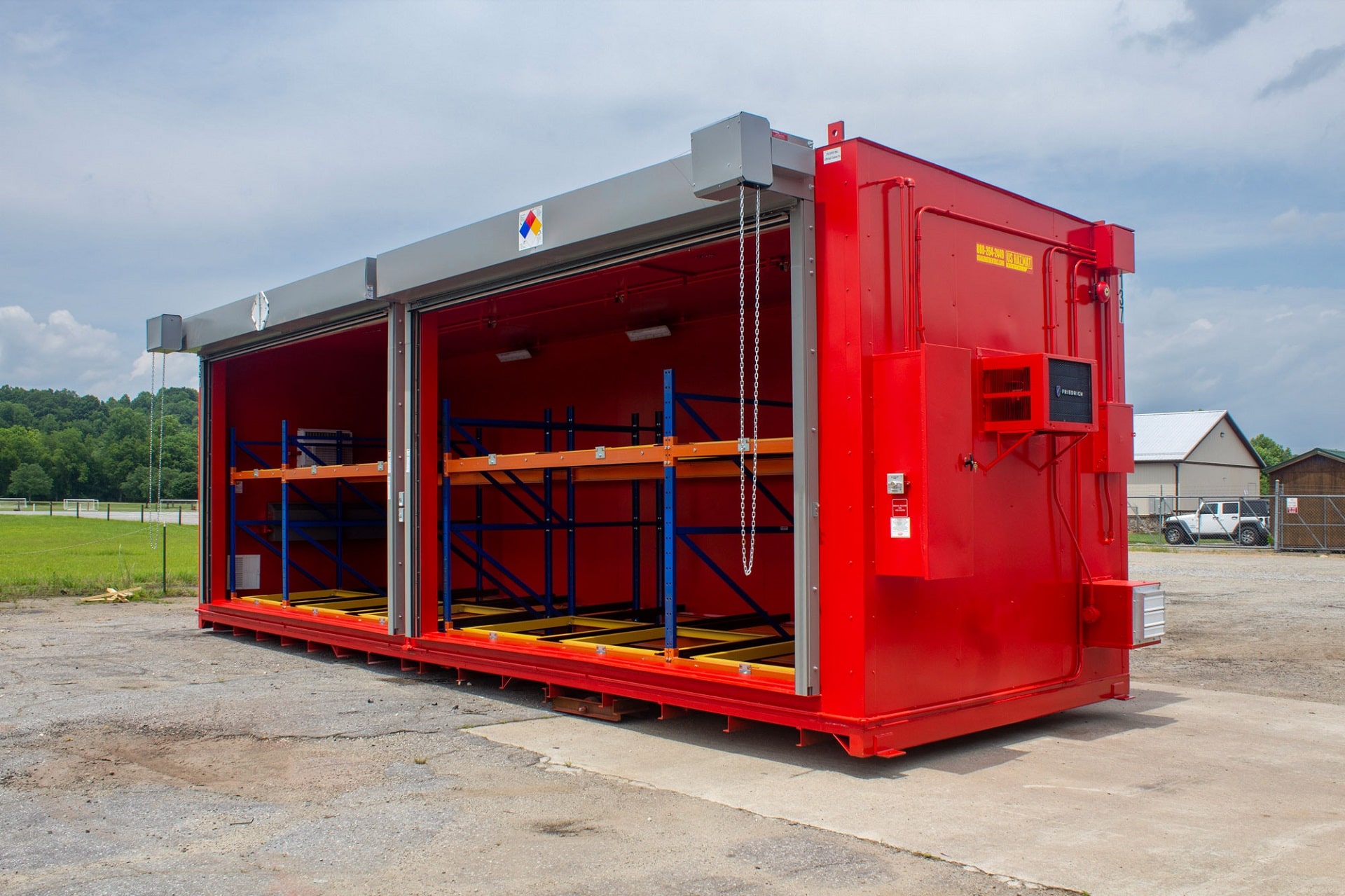
Renting does not mean compromising on code. Every US Hazmat building is engineered for hazardous storage from the ground up — not a shed or shipping container pressed into service — and is designed to meet or exceed OSHA, EPA, and NFPA requirements.
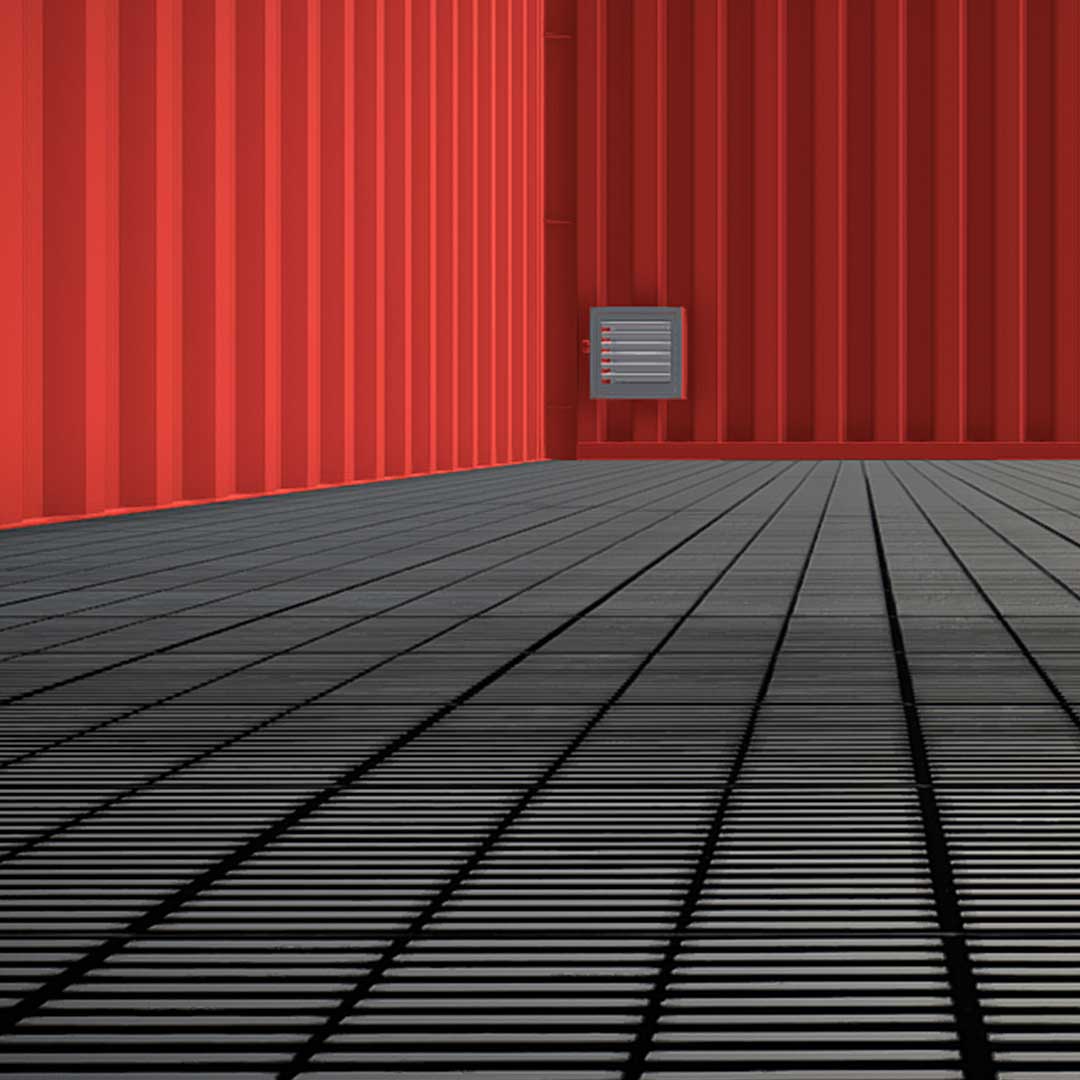
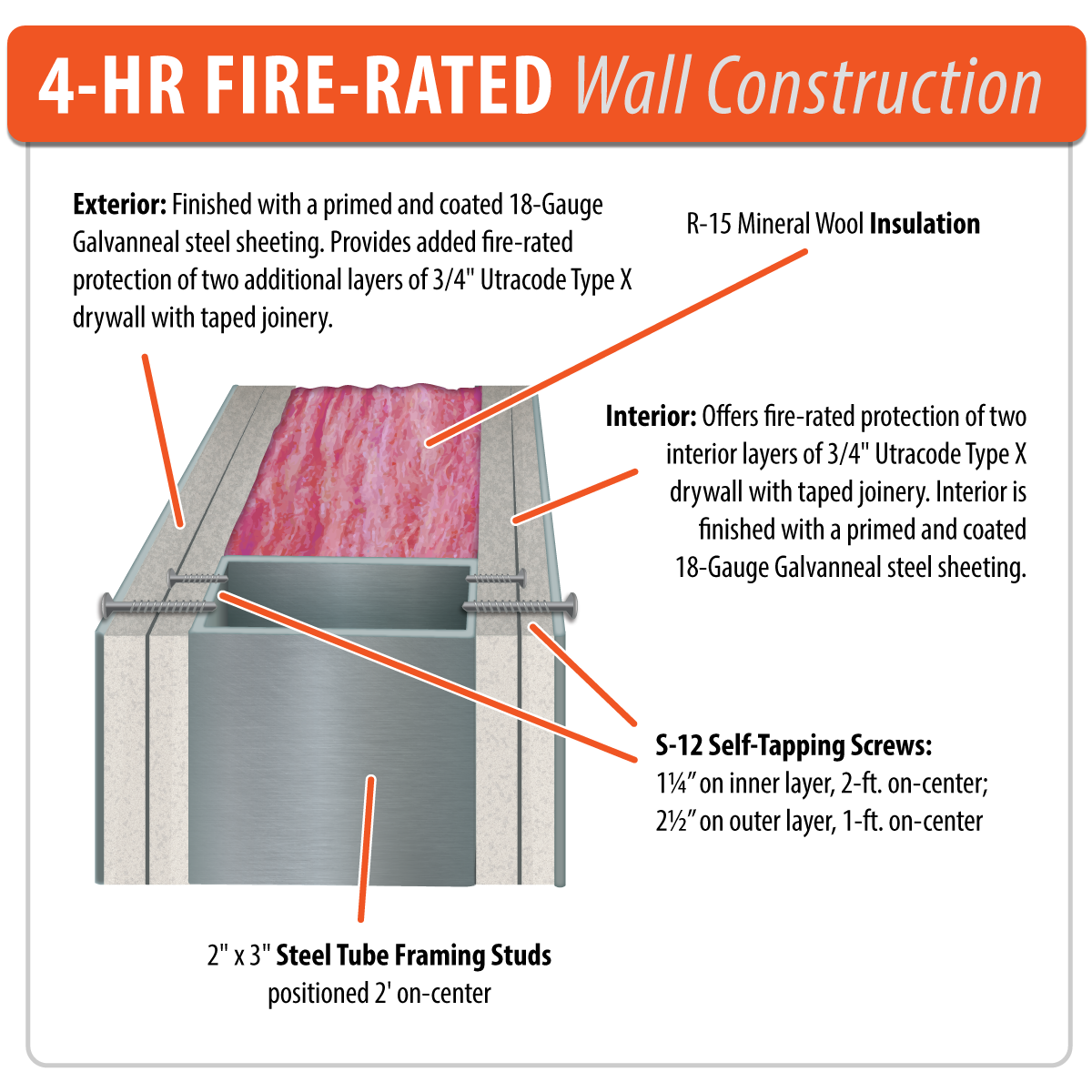
In-stock, ready-to-ship configurations include:
- Secondary spill containment — sumped, chemical-resistant floors (Secondary Spill Containment)
- Non-fire-rated, 2-hour, and 4-hour fire-rated buildings (2-Hr · 4-Hr)
- Climate control — heating, cooling, and humidity management for temperature-sensitive chemicals
- Integrated fire suppression (Fire Suppression System)
- Leak detection, explosion-relief panels, mechanical ventilation, and hazardous-rated electrical
- Custom workflow integrations — configured for storage, mixing, dispensing, and raw-material handling at the point of use, and built to earn local AHJ approval
This gives you a defensible, professional compliance posture that stands up to regulatory and insurance-carrier review — from day one.
Weatherproof Outside, Controlled Inside
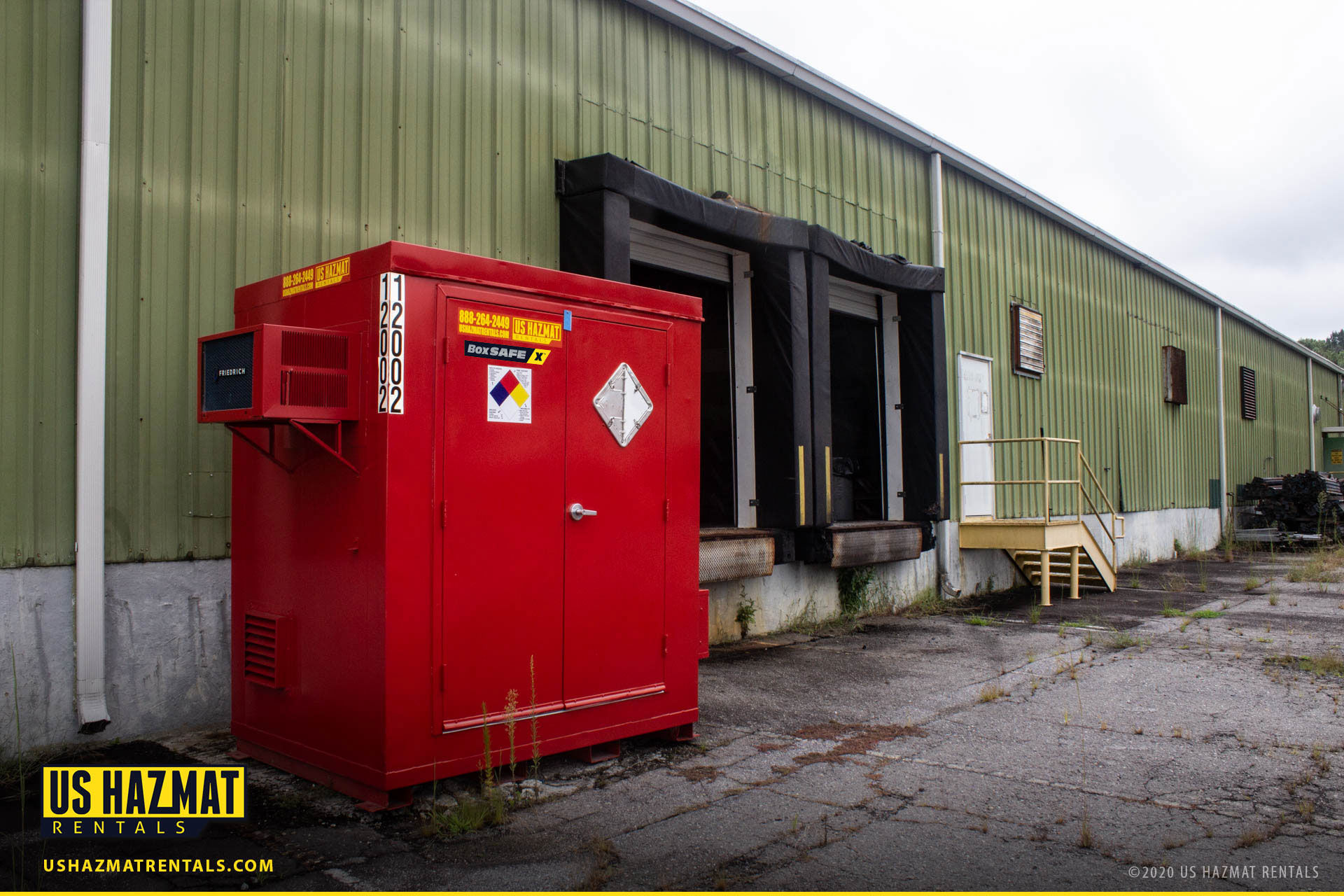
These are exterior-rated, weatherproof buildings engineered to sit outdoors in the elements while maintaining a controlled internal environment. That means you can place compliant storage exactly where the work happens — adjacent to production, at the point of use — without surrendering floor space inside your main facility or transporting hazardous materials across the site.
Integrates Into the Workflow Inside Larger Facilities
Renting isn't only for standalone yards. Purpose-built lockers and buildings drop into the workflow of a larger operation, putting regulated materials within ready reach of the line while keeping them properly contained, ventilated, and separated from ignition sources. Ready-access storage at the point of use cuts handling steps, reduces transport risk, and keeps accountability clear.

Low Cost of Entry, Predictable Overhead
You don't tie up hundreds of thousands of dollars in design, engineering, and construction to get compliant storage. You pay one monthly rental fee — a predictable operating expense that's generally tax-deductible and easy to forecast, with no loan and no large up-front budget request. Capital stays free for core operations: equipment, staffing, and growth.
Flexibility as Your Operation Changes
Storage needs rarely hold still — production cycles, seasonal demand, project work, and regulatory shifts all move the target. Renting lets you scale capacity up or down, add temporary storage for peak periods, relocate buildings as workflows evolve, and reconfigure as the materials you handle change. A permanent building locks in today's assumptions; a rental adapts as reality does.
Temporary, Short-Term, and Inventory-Control Use Cases
Renting is purpose-made for temporary and short-term needs: a construction project that ends, a seasonal chemical program, a plant turnaround, a bridge to permanent construction, or a surge in regulated inventory that has to be controlled right now. You get compliant capacity for exactly the window you need it — and hand it back when you don't.
On-Site Rental vs. Off-Site Warehousing
Off-site hazmat warehousing looks like a shortcut but usually adds cost, delay, and risk. Every move of hazardous material multiplies handling exposure, complicates who owns compliance, and slows the line. On-site rental storage keeps materials at the point of use, improves efficiency, and keeps accountability in one place. For hazardous materials, more distance means more risk.
Maintenance, Repairs, and Liability Shift to Us
Owning a hazmat building means owning its upkeep — coatings, containment, ventilation, and fire-protection systems, all requiring budget, staff time, and specialized expertise. A rental shifts much of that responsibility to the provider, cutting internal workload, avoiding surprise repair bills, and lowering long-term liability.
The Bottom Line
Renting chemical and hazardous material storage buildings delivers faster compliance, lower upfront cost, greater flexibility, and reduced long-term risk than traditional construction. In today's regulatory and financial climate, renting isn't a fallback — for many organizations it's the smartest, most responsible choice.
Frequently Asked Questions
Is it cheaper to rent or build a chemical storage building?
For most organizations, renting is far cheaper to start. A custom build carries six figures in design, engineering, permitting, and construction before use; a rental is one monthly operating fee with no upfront capital, generally tax-deductible.
How fast can I get a compliant chemical storage building?
Rental buildings are pre-engineered and in stock, so they can be delivered and in service in days to weeks — versus months to years for traditional construction and permitting.
Are rented chemical storage buildings OSHA, EPA, and NFPA compliant?
Yes. Every building is engineered from the ground up for hazardous storage and designed to meet or exceed OSHA, EPA, and NFPA requirements, with secondary containment, ventilation, fire-rated assemblies, and fire suppression available.
What options are available on rental buildings?
Configurations range from secondary spill containment to 4-hour fire-rated, climate-controlled buildings with integrated fire suppression, leak detection, explosion-relief panels, ventilation, and custom integrations for storage, mixing, dispensing, and raw-material handling.
Can rental buildings be placed outside?
Yes. They're weatherproof, exterior-rated buildings that maintain a controlled internal environment, so they can be sited outdoors at the point of use.
Is renting only for short-term needs?
No. Renting suits temporary projects and long-term operations alike — many organizations rent as a permanent-cost strategy or as a bridge while validating long-term storage needs.
How are rental payments treated for accounting?
Rental storage is typically an operating expense rather than a capital asset, which simplifies budgeting and is generally tax-deductible. (Confirm with your tax advisor.)