Introduction — The Critical Role of Drum Storage in Industrial Safety

Every day, industrial facilities—from chemical manufacturers to waste management operations—rely on 55-gallon drums to store, handle, and transport liquids and hazardous materials. While bulk drum storage is efficient in 55 gal barrel containers for these applications, they also present significant risks if stored improperly. Leaks, spills, fires, and regulatory violations can result in environmental damage, costly fines, worker injuries, and operational shutdowns.

That’s where engineered bulk drum storage buildings, chemical drum storage lockers, and spill containment systems come into play. These solutions are designed specifically to protect people, property, and the environment while ensuring compliance with critical safety codes and regulations—including those established by OSHA (Occupational Safety and Health Administration), EPA (Environmental Protection Agency), NFPA (National Fire Protection Association), and the International Fire Code (IFC).
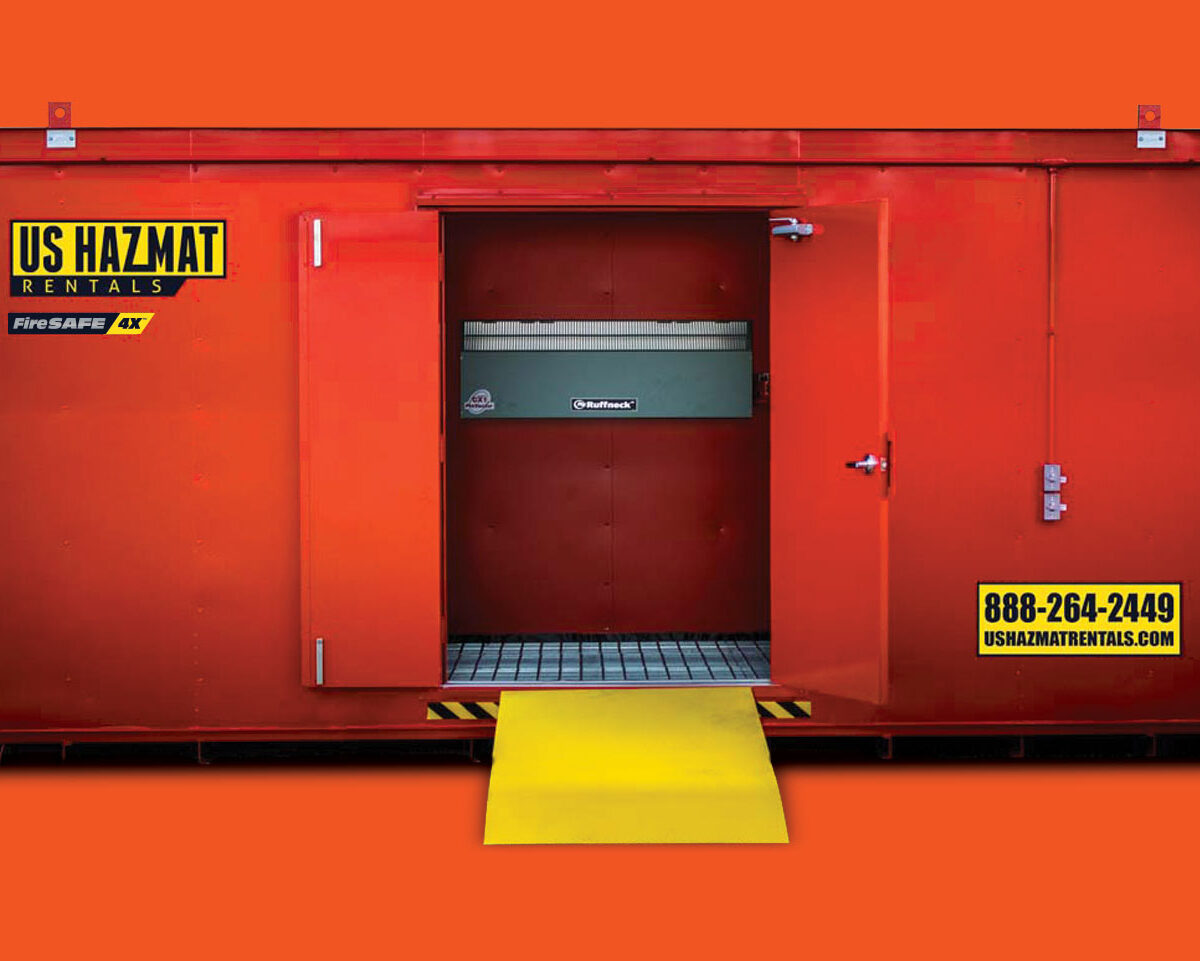
55 gallon bulk drum storage building locker

FireSafe Unit cutout on Orange Background

Bulk Drum Storage Rental Options

Full configured and compliant 55 gallon barrel chemical storage drum solutions for small and large volumes of chemical storage drums and small materials. Our storage solutions offer a single-point single phase power hookup providing full storage capabilities on standard models including: LED lighting, heating, air conditioning, and mechanical ventilation. Each unit if fully equipped with code-compliant secondary spill containment, dry chemical fire suppression, audible alarm, and easy access ramp for simple material handling.

8′ WIDE CHEMICAL STORAGE RENTAL SIZE OPTIONS

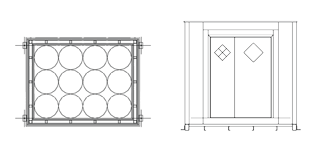
8x10 Chemical Drum Storage Barrel Capacity

8′ x 10′

Double-Leaf Door

12 BARRELS

View 3D Model:

8x20 Chemical Drum Storage Barrel Capacity

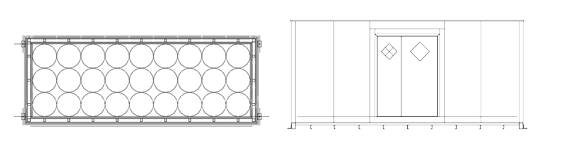
8′ x 20′

Double-Leaf Door

27 BARRELS

View 3D Model:

8x30 Chemical Drum Storage Barrel Capacity

8′ x 30′

Double-Leaf Door

42 BARRELS

View 3D Model:

8x40 Chemical Drum Storage Barrel Capacity

8′ x 40′

2 Double-Leaf Doors

57 BARRELS

View 3D Model:

Need More Storage? Service Is Our Business…

Contact A Hazmat Sales Engineer To Explore Custom Options To Meet Your Needs.

Understanding Chemical Drum Storage Buildings

In this comprehensive guide, we’ll explore every facet of modern drum storage — from facility design fundamentals and spill containment requirements to regulatory compliance and operational best practices. Whether you’re planning a new build, expanding an existing inventory, or simply reviewing your safety protocols, this deep-dive has you covered.

1. What Is Drum Storage? Understanding the Basics…

The 55-gallon drum—also known as a 55 gallon barrel—is the industrial standard
for storing liquids, solids, wastes, and hazardous materials.
Made of steel or high-performance plastics, these drums hold approximately 200 liters
and are engineered for durability and transportability.

These drums are essential across a wide range of industries, including:

  • Chemical manufacturing and processing
  • Oil and petroleum distribution
  • Food and beverage ingredient handling
  • Agricultural products and fertilizers
  • Hazardous and regulated waste storage

However, large inventories of drums require specialized storage infrastructure
to ensure safe handling and effective risk mitigation.
That’s where purpose-built drum storage buildings and storage lockers excel.

2. Why Purpose-Built Drum Storage Matters.

The Limitations of Generic Storage

Traditional warehouses, sheds, or metal containers are not engineered for hazardous materials.
Without proper containment, ventilation, fire separation, or spill control, these environments can:

  • Allow spills to migrate into soil or storm drains
  • Create fire and explosion hazards
  • Violate local, state, and federal codes (OSHA, EPA, NFPA)
  • Compromise worker safety and emergency response

The regulatory framework governing hazardous material storage is strict. For example:

  • OSHA limits flammable liquids stored outside a compliant container to just 25 gallons.
    Excess quantities must be stored in engineered laboratories or storage buildings that
    comply with OSHA and fire code requirements.
  • The EPA’s Spill Prevention, Control, and Countermeasure (SPCC) rule requires
    secondary containment capable of holding at least 110% of the volume of the
    largest container, or 10% of the total aggregate volume stored—whichever is greater.
  • NFPA 30 establishes requirements for separation distances, ventilation,
    fire protection, and maintenance practices for flammable and combustible liquids
    stored in drums.

A purpose-built drum storage building ensures compliance with these standards
while optimizing space utilization, accessibility, and overall safety.

3. Drum Storage Building Types and Features.

A. Bulk Drum Storage Buildings

Bulk drum storage buildings are engineered facilities designed specifically for housing large quantities of 55 gal drums. These structures protect stored materials and personnel through features such as:

  • Secondary containment sumps – capture spills and leaks before they leave the storage area.

  • Ventilation systems – reduce fume accumulation and maintain compliance with NFPA and OSHA ventilation requirements.

  • Explosion-proof electrical and lighting – mitigate ignition sources in volatile environments.

  • Fire-rated walls and doors – provide passive fire protection for flammable and combustible liquids.

  • Forklift-accessible doors and aisles – improve efficiency and safety in handling and retrieval.

These buildings can be configured to meet a wide range of capacity and compliance needs, from medium-size storage (e.g., up to ~57 drums) to large-scale bulk storage (upward of 150-plus drums).

B. Chemical Drum Storage Lockers.

The Limitations of Generic Storage

For smaller inventories, chemical storage lockers provide a compact and compliant solution. These units are typically:

  • Sized from a few drums up to dozens

  • Built with welded steel for weather resistance

  • Equipped with integrated containment sumps

  • Rated for OSHA, NFPA, and EPA compliant storage of non-flammables to flammable liquids

A typical example is a non fire-rated storage locker capable of holding up to six drums with significant sump capacity for containment.

Lockers are ideal for point-of-use, maintenance, or satellite storage where a bulk drum building may not be necessary.

C. Fire-Rated vs Non Fire-Rated Drum Storage

A critical distinction in drum storage design is fire rating:

  • Fire-Rated Drum Storage Buildings include fire-resistant walls, closures, and assemblies (often 2-hour or greater) that help protect the inventory and surrounding infrastructure in the event of fire. These units are typically required where flammable or combustible liquids are present.

  • Non Fire-Rated Drum Buildings/Lockers are suited for non-flammable hazardous materials that don’t demand a fire rating but still require containment and safety features.

Design selection depends on your chemical profile, hazard classifications, local codes, and fire marshal requirements.

B. Secondary Containment and Spill Control

Secondary containment is essential. In the event of a leak or spill, the containment must hold a minimum volume as defined by EPA SPCC rules:

  • 110% of the largest container’s volume OR

  • 10% of the total aggregate volume stored

Whichever requirement is greater.

Integrated sumps, curbing, and grated flooring systems help capture spills before they impact personnel or the environment — and make inspections and cleanup much easier.

Ventilation and Fume Management

Proper ventilation — whether mechanical or natural — is critical in drum storage areas, especially where volatile chemicals are present. Venting systems help ensure fumes do not accumulate to dangerous levels that could lead to fire or health hazards.

Fire Safety and Suppression

Depending on the chemical type and quantity:

  • Fire suppression systems (sprinkler, foam, or other agents) may be required under NFPA or IFC codes.

  • Explosion relief panels and fire-rated doors are often used to channel heat and pressure in a fire scenario.

Consult local fire code officials to determine the specific fire suppression requirements for your site.

4. Fundamental Drum Storage Design Considerations

A. Capacity and Layout Planning

Storage capacity goes beyond counting drums. Facility managers must account for:

  • Aisle widths for safe forklift access

  • Rack systems if stacking or multi-tier storage is planned

  • Spill containment footprint

  • Fire and egress access

  • Incompatible material segregation

Standard building widths (e.g., 6’, 8’, 10’, 12’, 14’) determine maximum drum counts — from ~28 drums in a 6’ structure to ~180 drums in a 14’ wide unit — when configured appropriately.

Contact US Hazmat Rentals at 888-264-2449 for complete details, pricing, and flammable storage building availability.