Contact Us

Most procurement choices for fuel containers focus on price per unit. That number ignores the real biggest cost: the risk of buying the wrong container, storing it improperly or forgetting the paperwork needed for an NFPA 30 inspection. Steel drums for gasoline storage are not containers. They come with certifications, strict containment rules and specific ways to handle and dispense them.
This guide is for EHS managers, facility directors and procurement teams who handle gasoline stored in drums at a fixed location. It explains the certifications, the NFPA 30 code rules, how to size containment properly, the correct bonding and grounding steps and the key question: should you use a cabinet or a room? These details define what a compliant steel drum for gasoline storage setup actually looks like.
US Hazmat Rentals works with industrial facilities across the country on compliant flammable liquid storage configurations, from single-drum setups to multi-drum rooms with secondary containment and listed fire suppression.
Why Gasoline Demands a Specific Drum Certification
Not every steel drum is a container for Class IB flammable liquids. Gasoline has a flash point of minus 45 degrees Fahrenheit. This places gasoline firmly in the Class IB category under NFPA 30. NFPA 30 is the code that governs storage of combustible liquids in most parts of the United States. Steel drums used to store gasoline must satisfy UN certification rules for transporting liquids. The rules are the UN1A1 designation for closed-head steel drums and the UN1A2 designation for open-head steel drums that are coupled with sealing closures. Any steel drums for gasoline storage that does not belong to those certification categories creates a compliance gap. That gap appears during the AHJ inspection.
The UN number stamped on a steel drum gives an inspector three pieces of information. It shows the material of construction, the type of closure and the performance test standard that the steel drum has passed. A steel drum without that UN number is not certified for gasoline transport or storage. This remains true no matter how the steel drum looks or what the seller says about it. In facilities that follow OSHA process safety management or EPA risk management program rules a non-certified steel drum used for Class IB service is a compliance gap. That gap shows up quickly during an inspection. All other aspects of any steel drums for gasoline storage configuration are built on that certified container baseline.
NFPA 30 and What It Actually Requires for Drum Storage
NFPA 30 organizes flammable liquid storage by quantity and container type, and the thresholds that trigger specific requirements are lower than most facilities expect. Storing more than 25 gallons of Class IB flammable liquid inside a building, outside of a listed flammable storage cabinet, requires a dedicated storage room with rated construction, ventilation designed to prevent vapor accumulation, and secondary containment sized for the largest single container in the room. Steel drums for gasoline storage in quantities above that threshold are not a matter of finding a safe corner of the warehouse. Every steel drums for gasoline storage plan that exceeds the cabinet threshold belongs in a purpose-built compliant space.
The storage room construction standard under NFPA 30 calls for a minimum two-hour fire resistance rating for the walls, ceiling, and floor penetrations in most occupancy types. Doors require a listed fire door with a self-closing mechanism. Ventilation must be mechanical, sized to provide at least one air change per minute of the room volume, and ducted to the exterior to prevent vapor migration into occupied areas. Flammable liquid drum storage of gasoline at industrial quantities without that ventilation system is one of the most common NFPA 30 violations found during AHJ inspections. The vapor density of gasoline is heavier than air, meaning it settles at floor level, and a room with inadequate exhaust is a vapor accumulation zone.
UN Rated Steel Drum Specifications for Gasoline
A standard 55-gallon UN rated steel drum for gasoline service is made from 18-gauge cold-rolled steel. Inside it has an epoxy liner to handle the solvent effects of hydrocarbon fuels. The UN1A1 closed-head design is the go-to for places that store and move gasoline without opening the drum. These drums have bung-style closures. One is two inches the other is three-quarter inches. Both sealed with gaskets that are approved for use with hydrocarbons.
To get the UN1A1 certification a drum must pass tests: hydraulic pressure, drop, stacking and vibration. These tests mimic the conditions the drum might face during transport or storage. If a drum passes it gets the UN marking can be used for steel drums for gasoline storage. It meets both NFPA 30 and DOT 49 CFR 173 rules. If a facility moves drums between locations they need to follow both storage and transport rules. The UN1A1 drum covers both in one design.
For jobs where the drum is opened often a drum pump with a tight-head closure works. It keeps the drum sealed when not in use. Allows for controlled dispensing. If the drum is accessed times during a shift an open-head UN1A2 drum, with locking rings is better.. After each use the locking ring must be tightened to the right torque to keep the vapor seal intact.
Bonding and Grounding: The Step That Prevents Ignition
Gasoline dispensed from a steel drum generates static electricity through the separation of liquid from container surfaces, and that charge accumulation is sufficient to create a spark at the point of dispensing if the drum is not bonded to the receiving container and both are not grounded to an effective earth ground. NFPA 77, the recommended practice for static electricity, and NFPA 30 both address this requirement for steel drums for gasoline storage, and the consequence of skipping it is not theoretical. Electrostatic ignition during fuel transfer is a documented cause of industrial fires in drum dispensing operations.
The bonding cable connects the drum to the receiving container before dispensing begins and maintains that connection throughout the transfer. The grounding cable connects either the drum or the receiving container to a grounded structural element, a ground rod, or a listed grounding and bonding system. Both connections must be made before the drum bung or dispensing valve is opened. Drum racks and dispensing stations in compliant flammable liquid drum storage setups include integrated bonding and grounding provisions as a standard feature, eliminating the step from the operator’s manual checklist. Facilities that rely on portable cables and an informal reminder process generate inconsistent compliance and a documented gap in the incident investigation report when something goes wrong.
Secondary Containment Sizing for Steel Drum Storage
Secondary containment is the physical barrier that prevents a spill or leak from reaching the drain, the soil, or an adjacent occupancy. NFPA 30 requires secondary containment for flammable liquid storage rooms, and the sizing rule for steel drums for gasoline storage is straightforward: containment volume must equal or exceed the volume of the largest single container in the room, plus allowance for any fire suppression water that may discharge into the contained area during a sprinkler activation.
For a four-drum gasoline storage configuration using 55-gallon UN rated steel drums, the containment volume calculation starts at 55 gallons for the largest single container and adds the sprinkler discharge volume over the storage footprint. A standard wet-pipe sprinkler head discharges at approximately 25 gallons per minute, and a 10-minute fire department response time produces 250 gallons of suppression water in a small storage room. The containment structure for that four-drum room needs to hold approximately 300 gallons, not 55.
Steel drums for gasoline storage in prefabricated flammable storage buildings arrive with integral secondary containment sumps sized and certified to NFPA 30 requirements for the drum quantity the building is rated to hold. That documentation package includes the containment volume calculation, the rated construction certification, and the listed ventilation system specification, which satisfies the plan review documentation requirements for most AHJ submittals in a single package. Facilities that build custom concrete containment structures need independent engineering certification for each component, which adds to both cost and timeline. Explore compliant prefabricated storage configurations at the US Hazmat Rentals NFPA 30 compliance page.
Flammable Storage Cabinet vs. Dedicated Storage Room
NFPA 30 says that when a building holds more than 25 gallons of Class IB flammable liquid the storage must move from cabinet storage to room-level storage. That rule applies to any steel drums for gasoline storage above that amount. A flammable storage cabinet listed under FM Approvals or UL Standard 1275 can safely hold up to 60 gallons of liquid and it meets NFPA 30 for that quantity without forcing the building to meet room construction rules.
The shift from cabinet storage to a room is where most small industrial facilities hit compliance problems. If a facility puts two 55-gallon drums of gasoline in a corner of a warehouse without rated construction, mechanical ventilation or secondary containment it does not obey NFPA 30 no matter how long it has been doing that. The AHJ does not allow non-compliant storage to stay in place just because it has existed for a time.
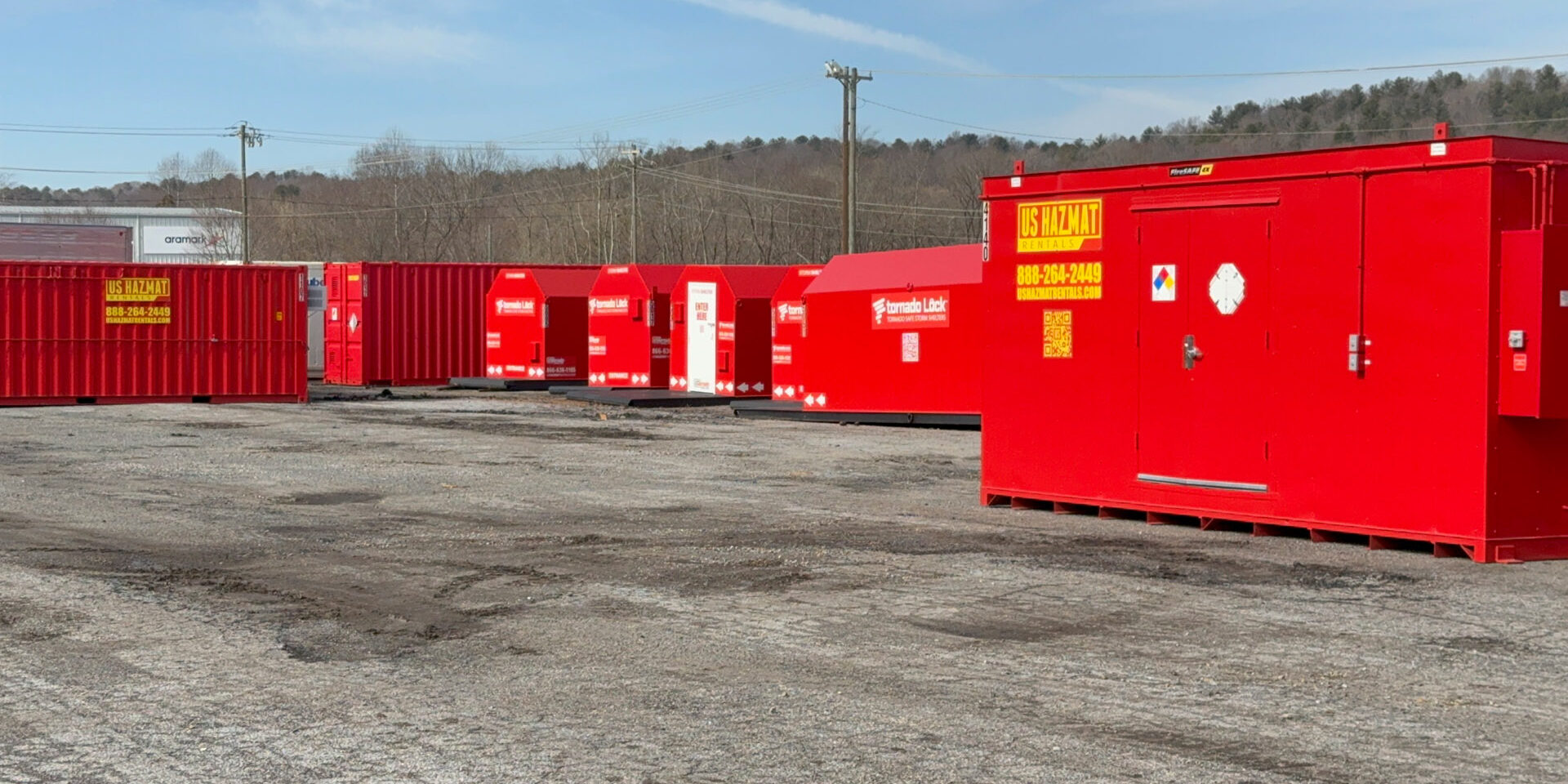
If a facility needs more than 60 gallons but fewer than 300 gallons, the easiest way to stay compliant is a prefabricated 4‑hour fire‑rated flammable storage building. This building gives the rated construction certification, listed ventilation and built-in containment in one package that can be delivered to the site and approved by plan review as a finished system.
See the full specifications for US Hazmat Rentals 4-hour fire rated storage buildings and match the right configuration to your drum count and site constraints.
Dispensing Station Design and Drum Management Protocols
A safe setup for steel drums for storing gasoline includes more than the space where the drum is kept. The area where the gasoline is poured out, the tools used to move the drums and the daily rules for managing everything are all part of what makes the setup compliant. This is what an NFPA 30 inspection looks at. Facilities that see steel drums for gasoline storage as something to buy instead of a full compliance plan end up with problems that lead to warnings.
Pouring from a 55-gallon drum needs a drum pump that is approved for Class IB liquids, a nozzle that is connected to the ground and has a shut-off that works automatically and a pan, under the place where the liquid is poured. This pan must drain into a layer of protection. Drums that are kept on stands should be placed with the top opening facing down when they are not being used.
This keeps the seal on the tight stops vapors from escaping and helps cut down on the amount of liquid that turns into vapor in the storage area. Drum inventory tracking, including the date each drum entered service, the batch number, and the cumulative volume dispensed, is a standard element of a site’s chemical management program and supports the SPCC documentation requirements for facilities above EPA threshold quantities.
Drums that have reached end of service contain residual fuel and vapor and remain a Class IB flammable liquid container until they are triple-rinsed, punctured, and certified as empty. An “empty” 55-gallon gasoline drum with residual vapor has enough hydrocarbon concentration inside the headspace to support ignition. Drum disposal through a licensed waste transporter is the compliant path.
Get the Storage Configuration Right Before Inspection
The difference between a complaint for steel drums for gasoline storage setup and a liability event is usually not a budget problem. Steel drums for gasoline storage done right costs the same money as done wrong.
The facilities that pass AHJ inspections on the first visit sourced the right certified containers, understood the NFPA 30 thresholds before they staged the drums, designed the containment for what actually needs containing, and did not skip the bonding and grounding step at the dispensing station.
Request specs, pricing, and delivery timelines today. The team at US Hazmat Rentals can match your drum count, gasoline volume, and site footprint to the right listed storage configuration, so the compliance documentation arrives with the equipment.
FAQ
What NFPA 30 requirements apply to steel drums for gasoline storage?
NFPA 30 requires that steel drums for gasoline storage use UN-certified containers, that quantities above 25 gallons inside a building be stored in a dedicated room with rated construction and mechanical ventilation, and that secondary containment be sized for the volume of the largest single container plus suppression discharge. The specific room requirements include minimum two-hour fire resistance rated construction, a listed self-closing fire door, and exhaust ventilation ducted to the exterior.
What is a UN rated steel drum and why does it matter for gasoline?
A UN rated steel drum carries a certification mark (UN1A1 for closed-head, UN1A2 for open-head) that indicates the drum has passed hydraulic pressure, drop, stacking, and vibration testing for flammable liquid service. Gasoline is a Class IB flammable liquid, and NFPA 30 and DOT 49 CFR require certified containers for storage and transport. A drum without UN certification is not compliant for gasoline service regardless of its physical condition.
How much secondary containment do I need for steel drum gasoline storage?
Secondary containment must hold the volume of the largest single container in the storage area, plus the expected suppression discharge if a sprinkler system is present. For a standard 55-gallon drum with wet-pipe sprinkler coverage, the effective containment volume requirement often exceeds 250 to 300 gallons when suppression discharge is factored in. Prefabricated flammable storage buildings include integral containment sumps sized and certified for the drum quantity they are rated to hold.
Do I need to bond and ground steel drums when dispensing gasoline?
Yes. NFPA 77 and NFPA 30 both address static electricity control during flammable liquid transfers. A bonding cable must connect the drum to the receiving container before dispensing, and a grounding cable must connect the system to an effective earth ground. Both connections must be in place before the drum is opened. Electrostatic ignition during dispensing is a documented cause of industrial fires in drum storage operations.
Can I store a 55-gallon drum of gasoline in a flammable storage cabinet?
No. Listed flammable storage cabinets under FM Approvals or UL Standard 1275 have a 60-gallon maximum capacity per cabinet for flammable liquids, but a 55-gallon drum exceeds the container size that cabinets are designed for. A single 55-gallon gasoline drum stored inside a building requires a dedicated NFPA 30 compliant storage room or a listed prefabricated flammable storage building, not a cabinet.
What is flammable liquid drum storage under NFPA 30 for quantities above 300 gallons?
For over 300 gallons of Class IB flammable liquid, NFPA 30 imposes extra requirements like aggregate quantity limits, setback distances from ignition sources and openings, and sometimes a specialized sprinkler system. Specific thresholds vary by occupancy classification and liquid inventory; an AHJ pre-application meeting helps confirm applicable thresholds.