Fresno sits in the middle of one of California’s productive agricultural and industrial corridors. In this city the difference between knowing a chemical is. Knowing what that regulation actually demands can cost a company months of project time and tens of thousands of dollars in corrections. For companies that store liquids, explosive materials or chemical inventories above threshold amounts Fire Department Hazardous Materials in Fresno is not just one permit.
Fire Department Hazardous Materials in Fresno is a stack of overlapping state and local rules that do not all come through the same office. Knowing where each rule comes from what it requires and which agency owns it is the step for any company that wants to move fast and avoid enforcement.
US Hazmat Rentals helps operations, in Fresno and the wider Central Valley. US Hazmat Rentals supports operators from the inventory check to the final compliant storage setup.
Who Enforces Fire Department Hazardous Materials in Fresno
I have seen that Fresno Fire Department Fire Prevention Bureau takes care of fire code rules inside city limits. They follow the California Fire Code, which comes from the International Fire Code and is updated every three years. If a building is outside city limits but still inside Fresno County, Fresno County Fire Protection District applies rules through its permit and inspection program. It is important to know which of those two agencies is in charge of a parcel because the permit form must be sent to the office based on that answer.
At the time Fresno County Certified Unified Program Agency runs the Hazardous Materials Business Plan, the California Accidental Release Program, programs for underground and aboveground storage tanks, the Hazardous Waste Generator Program and the Tiered Permitting Program. All of these are managed through an inspection and permitting system. Usually CUPA is the point of contact, for compliance. Fresno Fire Department still deals with fire code permits as part of the Fresno Fire Department hazardous materials program.
On the side ATF controls the storage of materials under 27 CFR Part 555. If a place stores classified explosives, detonators or blasting agents it must follow ATF magazine rules even if state or local codes say otherwise. Thus Fresno Fire Department hazardous materials in Fresno must go through three authorities. If a facility checks all three requirements before submitting any paperwork it usually moves through the process quickly.
What Triggers a Fire Code Permit for Hazardous Materials in Fresno
California Fire Code Chapter 56 governs explosive materials storage and handling. The permit trigger is tied to Section 105.5, which lists the activities and quantities requiring a permit before operations begin. Before a fire code permit issues under the fire department hazardous materials in Fresno program, the applicant must file a surety bond or liability certificate for $100,000. Government entities are exempt; private operators in construction, mining, agriculture, or demolition are not.
Any new explosive storage site, including temporary job site storage, requires at least 48 hours advance written notice to local law enforcement, the fire department, and the local emergency planning committee. Quantity limits under CFC Table 5604.3 set the ceiling for each storage configuration.
For Division 1.1 and 1.2 high explosives, indoor storage without a magazine is effectively prohibited. For 5 pounds of high explosive stored outdoors, the American Table of Distances requires a minimum of 70 feet from an inhabited building with barricading or 140 feet without. Division 1.4 materials carry more manageable thresholds: up to 100 pounds indoors with a cabinet and sprinklers, and 100 feet from inhabited structures.
Portable or mobile magazines under 120 square feet bypass the California Building Code plan check but remain fully subject to fire department hazardous materials in Fresno permit requirements and ATF storage rules.
ATF Requirements: The Federal Baseline
ATF regulations under 27 CFR Part 555 are a non-negotiable layer within the fire department hazardous materials in Fresno compliance framework. The regulations define five magazine types and assign materials to each by hazard class. Type 1 magazines are permanent structures for high explosives. Type 2 magazines are mobile or portable and approved for indoor and outdoor high explosive storage; indoor Type 2 units are limited to 50 pounds of explosives and no more than 5,000 detonators per building.
Type 3 magazines are portable outdoor structures for temporary attended use only; explosives must transfer to an approved magazine at each workday’s end. Type 4 covers low explosives, blasting agents, and non-mass-detonating detonators. Type 5 covers blasting agents exclusively.
Detonators cannot share a magazine with other explosive materials unless the magazine is Type 1 or Type 2. Local fire authority notification (oral notice the same day storage begins, written notice within 48 hours) is an ATF requirement, not just a local courtesy. Fire department hazardous materials inspectors in Fresno will ask for documentation of that ATF notification during permit verification. Any theft or suspected theft must be reported to ATF and local law enforcement within 24 hours of discovery.
HMBP: The Threshold Most Facilities Hit First
For facilities handling hazardous materials below the fire code explosive permit thresholds, the Hazardous Materials Business Plan requirement typically arrives first. The HMBP threshold in California triggers at aggregate quantities greater than 55 gallons, 500 pounds, or 200 cubic feet of any hazardous material. Explosives, oxidizers, flammable solids, and Class 3 flammable liquids all count.
Once a facility crosses that trigger, it must file with the Fresno County CUPA through the California Environmental Reporting System. That HMBP submission is also what flags the operation to the fire department hazardous materials in Fresno inspection program for initial outreach. The document covers chemical inventory, site map, emergency response and training plan, and emergency contact information, and it must be updated annually. The fire code official may request the HMBP as part of the permit application to verify that storage quantities match what the CUPA has on file. Inconsistencies between the two are a reliable source of enforcement findings.
Flammable Storage Cabinets: The Fire Cabinet for Chemicals
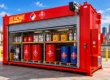
Any Fresno facility that stores combustible liquids above the outside-cabinet threshold must have a fire cabinet for chemicals that meets California Fire Code and NFPA 30 requirements. Outside a listed cabinet the maximum amount of Class I liquids allowed is 25 gallons per control area. Inside a listed storage cabinet the combined limit for Class I and II liquids increases to 60 gallons per cabinet.
A fire cabinet for chemicals that qualifies must have a UL or FM Global listing. UL-listed cabinets follow UL 1275 construction standards: they are made of double-wall steel with least 1.5 inches of air space between the walls a raised sill to hold spills, a self-closing door and a vent that keeps internal pressure safe during a fire. FM-listed cabinets follow rules under FM Approvals Standard 6050. Metal enclosures that are not tested by a party do not meet the rules no matter how strong they look. Fresno Fire Prevention Bureau inspectors check cabinet listings during Group H occupancy inspections.
Not having the right fire cabinet for chemicals can lead to a working-without-permit penalty that’s four times the regular fee. Before choosing a cabinet facilities can use the US Hazmat Rentals hazardous materials storage planner to see how flammable liquid they have and make sure their setup meets the fire department hazardous materials in Fresno requirements.
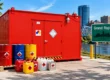
Facilities that have flammable liquids than their indoor cabinets can hold have two options that follow the rules. One is a listed storage locker that meets UL 1275 or NFPA 30 standards. The other is an enclosed storage building with ventilation secondary containment and a suppression system that matches the amount of liquid stored. The best way to find out which option works is to have a -application meeting, with the Fire Prevention Bureau before buying any equipment.
Costs and Lead Times to Plan For
Permit costs for fire department hazardous materials in Fresno fall into several layers that add up faster than most operators anticipate.
The Fresno Fire Department Special Hazard User Permit runs from $129 for Level 1 (10 to 100 gallons of flammable or combustible liquid) to $202 for Level 3 (over 1,000 gallons). Above-ground tank installation adds $242. Group H inspection fees start at $158 for the smallest footprints and reach $625 for facilities over 150,000 square feet. Any reinspection after a failed initial inspection adds to that total.
For explosive materials, the $100,000 surety bond or liability certificate is the largest upfront cost in the California fire department hazardous materials in Fresno permit process. Annual premiums typically run between $500 and $1,500 depending on applicant creditworthiness. The California fire code insurance requirement is separate from ATF coverage and must name the fire code official and jurisdiction as certificate holders.
Lead times for the full permit package (HMBP filing, fire code permit application, plan review, inspection, and approval) typically run six to twelve weeks for straightforward installations. Complete application packages submitted at the first meeting consistently clear the fire department hazardous materials in Fresno review process faster than those assembled in response to plan review comments.
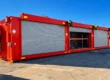
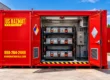
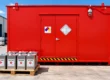
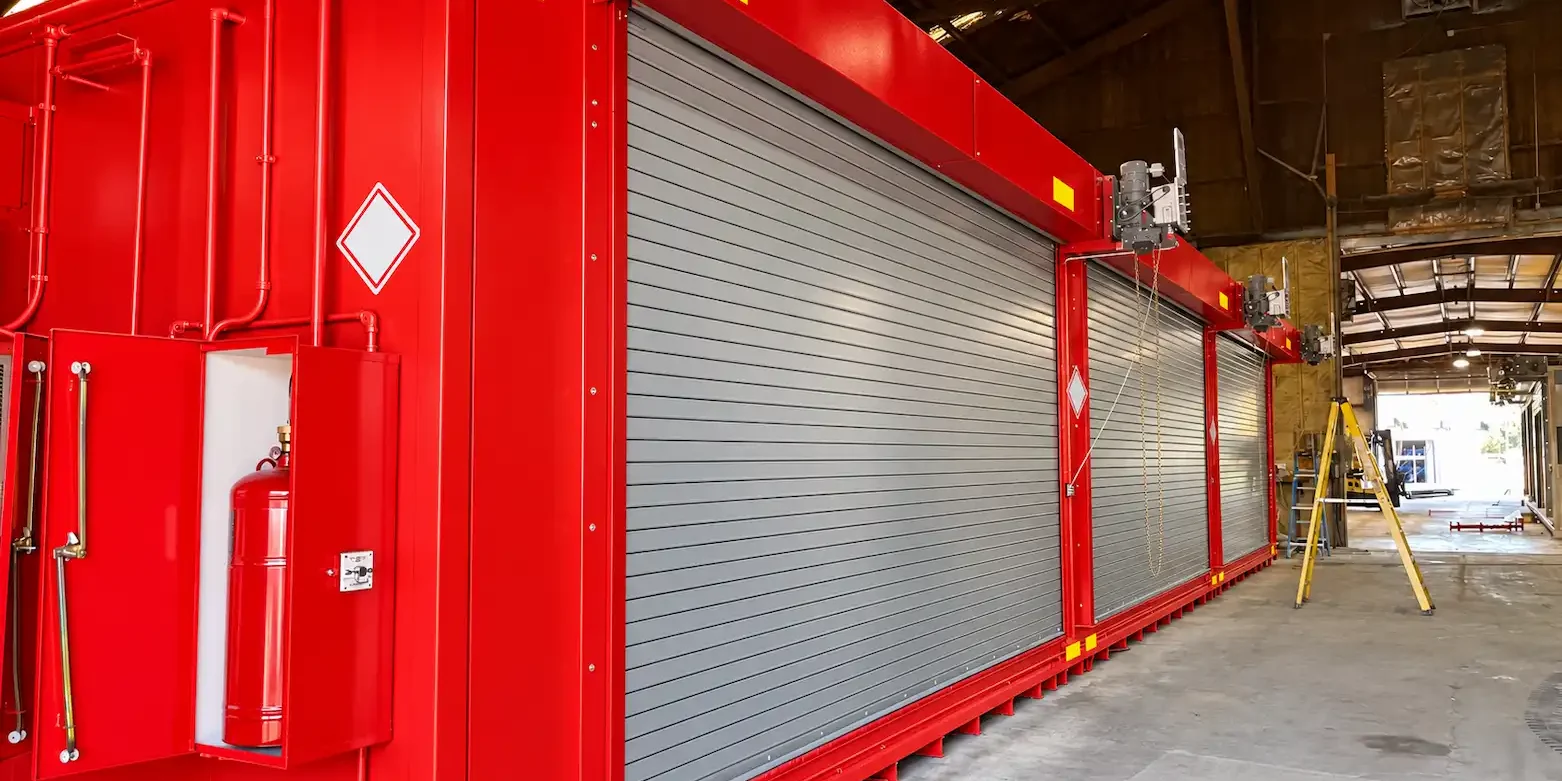
US Hazmat Rentals offers prefabricated explosive storage solutions with ATF-compliant magazine specifications and fire code-ready documentation packages through our explosive storage rental program. Reaching our team early is the most reliable way to secure a compliant unit before the next order cycle closes.
Next Steps for Fresno Facilities
The permit path for fire department hazardous materials in Fresno runs through multiple agencies, and the order matters. Start with a complete chemical inventory mapped against both the California HMBP thresholds and the California Fire Code quantity limits. That inventory drives every downstream document: the HMBP filing, the fire code permit application, the ATF notification, and the classified locations drawing if the inventory includes materials triggering NEC Article 500 electrical classification.
File the HMBP with the Fresno County CUPA through CERS before approaching the fire department. Submitting a permit application before the HMBP is on file introduces a delay that timelines do not recover quickly from. For explosive materials, contact ATF’s San Francisco Field Division to confirm whether the planned configuration requires a new or amended Federal Explosives License or Permit, and keep the written confirmation on file.
Request a pre-application meeting with the Fresno Fire Prevention Bureau before submitting anything formal. Bring the preliminary site plan, the chemical inventory, and the draft HMBP. That meeting confirms which permit tier applies, which fees to budget, and whether site-specific variances are needed before the formal application goes in.
Getting that sequence right is what separates facilities that clear fire department hazardous materials in Fresno compliance on the first attempt from those that cycle back through corrections. Reserve your unit or building before the next order cycle. Reach the team directly at the US Hazmat Rentals contact page and share your timeline and inventory before you file.
FAQ
What permits does the Fresno Fire Department require for hazardous materials storage?
The Fresno Fire Prevention Bureau issues Special Hazard User Permits for flammable and combustible liquid storage, with three fee tiers based on stored quantity. Fire department hazardous materials in Fresno also requires a separate permit under California Fire Code Chapter 56 for explosive materials, including a $100,000 surety bond before the permit issues. Facilities above the state HMBP thresholds file separately with the Fresno County CUPA.
Does Fresno County have its own explosive storage rules beyond California state requirements?
The Fresno County Fire Protection District and the City of Fresno Fire Prevention Bureau both enforce the California Fire Code, which may include local amendments on top of the state-adopted baseline. Pre-application coordination with the local fire code official is the most reliable way to identify any Fresno-specific requirements before the application is submitted.
What is the ATF requirement for storing detonators separately from other explosives?
Under 27 CFR Part 555, detonators generally cannot share a magazine with other explosive materials. Non-mass-detonating detonators may be stored in a Type 4 magazine alongside electric squibs, safety fuse, shock tube, and igniters. All detonators may share a Type 1 or Type 2 magazine with those same accessories. Separate blasting supplies magazines are the standard arrangement for operations storing both high explosives and initiating systems.
What is a fire cabinet for chemicals, and which Fresno facilities need one?
A fire cabinet for chemicals is a listed flammable liquid storage cabinet meeting UL 1275 or FM Approvals Standard 6050. Any facility storing more than 25 gallons of Class I flammable liquids outside of listed cabinets in a single control area must use listed cabinets. Each cabinet holds up to 60 gallons of combined Class I and II liquids. Inspectors verify cabinet listings during Group H occupancy inspections as part of the fire department hazardous materials in Fresno compliance review.
What is the HMBP threshold in California, and when does it apply to Fresno businesses?
The California Hazardous Materials Business Plan is required when a business handles aggregate quantities greater than 55 gallons, 500 pounds, or 200 cubic feet of any hazardous material. In Fresno County, the HMBP is filed with the CUPA through CERS and updated annually. Filing with the CUPA before applying for fire code permits is the most efficient sequencing for fire department hazardous materials in Fresno compliance.
How long does the permit process take in Fresno?
From HMBP filing through fire code permit approval, fire department hazardous materials in Fresno typically takes six to twelve weeks for standard installations. Projects requiring new building permits, permanent magazine construction, or distance variances under the California Table of Distances run longer. Submitting a complete package at the first application, covering the chemical inventory, HMBP, ATF notification confirmation, site plan, and equipment listing documentation, reduces plan review cycles and shortens the overall timeline.