If your team is asking is isopropyl alcohol flammable, the answer is not a technical footnote. It is a storage decision. Isopropyl alcohol, often called IPA or 2-propanol, is familiar enough to feel harmless in the lab. It shows up on benches, cleaning carts, production areas, QC rooms, maintenance shelves, and wipe-down stations. That familiarity is useful for workflow. It can also make the hazard feel smaller than it is.
OSHA lists isopropyl alcohol with a 53°F flash point. NIOSH identifies it as a Class IB flammable liquid, with a lower explosive limit of 2.0% and an upper explosive limit of 12.7%. Those details matter because IPA can produce ignitable vapor at ordinary workplace temperatures, not only under unusual conditions.
That is why is isopropyl alcohol flammable is only the first question. The better lab question is this: how much IPA is stored, where is it stored, what else is stored nearby, and does the current setup match the hazard? At US Hazmat Rentals, we help industrial teams think through flammable chemical storage with rental options built for volatile chemical environments.
Is Isopropyl Alcohol Flammable Enough for Special Storage?
Yes. Is isopropyl alcohol flammable enough to deserve special storage? In many industrial labs, yes.
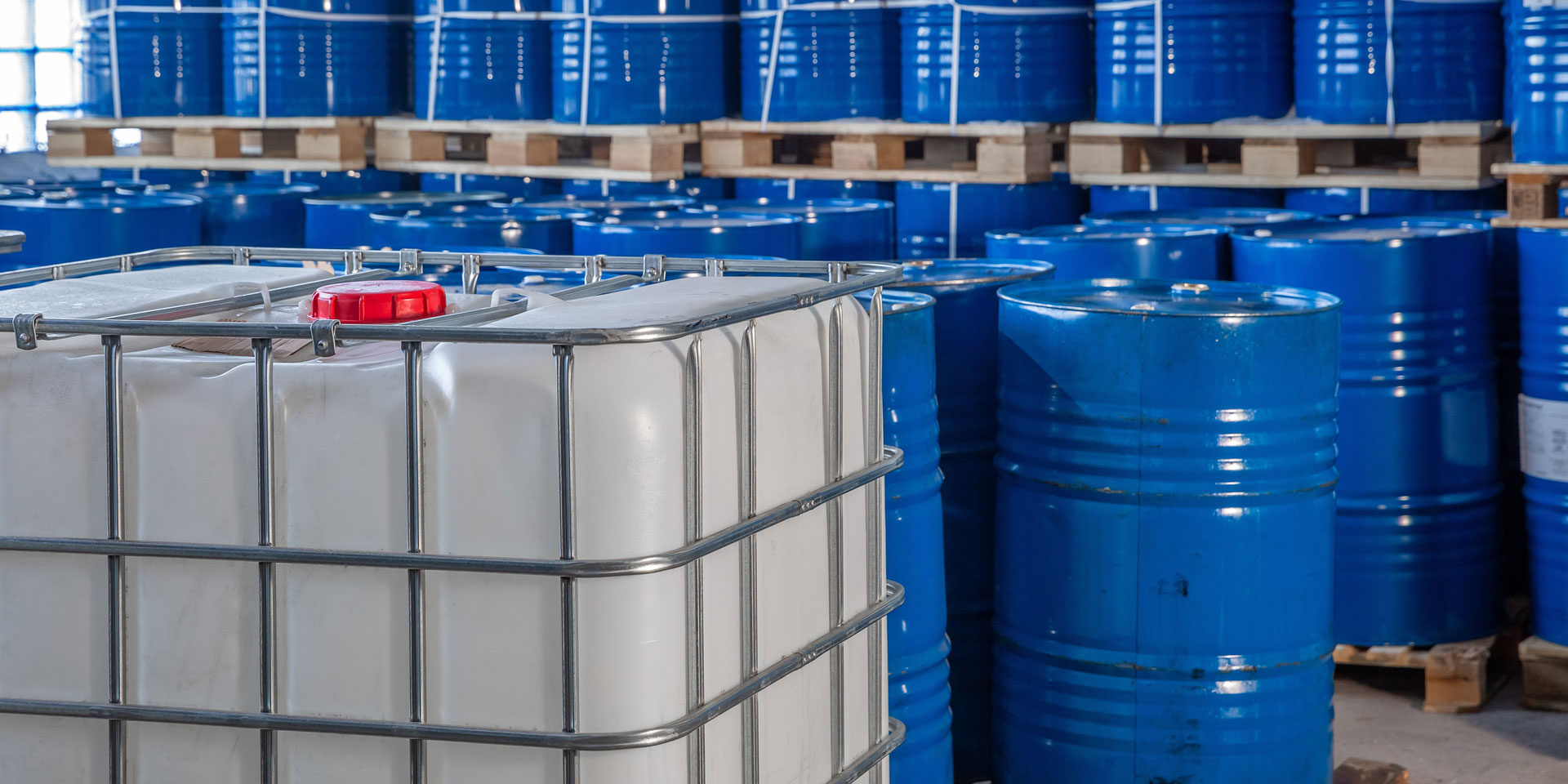
The need for a special cabinet or storage building depends on total volume, container size, concentration, room conditions, fire code expectations, and the full solvent inventory. A few small containers used under controlled lab protocols create a different storage picture than drums, bulk containers, production support inventory, or multiple flammable liquids stored together.
OSHA’s general industry rule limits a single storage cabinet to 60 gallons of Category 1, 2, or 3 flammable liquids, or 120 gallons of Category 4 flammable liquids. OSHA’s construction standard also states that no more than 25 gallons of flammable liquids should be stored in a room outside an approved storage cabinet.
That does not mean every lab needs the same cabinet. It means IPA cannot be treated like ordinary supply stock once the quantity, location, or exposure pattern creates a regulated storage concern.
Why IPA Feels Routine but Acts Like a Volatile Solvent
IPA is common because it works. It cleans. It evaporates. It fits many lab and industrial processes. Those same qualities are exactly why storage needs attention.
NIOSH lists IPA with vapor density greater than air and identifies incompatibilities that include strong oxidizers, acetaldehyde, chlorine, ethylene oxide, acids, and isocyanates. Vapor behavior matters because risk is not limited to the liquid inside the bottle. A loose cap, poor ventilation, open transfer, damaged container, or nearby ignition source can turn a routine chemical into a serious exposure.
A lab should be able to answer these questions without guessing:
| Lab Question | Why It Matters |
| How much IPA is stored on site? | Quantity drives storage classification and cabinet needs |
| What concentration is being used? | Different products may carry different SDS guidance |
| Are containers closed when not in use? | Vapor control depends on proper closure |
| Is IPA stored with acetone or ethanol? | Combined solvent inventory changes the total flammable load |
| Are oxidizers or acids nearby? | Incompatibilities can raise reaction and fire risk |
| Are ignition sources controlled? | IPA vapor can ignite under the wrong conditions |
| Is ventilation reviewed? | Vapor accumulation can create hidden hazards |
Is isopropyl alcohol flammable may sound simple. In a real lab, the answer depends on the storage environment as much as the chemical name.
IPA, Acetone, Ethanol, and the Full Solvent Picture
Industrial labs rarely store IPA alone. It often sits near acetone, ethanol, methanol, xylene, hexane, or other volatile liquids. That is where many protocols get weak. Teams focus on one bottle instead of the combined flammable load.
OSHA has discussed pharmaceutical manufacturing scenarios involving isopropyl alcohol or ethanol for chromatography column regeneration and buffer preparation, noting that these are Class IB and Class IC flammable liquids. That kind of classification matters because familiar lab solvents can still carry serious storage obligations.
Use this table as a high-level planning aid:
| Chemical | Common Lab Use | Main Storage Concern |
| Isopropyl alcohol | Cleaning, wipe-downs, process support | Class IB flammable liquid and vapor control |
| Acetone | Cleaning, degreasing, extraction support | High volatility and low flash point |
| Ethanol | Cleaning, processing, lab use | Flammable vapor and storage quantity |
| Methanol | Reagent and solvent use | Flammability plus toxic exposure concerns |
| Xylene | Histology, coatings, solvent support | Flammable liquid and exposure control |
Final storage decisions should come from SDS review, local code interpretation, EHS policy, and qualified safety review. The table helps frame the conversation. It does not replace the protocol.
When an Isopropyl Alcohol Storage Cabinet Becomes the Practical Choice
An isopropyl alcohol storage cabinet becomes more than a nice-to-have when IPA stops being a small working supply and becomes recurring inventory.
That shift can happen quietly. One department adds gallon containers. Another keeps backup bottles. A cleaning station stores extra IPA near production. A lab adds acetone and ethanol to the same shelf. Suddenly, the facility has a storage issue that nobody formally planned.
Signs your site may need a dedicated cabinet include:
- IPA is stored in multiple bottles, gallons, drums, or larger containers.
- IPA shares space with acetone, ethanol, methanol, or other flammables.
- Flammable liquids are kept on open shelving.
- Containers sit near heat, sparks, or unsuitable electrical equipment.
- Flammable waste remains outside protected storage.
- Staff are not sure where IPA belongs after use.
- IPA inventory rises during production, testing, or cleaning cycles.
- Fire marshal, EHS, or insurance reviews have flagged storage conditions.
US Hazmat Rentals notes that flammable or combustible liquids are limited outside approved storage containers, and that specialized storage buildings can support larger flammable inventory needs.
Is Isopropyl Alcohol Flammable in Diluted Forms?
The question is isopropyl alcohol flammable gets more complicated when dilution enters the room.
Many facilities use 70%, 91%, or 99% IPA. Higher concentrations often feel easier to identify as flammable, but dilution does not automatically remove the storage concern. The SDS for the specific product should drive the decision because flash point, hazard classification, formulation, and concentration may differ.
A poor shortcut is saying, “It is just rubbing alcohol.” Another poor shortcut is saying, “It is mostly water, so it is fine.” Neither statement belongs in a serious lab protocol.
The better process is straightforward:
- Review the SDS for the exact IPA product.
- Confirm flash point and classification.
- Include the product in the flammable inventory when required.
- Review quantity stored outside approved cabinets.
- Evaluate what other solvents are stored nearby.
- Reassess storage if concentration, volume, or process use changes.
That keeps the decision tied to the actual material, not habit.
Flammable Chemical Storage Is Bigger Than a Yellow Cabinet
Good flammable chemical storage does not end with a cabinet purchase. The cabinet is part of the system. The system also includes inventory control, ventilation, ignition control, container inspection, employee training, waste handling, and compatibility review.
NFPA 30 is intended to provide safeguards for the storage, handling, and use of flammable and combustible liquids, including waste liquids. That scope is important because a safe lab does not only store full containers properly. It also manages transfers, residues, waste, and access.
A serious protocol should review:
| Storage Element | What to Check |
| Inventory | Total IPA and combined flammable solvent volume |
| SDS access | Current SDS available for each chemical |
| Containers | No leaks, swelling, cracked caps, or damaged labels |
| Cabinet use | Approved cabinet used when quantity requires it |
| Segregation | IPA kept away from incompatible materials |
| Ventilation | Vapor buildup addressed for the room and process |
| Ignition control | No open flames, sparks, or unsuitable electrical nearby |
| Waste | Flammable waste handled as a controlled hazard |
| Training | Staff know where IPA belongs and why |
| Inspection | Storage areas checked before drift becomes normal |
The phrase is isopropyl alcohol flammable should lead to a full storage review, not a one-line answer.
Common Industrial Lab Mistakes With IPA Storage
Most IPA storage failures do not start dramatically. They start with normal work habits that drift.
A lab buys extra stock before a busy run. Someone stores a transfer bottle near the bench because it is convenient. Empty containers sit too long. Waste is managed loosely. Solvents are grouped by alphabet, not hazard. Nobody means to create a problem. The system simply stops matching the risk.
Common mistakes include:
- storing IPA alphabetically instead of by hazard
- placing IPA near oxidizers, acids, or incompatible reagents
- leaving transfer bottles unlabeled
- keeping flammable waste outside approved storage
- storing excess inventory in the lab
- assuming small bottles do not count
- placing IPA near hot plates or ignition sources
- using damaged caps or poor containers
- failing to update SDS access
- treating solvent-soaked wipes as ordinary trash
- allowing open shelving to become overflow storage
These are not rare mistakes. They are exactly why lab storage protocols need review before an inspection, incident, or insurance audit forces the issue.
A Cleaner IPA Storage Protocol for Industrial Labs
A good protocol should be boring in the best possible way. Clear. Repeatable. Easy to inspect.
Use this framework for qualified EHS, lab, or operations teams:
- Identify every IPA product on site.
- Confirm concentration, SDS details, and flash point.
- Add IPA to the flammable liquid inventory.
- Review total volume with acetone, ethanol, methanol, and other solvents.
- Keep only necessary working quantities outside approved storage.
- Store inventory in approved flammable storage when required.
- Separate IPA from oxidizers and other incompatible materials.
- Manage flammable waste in suitable containers and storage areas.
- Keep ignition sources away from storage and dispensing zones.
- Train staff on where IPA belongs after use.
- Inspect containers, cabinets, rooms, and waste areas routinely.
- Reassess storage when inventory or process use changes.
This is not about slowing the lab down. It is about making safety predictable enough that people do not have to improvise.
When a Rental Flammable Storage Building Makes More Sense
A cabinet may be enough for smaller quantities. It may not be enough for larger labs, field operations, temporary industrial projects, remediation sites, production support areas, or facilities under space pressure.
A rental flammable storage building may make more sense when:
- IPA and solvent volume exceeds cabinet capacity.
- The project has a temporary or seasonal timeline.
- Storage needs to be deployed quickly.
- Production changes create short-term inventory growth.
- IPA, acetone, ethanol, and other volatile chemicals are stored together.
- Outdoor storage is safer or more practical than indoor storage.
- Fire-rated construction is required.
- The facility wants to avoid permanent construction.
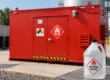
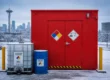
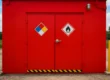
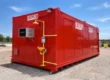
US Hazmat Rentals offers non-fire-rated, two-hour, and four-hour flammable storage options, and its fire-rated buildings may include secondary spill containment, ventilation, climate control, lighting, and related features depending on the unit.
For project-driven sites, rental storage can close the gap between immediate compliance pressure and long permanent-construction timelines.
How to Decide What Your Lab Actually Needs
The right storage setup depends on the whole operating picture.
Before choosing a cabinet, locker, or rental building, review:
| Decision Factor | Why It Matters |
| Total volume | Determines whether cabinet storage is enough |
| Container size | Bottles, drums, and totes need different planning |
| Chemical mix | IPA plus acetone or ethanol changes total load |
| Duration | Temporary work may favor rentals |
| Location | Indoor and outdoor storage carry different constraints |
| Fire rating | Some inventories need rated protection |
| Ventilation | Volatile solvents may need additional controls |
| Access frequency | Daily use changes layout and workflow |
| Local code | Fire marshal requirements may be stricter than baseline rules |
This is where expert review pays off. Is isopropyl alcohol flammable gets your team to the hazard. The storage decision comes from volume, site conditions, compatibility, workflow, and code expectations.
Do Not Let IPA Become the Weak Point in Your Lab Protocol
IPA is useful because it is simple, familiar, and easy to fit into everyday lab work. That same familiarity is what makes it easy to underestimate.
The answer to is isopropyl alcohol flammable is clear. OSHA lists IPA with a 53°F flash point. NIOSH classifies it as a Class IB flammable liquid. Once that is understood, the real work is choosing storage that matches the quantity, location, concentration, access pattern, and full solvent profile.
At US Hazmat Rentals, we help industrial labs, manufacturers, project teams, and field operations solve flammable storage problems without locking into permanent construction. If your site stores IPA, acetone, ethanol, or other volatile chemicals, now is the time to review the inventory before storage becomes the weak point in your protocol. Explore our flammable chemical storage rentals and choose a system that protects your team, timeline, and compliance position.
FAQ
Is isopropyl alcohol flammable?
Yes. OSHA lists IPA with a 53°F flash point, and NIOSH identifies it as a Class IB flammable liquid.
Does IPA need a flammable storage cabinet?
Often, yes. The answer depends on quantity, container type, room conditions, and local fire code expectations.
Can IPA be stored with acetone?
Only when total flammable load, compatibility, ventilation, ignition control, and code requirements are properly reviewed.
Is 70% isopropyl alcohol flammable?
It can be. Always check the exact product SDS for flash point, classification, and storage guidance.
What is an isopropyl alcohol storage cabinet?
It is an approved flammable liquids cabinet used to store IPA and similar solvents more safely.
When should a lab rent a flammable storage building?
When solvent volume exceeds cabinet capacity, storage is temporary, or outdoor fire-rated storage is needed.