Memphis does not move freight casually. The city is built around speed, volume, and multimodal access. Air, road, rail, and river all matter here. Memphis Moves describes the region as offering intermodal connections to national and international markets, with 75% of the U.S. population reachable within a two-day drive. The same source lists Memphis as home to five Class I railroads, a major cargo airport, a major trucking corridor, and one of the largest inland ports in the country.
That kind of logistics power creates a practical storage question. What happens when chemicals, totes, drums, or palletized materials need to be staged near transit without turning the site into a spill risk? That is where professional containment containers become part of the operation, not just part of the safety plan.
At US Hazmat Rentals, we help project managers, warehouse teams, manufacturers, and logistics operators choose rental storage that supports safer bulk handling. For teams working around Memphis distribution corridors, IBC tote containers and storage can help keep materials organized, accessible, and protected while they move through a busy supply chain.
Why Memphis Logistics Sites Need Better Containment Planning
A logistics hub does not fail only when freight stops moving. It can also fail when freight moves too fast for the storage system around it.
Memphis is a strong example. The International Port of Memphis is described as the second largest inland port on the shallow draft portion of the Mississippi River and the fifth largest inland port in the United States. It also includes Presidents Island and Pidgeon Industrial Park, with rail, road, and water connectivity tied into industrial activity.
That kind of setting means materials may pass through warehouses, transfer points, staging yards, temporary project sites, and industrial storage areas before reaching their next destination. If drums or IBC totes are staged without proper containment, one damaged valve, cracked fitting, forklift strike, or slow leak can create a problem that reaches beyond one container.
Professional containment containers help create a safer buffer between movement and exposure. They give teams a defined place to store materials while protecting the site from spills, leaks, and disorganized handling.
What Professional Containment Containers Are Really Solving
The word “container” can make the solution sound simple. Put the material inside. Close the door. Move on.
Real hazmat storage is not that casual.
Professional containment containers are meant to solve several problems at once:
- keeping drums, totes, or palletized materials in one controlled area
- reducing exposure from spills or leaking containers
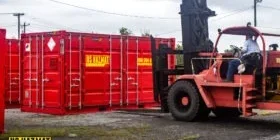
- supporting forklift access and workflow
- separating storage from normal traffic
- improving inspection visibility
- helping teams manage inventory without improvising
- supporting compliance conversations with documented equipment
- protecting employees, equipment, pavement, and nearby operations
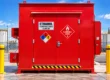
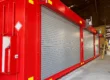
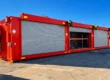
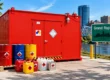
US Hazmat Rentals describes its BoxSAFE storage containers as designed for chemical drums, chemical totes, and palletized materials, with EPA-compliant secondary spill containment. The company also notes storage options with mechanical ventilation, LED lighting, dry chemical fire suppression, and climate control depending on the selected configuration.
That matters in transit-heavy environments because storage is rarely static. Materials arrive, wait, shift, get pulled, get loaded, and move again. The storage unit has to support that movement without losing control.
IBC Tote Storage Needs More Than Open Yard Space
IBC totes are useful because they hold more volume than smaller containers while staying more manageable than many bulk systems. That does not make them easy to store on a crowded logistics site.
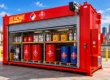
US Hazmat Rentals notes that totes are bulky and can become hard to manage at a job site. Their chemical storage tote lockers are designed for tote storage and handling, with forklift accessibility, secondary spill containment, and optional mechanical ventilation, climate control, lighting, and dry chemical fire suppression.
That is exactly the kind of setup Memphis logistics teams often need. A tote that is waiting for transfer still needs protection. A tote that is temporarily staged still needs a defined storage plan. A tote that is being accessed repeatedly needs a layout that does not invite spills or forklift damage.
| IBC Tote Storage Issue | Why It Matters in Transit Settings |
| Forklift movement | Totes are often moved during loading, staging, and repositioning |
| Valve protection | Bottom valves can be vulnerable during handling |
| Spill exposure | A slow leak can spread quickly across pavement or warehouse floors |
| Mixed inventory | Different materials may require separation or compatibility review |
| Weather exposure | Outdoor staging may need added protection |
| Access frequency | Repeated access increases handling risk |
| Documentation | Audits and customer requirements often expect organized storage |
A tote is not the problem. A loose storage plan is.
Containment Containers Help Control Spill Risk Before Freight Moves
Transit creates transition points. Transition points create risk.
A container may be safe while sealed in storage, then become vulnerable during transfer, staging, forklift handling, or loading. That does not mean every operation is dangerous. It means storage planning has to account for movement, not just inventory.
EPA’s SPCC guidance states that bulk storage container installations covered by the rule must provide secondary containment for the largest single container, with additional capacity for precipitation when applicable. While SPCC does not apply to every chemical situation, the principle is useful: storage should include a backup containment layer when a primary container fails.
For Memphis transit environments, spill containment containers can help teams manage that risk in a more practical way. Instead of leaving totes or drums staged in open areas, teams can place them in a unit built around secondary containment, access, and workflow.
A better setup reduces the chance that a single leak becomes:
- a cleanup event
- a damaged shipment
- a delayed load
- an employee exposure concern
- a customer complaint
- a regulatory problem
- a property damage issue
Containment does not slow logistics down. Done well, it keeps the operation from being interrupted by preventable problems.
Bulk Chemical Storage Should Fit the Pace of Memphis Freight
Bulk chemical storage near a logistics hub has to be practical. A solution that looks good on paper but slows every transfer will not last. A solution that is easy but does not contain spills will not protect the site.
Memphis is known for multimodal freight movement. Averitt describes the city as a place where runway, river, road, and rail converge, with Memphis serving as a major logistics point for distribution and fulfillment.
That pace makes flexible storage especially valuable. A permanent building may be more than the project needs. A basic shipping container may be too limited. Open staging may be too risky. Rental containment containers often fit the middle ground because they can be deployed where the need exists, then removed or relocated when the operation changes.
Bulk chemical storage decisions should account for:
- inventory volume
- container type
- access frequency
- site layout
- forklift routes
- transfer points
- hazard class
- compatibility
- ventilation needs
- fire-rating needs
- secondary containment capacity
- rental duration
- local site restrictions
The right system should support the material and the movement.
Containment Container Options for Transit and Staging
Not every site needs the same containment setup. A Memphis warehouse staging IBC totes may need something different from a temporary industrial project receiving palletized chemicals.
US Hazmat Rentals describes several BoxSAFE options, including standard containers, extra-tall options, side-loading containers for forklift access, and fully loaded units with climate control, spill containment, mechanical ventilation, LED lighting, and dry chemical fire suppression.
Here is a simple planning comparison:
| Storage Need | Possible Container Feature |
| IBC tote staging | Forklift-accessible tote storage |
| Drum and tote mix | Drum, tote, and pallet-compatible interior |
| Outdoor chemical storage | Steel container construction with containment |
| Higher vapor concern | Mechanical ventilation option |
| Temperature-sensitive material | Climate control option |
| Higher fire concern | Fire-rated or fire suppression option, based on inventory |
| Frequent loading | Side-load or easier access configuration |
| Spill control | Secondary containment sump and grated floor |
| Temporary project | Rental unit that can be removed or relocated |
This is where rental flexibility becomes valuable. The container can match the project instead of forcing the project to adapt around a permanent structure.
What Memphis Logistics Teams Should Check Before Renting
A containment rental should start with the inventory, not the unit size.
Before selecting containment containers, gather the information your storage provider will need:
- What materials are being stored?
- Are they flammable, corrosive, toxic, oxidizing, or otherwise regulated?
- How many drums, totes, or pallets need storage?
- What is the largest single container?
- Are IBC totes full, partial, or empty but not cleaned?
- Will materials be accessed daily or only staged?
- Will forklifts need interior or side access?
- Is outdoor placement required?
- Does the site need ventilation, climate control, lighting, or fire suppression?
- Are incompatible materials being stored near each other?
- What is the expected rental duration?
- Are there customer, insurer, fire marshal, or site-specific requirements?
This review makes the rental decision cleaner. It also reduces the risk of choosing a container that is too small, too hard to access, or under-equipped for the material.
Why Rentals Often Make Sense for Memphis Transit Operations
Logistics needs change quickly. A new contract starts. A customer changes volume. A seasonal inventory spike appears. A facility renovation pushes chemicals out of their usual storage area. A project moves from one site to another.
Permanent storage rarely fits that kind of movement.
Rental containment containers can make sense when:
- the storage need is temporary
- volume changes by season or contract
- the site needs fast deployment
- the project cannot wait for permanent construction
- the container may need to relocate
- the facility wants operating flexibility
- the team needs compliant storage without long-term capital commitment
- the operation needs containment close to the active transit area
US Hazmat Rentals states that its chemical storage containers can be rapidly deployed and relocated into job sites, with features such as forklift pockets, secondary spill containment sump flooring, ventilation, lighting, and other configuration options.
That matters in Memphis because freight operations are built around movement. Storage should be able to move with the operation when the site demands it.
Practical Checklist for Containment Containers in Memphis
Use this checklist before choosing a rental unit for a logistics, warehouse, industrial, or transit site.
- Confirm the full chemical inventory.
- Identify container types: IBCs, drums, totes, pallets, or mixed loads.
- Review SDS information for each material.
- Separate incompatible materials before storage planning.
- Confirm the largest single container volume.
- Determine if secondary containment capacity is sufficient.
- Map forklift routes and loading access.
- Decide whether side-loading access is needed.
- Confirm if ventilation or climate control is required.
- Check whether fire-rated storage or fire suppression may be needed.
- Confirm pad, surface, and delivery access.
- Plan signage and restricted access.
- Keep inspection space around stored materials.
- Train staff on where materials belong after unloading.
- Document inspection routines and spill response steps.
This is the difference between renting a container and building a storage process.
What a Professional Containment Container Should Include
A professional storage unit should do more than hold materials behind a locked door.
Look for features such as:
| Feature | Why It Matters |
| Secondary spill containment | Helps control leaks before they spread |
| Grated flooring | Keeps stored items above the containment sump |
| Forklift access | Supports safer tote and pallet handling |
| Ventilation option | Helps manage vapor or air turnover needs |
| Lighting option | Improves visibility for inspections and access |
| Climate control option | Helps with temperature-sensitive materials |
| Fire suppression option | Supports higher-risk storage configurations |
| Durable steel construction | Protects inventory in industrial environments |
| Access ramp | Improves loading and unloading workflow |
| Compatible layout | Supports drums, totes, or palletized materials |
US Hazmat Rentals lists BoxSAFE C options with secondary spill containment sump flooring, mechanical ventilation, LED lighting, climate control, dry chemical fire suppression, and configurations for drums, totes, and palletized quantities.
A strong container is not only durable. It is organized around the way the material will actually be handled.
Protect the Memphis Route Before the Load Moves
Memphis gives logistics teams enormous reach. That reach comes with pressure. Shipments move quickly. Materials change hands. Totes get staged. Drums wait for pickup. Warehouses adjust to new volume. In that kind of environment, storage cannot be an afterthought.
Professional containment containers give teams a defined place to control bulk chemical storage before materials move again. They help reduce spill exposure, organize IBC tote storage, support forklift handling, and keep the site better prepared for the next transfer.
At US Hazmat Rentals, we help logistics teams, industrial operators, contractors, and project managers choose rental storage that fits real operating conditions. If your Memphis-area site needs safer chemical staging, IBC tote handling, or bulk storage support, explore our IBC tote containers and storage and choose a containment solution that protects the route before the load ever leaves the site.
FAQ
What are containment containers used for?
They help store drums, IBC totes, and palletized materials while providing spill control and safer site organization.
Why are containment containers important near Memphis logistics hubs?
Memphis moves freight through air, rail, road, and river networks, so staging areas need safer chemical storage support.
Can containment containers hold IBC totes?
Yes. Certain hazmat rental units are designed for IBC tote storage, forklift access, and secondary spill containment.
When should a site use spill containment containers?
Use them when leaks, spills, bulk liquid storage, or temporary staging could expose workers, property, or nearby operations.
Are rental containment containers better than permanent storage?
For temporary, seasonal, or shifting logistics needs, rentals often provide faster deployment and more flexibility.
Where can I find IBC tote storage rentals?
US Hazmat Rentals offers IBC tote storage and containment options for industrial, logistics, and project-based sites.