
Perchlorate ammonium is often searched under that wording, but the technical name most teams will see on labels and Safety Data Sheets is ammonium perchlorate. That distinction matters. In storage planning, the name on the SDS drives classification, segregation, emergency response, compatibility review, and the type of storage environment a facility may need.
Ammonium perchlorate is not managed like a standard flammable solvent. PubChem identifies ammonium perchlorate as a strongly oxidizing hazardous material, and OSHA has addressed its classification under oxidizing substances rather than treating it as a typical combustible liquid. That means the main storage concern is not simply “keep it away from flame.” The stronger question is how to keep an oxidizer away from incompatible materials, heat stress, contamination, and project-site shortcuts.
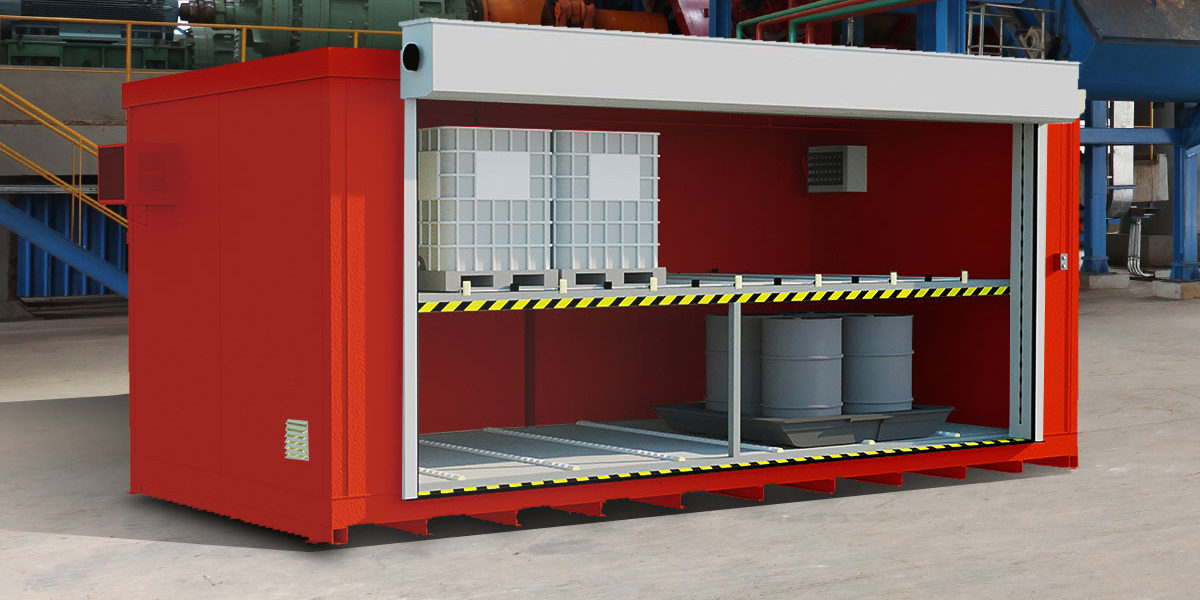
At US Hazmat Rentals, this is where modular storage becomes practical. A project may already have systems for acetone, isopropyl alcohol, fuels, or other flammable chemicals, but oxidizers require their own review. The Flammable Chemicals Storage pillar is useful because flammable storage and oxidizer segregation often need to be planned together, especially when both hazard classes exist on the same site.
Perchlorate Ammonium Starts With the SDS, Not the Storage Unit
A storage decision should never begin with the building size alone. It should begin with the SDS. For perchlorate ammonium, that means confirming the correct chemical identity, hazard classification, manufacturer storage guidance, incompatibilities, PPE requirements, emergency response information, and transport or handling restrictions.
PubChem lists ammonium perchlorate storage guidance as keeping the container tightly closed in a dry, well-ventilated place, with storage class noted as strongly oxidizing hazardous materials. Supplier SDS guidance also commonly points to dry, ventilated, compatible oxidizer storage and original closed containers.
For project managers, that means the storage unit is only one part of the answer. The unit must support the chemical profile. The SDS tells you whether the material needs separation, dryness, ventilation, temperature review, security, spill planning, or special compatibility controls.
Oxidizer Storage Is Different From Flammable Storage
Flammable liquids are controlled around vapor, ignition sources, fire-rated storage, bonding and grounding where applicable, ventilation, and liquid containment. Oxidizers create a different problem. They can intensify combustion when they contact incompatible materials, especially fuels, organic materials, reducing agents, or contaminated surfaces.
That is why perchlorate ammonium should not be placed into a general chemical storage area without a compatibility review. EPA chemical segregation guidance warns that incompatible chemical storage can create hazardous reactions and emphasizes using the SDS when a chemical is not clearly understood. University chemical storage guidance also notes that oxidizers should be separated from flammable and combustible materials and reducing agents.
This is where teams sometimes make expensive mistakes. They see “chemical storage” as one category. Inspectors, safety managers, and incident investigators do not.
Why Perchlorate Ammonium Needs Separation From Flammables
On many job sites, flammables get most of the attention. That is understandable. Acetone, IPA, fuels, solvents, and coatings are familiar hazards. But oxidizers can make those hazards worse if storage is poorly organized.
Perchlorate ammonium should be reviewed separately from flammable liquids because the storage risk changes when incompatible materials are nearby. Oxidizer storage should account for distance, barriers, separate containment where required, compatible shelving or surfaces, and clear labeling.
A practical segregation review should ask:
- Is the oxidizer stored away from flammable and combustible materials?
- Are reducing agents stored in a separate area?
- Are organic materials, rags, paper, wood, cardboard, oils, and solvents kept away?
- Is the container closed, clean, and protected from contamination?
- Are labels readable and consistent with the SDS?
- Are employees trained to recognize oxidizer markings?
- Does the site have separate spill response expectations for oxidizers?
- Is the storage unit designed for the actual hazard class?
A rental storage solution can help when a project needs separation quickly. Instead of forcing incompatible materials into one crowded area, the site can deploy purpose-matched storage for the hazard class.
Perchlorate Ammonium and Heat Exposure
The word “volatile” should be used carefully here. Ammonium perchlorate is a solid oxidizer, not a volatile liquid like acetone. The storage concern is not routine vapor release in the same way it would be for many flammable liquids. The concern is the material’s oxidizing behavior, sensitivity to poor storage conditions, heat exposure, contamination, and incompatibility.
PubChem’s storage guidance points to dry, well-ventilated storage with tightly closed containers. SDS sources identify ammonium perchlorate as a strong oxidizer and warn against combustible material contact.
For perchlorate ammonium, climate and storage environment should be reviewed through the SDS and applicable safety standards. A hot, humid, poorly ventilated, mixed-use container is not the same as a dry, designated oxidizer storage area with clean labeling, compatible materials, and controlled access.
Storage Priorities for Ammonium Perchlorate
| Storage Concern | Why It Matters | Practical Review Point |
| Oxidizer classification | Changes compatibility and storage rules | Confirm SDS and hazard class first |
| Incompatibles | Oxidizers can intensify reactions with fuels or organics | Separate from flammables, combustibles, and reducing agents |
| Dry storage | Moisture can affect containers, labels, and storage quality | Keep containers closed in dry conditions |
| Ventilation | Supports safer storage environment | Confirm ventilation needs from SDS and code review |
| Contamination control | Contamination can increase risk | Keep containers clean, closed, and properly handled |
| Labeling | Supports HazCom and emergency response | Maintain readable chemical and hazard labels |
| Access control | Reduces unauthorized handling | Limit storage access to trained personnel |
| Rental configuration | Project needs may change quickly | Match the unit to hazard class and duration |
This table is not a substitute for a qualified safety review. It gives project teams a clearer way to start the conversation before selecting a chemical storage rental.
Perchlorate Ammonium Should Not Share a Generic Storage Space
Generic storage is one of the most common problems in temporary projects. A site receives different materials over time, puts them in the same area, and assumes separation can be handled later. With oxidizers, later is not a safe strategy.
Perchlorate ammonium should be stored in a designated area for compatible oxidizers, not placed beside flammable liquids, oily materials, solvent wipes, or combustible packing. Supplier SDS guidance for ammonium perchlorate recommends storage in original closed containers in areas specially designated for compatible oxidizers.
For US Hazmat Rentals customers, this is where modular storage has a strong operational advantage. A dedicated rental unit can help separate hazard classes without waiting for permanent construction, especially during construction, remediation, energy, manufacturing, or government project work.
Labeling and Documentation Matter More With Oxidizers
Oxidizer storage depends heavily on clear information. If a label fades, a container is moved, or a project team loses track of the SDS, the storage area becomes harder to manage. This matters even more when multiple contractors, shifts, or temporary workers are involved.
A stronger storage plan should include:
- Current SDS access
- Correct chemical name on containers
- Oxidizer hazard identification
- No smoking and no ignition source signage where needed
- Incompatibility notices
- Restricted access signs
- Emergency contact information
- Inspection records
- Training documentation
OSHA’s Hazard Communication Standard requires employers to provide information about hazardous chemicals through labels, SDSs, and training. For perchlorate ammonium, that documentation is not just administrative. It tells the site how the material should be stored, separated, inspected, and discussed during safety planning.
Oxidizer Storage and Flammable Chemical Storage Need a Shared Plan
The pillar topic is flammable chemicals, but oxidizers belong in the same safety conversation because many sites store both. A project can have acetone, isopropyl alcohol, fuels, coatings, adhesives, or solvents on one side and oxidizing materials on the other. The danger comes when those categories are planned separately on paper but crowded together on site.
The Flammable Chemicals Storage page supports this broader planning because project teams need to understand how flammables are controlled before deciding where oxidizers should not go.
A combined review should identify:
- Which materials are flammable
- Which materials are oxidizers
- Which materials are corrosive, toxic, reactive, or water-sensitive
- Which materials are incompatible with each other
- Which materials need ventilation, climate control, or fire-rated storage
- Which storage areas need separate containment
- Which units need signage, access control, and documentation
Perchlorate ammonium should never be planned as an isolated line item. It should be evaluated against everything else stored nearby.
When Rental Storage Makes More Sense Than Permanent Construction
Permanent chemical storage can make sense for fixed, long-term facilities. Many projects do not fit that model. Timelines shift. Materials change. Locations move. A site may need oxidizer storage for one project phase and flammable storage for another.
A chemical storage rental can help project teams respond faster without building permanent infrastructure that may not match future needs. For oxidizers, this can be especially helpful when separation is required quickly or when existing storage is already dedicated to flammables.
Rental storage can support:
- Faster deployment
- Separate hazard-class storage
- Short-term or long-term use
- Relocation during project phases
- Reduced capital commitment
- Better site flexibility
- Cleaner inspection documentation
- Safer segregation from flammable materials
The value is not only speed. It is avoiding the wrong permanent decision when the project need is temporary, uncertain, or changing.
Choosing a Rental Unit for Perchlorate Ammonium Storage
The right rental unit depends on the full chemical profile, not just the name of the material. Before selecting storage for perchlorate ammonium, a project team should review volume, container type, site location, access frequency, compatibility, temperature requirements, and whether other chemicals will be stored nearby.
A qualified storage review should cover:
- SDS storage conditions
- Hazard class and DOT classification
- Container type and condition
- Required segregation from flammables or combustibles
- Need for dry, ventilated storage
- Spill response and cleanup expectations
- Site access and placement
- Fire code or AHJ requirements
- Security and employee access
- Rental duration and relocation needs
OSHA’s classification notice identifies ammonium perchlorate under UN Class 5 oxidizing substances, which reinforces the need to evaluate oxidizer-specific storage rather than defaulting to flammable liquid assumptions.
Inspection Habits That Reduce Storage Risk
Storage risk increases when nobody owns the area. A rental unit should not become a forgotten box on the edge of a project site. It needs inspection, documentation, and clear responsibility.
Routine inspection should check:
- Container closure
- Label condition
- Signs of damage or contamination
- Moisture intrusion
- Housekeeping
- Separation from incompatible materials
- Condition of shelving, pallets, or secondary containment
- Access control
- Signage visibility
- SDS availability
- Spill kit readiness
- Changes in inventory
For perchlorate ammonium, inspection should focus on keeping storage dry, clean, labeled, segregated, and aligned with SDS guidance. Small storage problems should be corrected early before they become process habits.
Common Mistakes in Oxidizer Storage
Oxidizer storage mistakes are often simple, but the consequences can be serious.
Common issues include:
- Storing oxidizers near flammables or combustibles
- Treating ammonium perchlorate like a general solid chemical
- Losing SDS access after delivery
- Using a shared mixed-chemical storage unit without segregation
- Allowing cardboard, wood, rags, or oils near oxidizers
- Ignoring humidity, heat, or poor housekeeping
- Failing to train temporary workers
- Leaving labels damaged or unreadable
- Choosing a unit based only on size
- Forgetting local fire authority requirements
These are exactly the kinds of problems modular rental planning can help prevent. When the storage unit is selected around hazard class and project workflow, the site starts with fewer compromises.
How US Hazmat Rentals Supports Safer Chemical Storage
US Hazmat Rentals helps project teams match storage equipment to the actual hazard profile of the materials on site. That includes flammable chemicals, oxidizers, corrosives, toxic materials, and other regulated substances that need more than ordinary storage space.
For perchlorate ammonium, the goal is not to oversimplify the hazard. The goal is to create a storage plan that respects oxidizer classification, SDS guidance, segregation, dry storage conditions, labeling, and inspection readiness.
A modular rental solution can help when a project needs safe storage without waiting months for permanent construction. It can also help separate oxidizers from flammable chemical storage areas, reduce site congestion, and give safety teams a more defensible setup during audits or internal reviews.
Store Oxidizers Like the Risk Is Real
A material does not need to be a liquid solvent to create serious storage concerns. Perchlorate ammonium, properly identified as ammonium perchlorate, requires oxidizer-aware planning from the first storage decision. The SDS, compatibility review, segregation plan, signage, inspection process, and rental unit selection all matter.
US Hazmat Rentals gives project teams a practical way to respond when chemical storage needs change quickly. If your site stores flammable materials and oxidizers during the same project, review the storage layout before those hazards end up too close together. The right rental setup can protect workers, simplify compliance planning, and keep the project moving with fewer preventable risks.
FAQ
Is perchlorate ammonium the same as ammonium perchlorate?
The common technical name is ammonium perchlorate. “Perchlorate ammonium” is usually an inverted search phrase.
Is ammonium perchlorate flammable?
It is classified as a strong oxidizer, not a typical flammable liquid. It can intensify fire risk with incompatibles.
Can ammonium perchlorate be stored with solvents?
It should be separated from flammable and combustible materials unless a qualified safety review confirms compatibility controls.
What storage conditions matter most for ammonium perchlorate?
Dry, well-ventilated, closed-container, compatible oxidizer storage is commonly identified in SDS guidance.Can US Hazmat Rentals support oxidizer storage projects?
Yes. US Hazmat Rentals can help match modular storage options to hazard class, project duration, and site conditions.