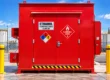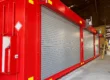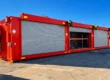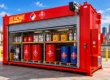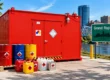

The NFPA hazard identification system plays a serious role in Dallas industrial safety because chemical storage risk is not only about what is inside a building. It is also about how quickly workers, inspectors, emergency responders, and site managers can understand that risk when conditions change. A storage area may hold flammable liquids, solvents, fuels, aerosols, corrosives, oxidizers, or mixed hazardous materials. If the hazard information is unclear, the site loses time exactly when clarity matters most.
Dallas industrial operations often move fast. Construction sites, logistics yards, manufacturing plants, remediation projects, utility work, energy support operations, and temporary storage locations may all handle regulated materials on changing timelines. In that kind of environment, hazard identification cannot be treated like a label added at the end. It should be part of the storage strategy from the beginning.
At US Hazmat Rentals, we help project teams think about hazardous material storage as a full safety system. A modular rental building can support containment, compliance, and faster deployment, but the site still needs accurate hazard visibility, current labels, worker training, and a storage setup that supports emergency response.
Why the NFPA Hazard Identification System Matters in Dallas
The NFPA hazard identification system is designed to communicate hazard information quickly during emergency conditions. NFPA 704 addresses health, flammability, instability, and related hazards that may appear during short-term acute exposure under fire, spill, or similar emergency conditions. Its purpose is to provide a simple and easily recognized marking system that helps emergency personnel evaluate hazards and plan response actions.
That matters because a responder arriving at a Dallas industrial site may not know what is inside a storage building. They may see smoke, a spill, a damaged drum, a leaking container, or a fire exposure, but they need fast context. The NFPA diamond helps them see whether health, flammability, instability, or special hazards are part of the situation.
For daily operations, the system also creates discipline. It pushes the team to know what materials are on site, how they are classified, whether labels are current, and whether the storage building reflects the actual hazard.
The system does not replace OSHA labels, Safety Data Sheets, worker training, or proper storage. It supports them by making emergency hazard information easier to read.
How the NFPA Hazard Identification System Supports Emergency Response
The NFPA hazard identification system is not just a compliance detail. It is a response tool. Its value appears when someone needs to understand risk without opening containers, searching through paperwork, or guessing based on product names.
The familiar NFPA 704 diamond communicates four categories:
| NFPA 704 Area | Color | What It Communicates |
| Health | Blue | Potential health hazard during emergency exposure |
| Flammability | Red | Fire hazard severity |
| Instability | Yellow | Reaction or instability concern |
| Special hazards | White | Specific concerns, such as oxidizer or water reactivity |
Each rating should reflect the actual material, not a vague category or a copied label. A solvent, a coating, a fuel, and a corrosive cleaner may all sit under the broad umbrella of hazardous materials, but they do not create the same emergency profile.
For Dallas industrial sites, this is especially important when temporary projects change inventory. If the storage building held one product last month and a different material this month, the hazard identification should be reviewed. A label that does not match the contents can be worse than no label because it gives responders the wrong confidence.
NFPA 704 Labeling Is Not the Same as OSHA HazCom
A strong safety program understands that NFPA 704 labeling and OSHA HazCom labels do different jobs. They may both communicate chemical hazards, but they are not interchangeable.
OSHA explains that Hazard Communication pictograms are used on labels and include a black hazard symbol on a white background with a red frame. OSHA also notes that a red frame without a hazard symbol is not permitted as a pictogram on the label. That system is built around workplace hazard communication for employees who use, store, or handle chemicals.
NFPA 704 is different. It is centered on emergency response. It gives quick visual information to responders who may be approaching a fire, spill, or release. That is why the two systems should work together instead of being confused.
A Dallas site may need:
- OSHA-compliant labels on containers
- Safety Data Sheets available to workers
- NFPA 704 markings for emergency response visibility
- Site signage for storage zones and restricted access
- Worker training on what each system means
- Updated labeling when chemical inventory changes
The point is not to add more signs for decoration. The point is to make chemical risk readable from the container level to the building level.
Dallas Fire Code Planning Should Start Before the Diamond Goes Up
Dallas has its own code environment, and storage planning should account for that from the start. The City of Dallas states that the 2021 International Fire Code Chapter 16 Dallas Fire Code Amendment is effective as of February 10, 2023. The city also states that structures must comply with adopted building and design codes, property maintenance, and land use regulations.
For industrial projects, that local layer matters. A temporary chemical storage building may still need review based on materials, quantities, placement, fire exposure, access, and local authority expectations. The NFPA diamond may be visible on the building, but the actual safety decision begins with the chemical inventory and site plan.
Before placing or updating hazard identification, Dallas teams should know:
- What materials are stored
- Whether they are flammable, combustible, corrosive, oxidizing, toxic, or unstable
- Which materials are incompatible
- How much is stored at peak inventory
- Whether temporary storage changes site access
- Whether a fire-rated or non-fire-rated rental building is needed
- Whether local review, permitting, or fire authority coordination applies
- Where emergency responders would approach the storage area
A label cannot compensate for a weak storage layout. The building, contents, signage, access, and documentation need to tell the same story.
NFPA Hazard Identification System and NFPA 30 Compliance Work Together
The NFPA hazard identification system becomes more useful when it is connected to NFPA 30 planning. NFPA 30 focuses on the storage, handling, and use of flammable and combustible liquids. NFPA 704 helps communicate emergency hazard severity. They are not the same standard, but they often belong in the same conversation when a Dallas site stores fuels, solvents, paints, coatings, adhesives, or other flammable liquids.
US Hazmat Rentals states that its chemical storage buildings meet or exceed NFPA Code 30 specifications, EPA standards, and OSHA standards. The company also notes that hazmat chemical storage building rental units are kept in stock and ready for delivery to project sites.
That matters for project-based operations. A Dallas team may need compliant storage quickly, but speed should not mean improvisation. The storage building should match the material and the hazard identification should match the storage building.
A practical workflow looks like this:
- Build the chemical inventory.
- Review SDS documents.
- Identify flammability, health, instability, and special hazards.
- Confirm quantities and container types.
- Choose fire-rated or non-fire-rated rental storage.
- Confirm containment and ventilation needs.
- Apply accurate OSHA and NFPA hazard communication.
- Train workers before the storage area becomes active.
The safest projects do not separate labeling from storage. They connect both.
Common Problems With the NFPA Hazard Identification System
Most labeling problems do not start with bad intent. They start with project drift. A temporary storage area stays longer than expected. A drum gets replaced with a different product. A subcontractor brings chemicals onto the site. A label fades in the Texas sun. A storage building moves to another location, but the signage is not reviewed.
That is how hazard identification stops matching reality.
Common mistakes include:
- Copying old NFPA 704 ratings without reviewing the SDS
- Confusing OSHA HazCom pictogram categories with NFPA 704 ratings
- Leaving outdated labels on rental storage buildings
- Using one diamond for mixed inventory without careful review
- Placing markings where responders cannot see them
- Forgetting to update labels after inventory changes
- Treating NFPA 704 as a replacement for container labels
- Missing SDS access for workers
- Storing incompatible materials in the same area
- Failing to include hazard identification in inspection routines
For Dallas projects, these mistakes can be avoided with a simple habit: review the label whenever the inventory changes. If the storage contents change, the hazard communication should be checked too.
How Modular Rentals Make Hazard Identification Easier
A modular hazmat rental building can make the NFPA hazard identification system easier to manage because it creates a defined storage point. Instead of hazardous materials being spread across a site, the project can place regulated materials in one controlled, visible, documented area.
That helps workers know where materials belong. It helps supervisors inspect inventory. It helps responders identify where hazards are concentrated. It also helps teams keep labels, SDS, and access control connected to one clear storage location.
A modular rental storage building can support:
- Clear placement of hazardous materials
- Better NFPA 704 visibility
- Stronger access control
- Easier worker training
- More organized storage zones
- Improved site inspection readiness
- Faster setup for temporary projects
- Better separation from active work areas
- Cleaner emergency response planning
The unit still needs to fit the hazard. A non-fire-rated rental may work for certain non-flammable materials. A fire-rated building may be needed for flammable liquids or higher-risk inventories. The right choice depends on the actual chemical profile, not just how much space is needed.
Hazard Identification Should Stay Current Throughout the Project
A good hazard label is not something a team places once and forgets. It has to stay current.
This matters because Dallas industrial projects can change quickly. A construction phase ends. A new subcontractor arrives. A remediation site moves from one material profile to another. A maintenance project stores different solvents than expected. A manufacturing shutdown brings temporary chemical inventory into an area that normally does not store it.
A practical review should ask:
- Are the NFPA 704 markings still accurate?
- Are container labels still readable?
- Are SDS documents current and accessible?
- Has the stored inventory changed?
- Are incompatible materials separated?
- Is the storage building still in the correct location?
- Are workers trained on the labels they see?
- Is the marking visible from likely emergency access points?
- Has the fire authority or site safety lead reviewed changes?
This is where hazard communication becomes operational. The goal is not simply to pass a visual check. The goal is to make sure the information on the building still reflects the risk inside.
Dallas Teams Need Hazard Communication That Workers Understand
A hazard system only works if people understand it. A label may be technically correct, but if workers do not know what the colors, numbers, pictograms, or warnings mean, the communication is incomplete.
Training should make the difference between systems clear. OSHA HazCom labels help workers understand chemical hazards during normal use. SDS documents provide detailed safety information. NFPA 704 markings support quick emergency-response recognition. Site signage helps control access and behaviour around the storage area.
For a Dallas industrial team, that training should be practical, not abstract. Workers should know where chemicals are stored, who is authorized to access them, where SDS documents are located, what labels mean, and who to notify if a container, label, or storage condition looks wrong.
Better training also helps prevent small problems from becoming larger ones. A worker who understands labeling is more likely to notice when a drum is unmarked, a label is faded, or a storage area does not match the materials inside.
What US Hazmat Rentals Helps Dallas Projects Solve
At US Hazmat Rentals, we help project teams avoid one of the biggest mistakes in chemical storage: treating temporary storage as if it can be casual. Temporary does not mean low-risk. A short-term project can still involve flammable liquids, corrosives, solvents, fuels, regulated waste, and emergency response concerns.
Our role is to help teams match the storage solution to the actual project need. That includes reviewing:
- Material type
- Quantity and container size
- Fire-rated or non-fire-rated storage needs
- NFPA 30 considerations
- Secondary containment
- Ventilation needs
- Site access
- Rental duration
- Placement near occupied areas or operations
- Hazard communication and labeling needs
The strongest storage plan is not built around a single product. It is built around the hazard, the site, the timeline, and the way workers will actually use the storage area.
For Dallas projects, that kind of planning can reduce confusion and improve safety before the first container enters the rental building.
A Safer Dallas Project Starts With Clear Hazard Identification
The NFPA hazard identification system helps make chemical risk visible before an emergency becomes harder to control. It gives responders a faster way to understand health, flammability, instability, and special hazard concerns. It also encourages project teams to keep inventory, labeling, SDS access, and storage planning aligned.
For Dallas industrial sites, that matters. Temporary storage, changing inventories, fast project timelines, and mixed chemical use can create confusion if the system is not managed carefully. The answer is not more labels for the sake of more labels. The answer is accurate, current, visible hazard communication supported by the right storage building.
US Hazmat Rentals helps teams create that connection through modular rental storage solutions built for real project conditions. If your Dallas operation needs temporary chemical storage, flammable liquid storage, or a safer way to support NFPA planning, explore our NFPA 30 compliance solutions and start with a storage plan that makes hazards easier to control.
FAQ
What is the NFPA hazard identification system?
It is a visual marking system used to communicate health, flammability, instability, and special hazards for emergency response.
Is NFPA 704 the same as OSHA HazCom?
No. OSHA HazCom supports worker chemical communication. NFPA 704 supports quick emergency-response hazard recognition.
Why does Dallas industrial storage need NFPA 704 labeling?
It helps responders and site teams quickly understand chemical hazards around storage buildings, tanks, rooms, or designated areas.
Does NFPA 704 replace Safety Data Sheets?
No. SDS documents provide detailed safety information. NFPA 704 provides quick visual emergency hazard information.
How does NFPA 30 relate to chemical storage?
NFPA 30 focuses on the storage, handling, and use of flammable and combustible liquids.
Can US Hazmat Rentals help with Dallas temporary storage?
Yes. US Hazmat Rentals helps project teams choose rental storage based on materials, quantities, hazards, timeline, and site conditions.