Finding the best way to store batteries Oklahoma City operations can actually rely on takes more planning than most facility teams expect, and the stakes in this market are higher than in most. Oklahoma City sits in one of the most thermally demanding environments in the continental United States: summer ambient temperatures that routinely exceed 100 degrees Fahrenheit accelerate battery degradation and lower the thermal runaway threshold for lithium-ion cells without any electrical fault required.
Add the density of oil and gas operations, industrial maintenance programs, and construction activity in the OKC metro, and what looks like a battery storage question quickly becomes a hazardous materials compliance question with a deadline attached.
The best way to store batteries Oklahoma City teams have to follow is not one-size-fits-all. The answer depends on the battery chemistry, the quantity stored, whether the batteries are charged or depleted, whether charging happens in the storage space, what other materials are stored nearby, and what the local Authority Having Jurisdiction expects to see in a permit application. Each of those variables changes the applicable code sections, the storage enclosure requirements, and the fire protection obligations.
At US Hazmat Rentals, we work with Oklahoma City-area facility managers, EHS officers, and procurement teams who need compliant battery storage infrastructure without a six-month capital project. The best way to store batteries Oklahoma City operations manage at scale involves purpose-built enclosures, controlled environments, and code-aligned documentation. This guide covers each of those dimensions directly.
Battery Chemistry Determines the Storage Specification
Not all batteries are the same, and identifying the best way to store batteries Oklahoma City facilities use starts with chemistry. Lithium-ion batteries, which power EV fleets, industrial equipment, ground support vehicles, and increasingly large energy storage systems, carry a thermal runaway risk that drives the most demanding storage specifications.
Lead-acid batteries, used in forklifts, backup power systems, and telecommunications infrastructure, emit hydrogen gas during charging and require ventilation, but they do not carry the same catastrophic failure mode as lithium-ion cells. Nickel-cadmium, nickel-metal hydride, and other chemistries have their own storage requirements.
Lithium-ion storage requires fire-rated construction above certain kWh thresholds under NFPA 855, the Standard for the Installation of Stationary Energy Storage Systems. NFPA 855 specifies maximum quantities of lithium-ion energy storage by hazard level before fire-rated enclosures, suppression systems, and engineered ventilation become mandatory.
Facilities that add battery inventory incrementally sometimes cross those thresholds without updating their storage infrastructure or their AHJ submissions. In Oklahoma City, where the OKC Fire Department enforces the International Fire Code with local amendments, that gap becomes visible during inspections, and the best way to store batteries Oklahoma City facility teams avoid that outcome is to spec the enclosure for the program’s projected maximum capacity.
The best way to store batteries Oklahoma City facilities use for lead-acid charging operations involves dedicated spaces with mechanical ventilation rated for the hydrogen hazard, not a general-purpose storage room with a door left open.
Oklahoma City’s Climate and What It Does to Battery Storage
The Gulf-influenced heat of Oklahoma summers is not a background condition for the best way to store batteries Oklahoma City teams implement. It is an active engineering variable that changes the storage specification in concrete ways. Lithium-ion cells degrade faster at elevated temperatures, and the onset temperature for thermal runaway in common lithium-ion chemistries is lower than most facility teams assume.
A battery pack that is near the end of its cycle life, improperly charged, or mechanically stressed can enter thermal runaway at temperatures that an uncontrolled outdoor or semi-outdoor storage environment reaches on a July afternoon in OKC. Climate control inside the storage enclosure is not a luxury for Oklahoma City deployments.
The enclosure needs to maintain battery storage temperatures within the manufacturer’s recommended range, which for most commercial lithium-ion chemistries is between 50 and 77 degrees Fahrenheit for long-term storage. Without active cooling, a storage enclosure in Oklahoma City in summer is an accelerated degradation environment that also increases fire risk.
The humidity variable in Oklahoma adds a secondary consideration for lead-acid storage. High humidity accelerates terminal corrosion on lead-acid batteries and can affect the integrity of battery casings over time. Storage enclosures for lead-acid batteries in Oklahoma City should provide ventilation for hydrogen management and protection from direct moisture exposure.
These requirements need to be addressed together in the same specification, and the best way to store batteries Oklahoma City operations use for lead-acid systems covers both.
DOT, OSHA, and the Hazmat Code Framework
The best way to store batteries Oklahoma City operations must document involves alignment with several overlapping regulatory frameworks. The Department of Transportation’s hazmat regulations under 49 CFR govern the transport of lithium batteries and classify them as hazardous materials under specific packing and labeling requirements.
For storage rather than transport, the applicable frameworks shift to NFPA 855 for energy storage systems, NFPA 1 and the IFC for fire code compliance, and OSHA standards for occupational safety in battery charging and storage areas. The 1987 hazmat code revisions that established the modern framework for hazardous materials classification and the storage of hazardous chemicals created the documentation and segregation obligations that facilities today still follow for battery and chemical storage programs.
That documentation obligation extends directly to battery storage: facilities storing lithium-ion systems above NFPA 855 thresholds must notify the local fire department, submit information on battery chemistry and kWh capacity, and in some cases provide an emergency response information package.
Oklahoma City’s fire department follows IFC Section 1206 requirements for energy storage systems, and those requirements include pre-installation notification for systems above defined thresholds.
For facilities that also store chemicals alongside battery inventory, the hazardous material 1791 classification, UN 1791 for sodium hypochlorite solution, illustrates why proximity planning matters. Sodium hypochlorite is an oxidizer.
Storage of Hazardous Chemicals Near Battery Storage Areas
The storage of hazardous chemicals in the same facility footprint as battery charging or storage areas introduces a segregation dimension that many operations underestimate. Flammable solvents, oxidizing agents, and corrosive acids each interact with battery storage risks in different ways, and the IFC and NFPA require physical separation between hazard classes that creates layout constraints on busy industrial sites.
The best way to store batteries Oklahoma City facilities manage near existing chemical inventories means accounting for the full chemical context, not evaluating battery storage in isolation. Flammable solvents stored near lithium-ion battery charging areas create a combined hazard profile: the thermal runaway risk adds an ignition source potential to an environment where flammable vapors may accumulate.
Even if the battery enclosure meets fire-rated standards, storing hazardous chemicals with low flash points in adjacent spaces without reviewed separation distances is a configuration that an OKC fire inspector will note. Segregation distances under the IFC vary by hazard class and quantity, and the safest approach is to have an EHS officer or fire protection engineer review the overall site layout before placement decisions are finalized.
Corrosive chemicals near battery storage add a materials compatibility concern. Battery casings, terminal connections, and wiring are vulnerable to corrosive vapors. The storage layout is the first line of defense against that outcome, and a site that plans it correctly before equipment arrives avoids the more expensive reconfiguration that follows an inspection finding.
What a Compliant Battery Storage Enclosure Looks Like in Oklahoma City
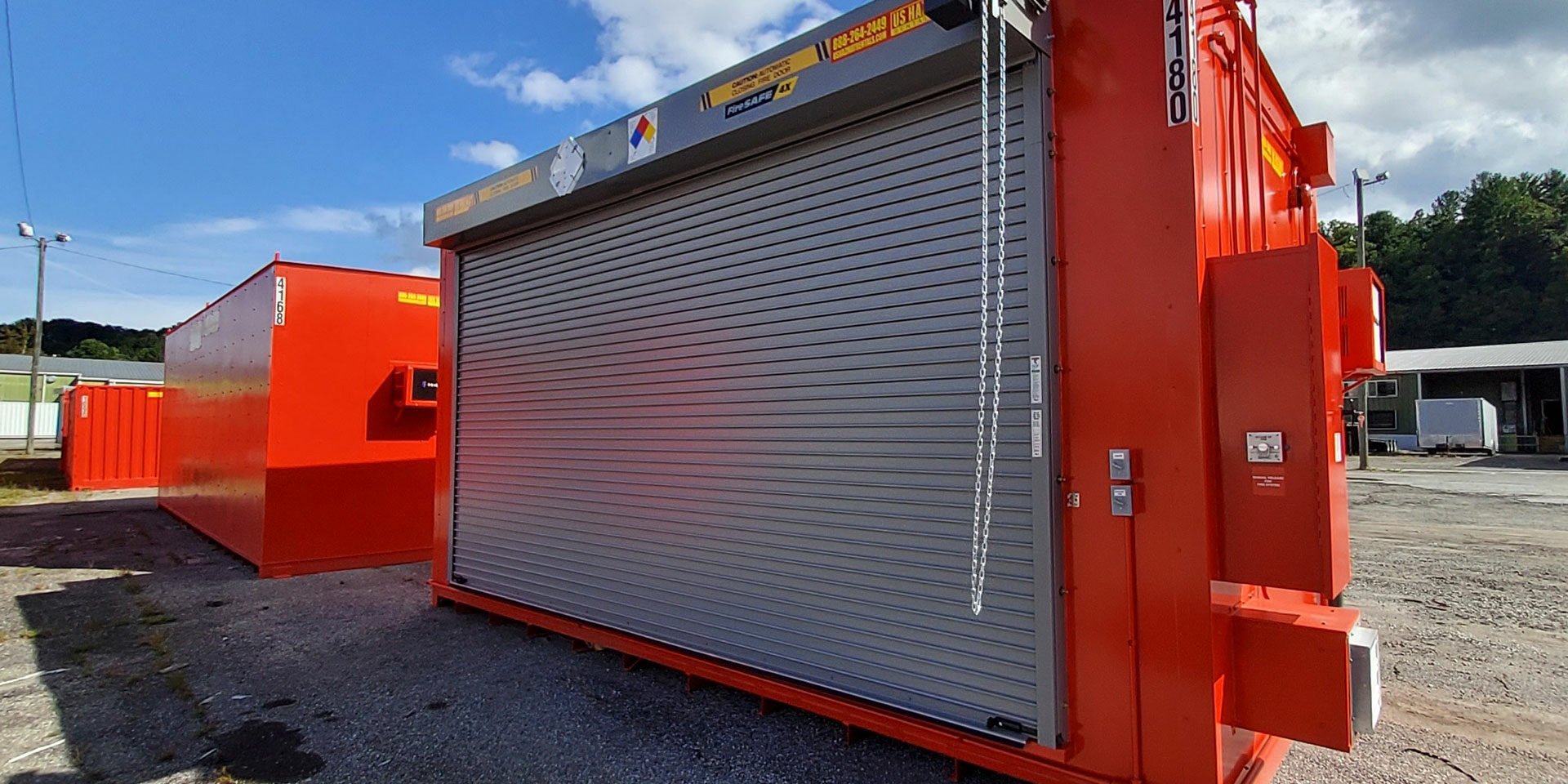
A compliant battery storage enclosure for lithium-ion systems in Oklahoma City needs fire rating, climate control, ventilation, suppression system readiness, and documentation for AHJ submission. Fire-rated construction under NFPA 855 is required above specific kWh thresholds, with two-hour ratings being the most common minimum for commercial energy storage applications.
The enclosure must also be sited at required separation distances from occupied structures, property lines, and other hazardous material storage under the IFC and local amendments. Ventilation requirements for battery enclosures address both thermal management and gas management. During a degrading cell event or a thermal runaway precursor, a lithium-ion battery can vent hydrogen fluoride and other toxic gases before any visible fire.
The ventilation system must provide air exchange rates sufficient to prevent accumulation of those gases to dangerous concentrations, and that rate is different from the rate required for a flammable liquid storage space. The best way to store batteries Oklahoma City teams should document includes the enclosure’s compliance with NFPA 855, the kWh inventory, the fire rating, the suppression system type and coverage, and the ventilation design parameters.
That documentation is what the OKC fire department reviews during a pre-installation notification process and what an inspector looks for during a site visit. A rental unit from a qualified provider arrives with that documentation prepared. For a deeper look at how hazardous material storage obligations apply to battery and chemical programs.
Oklahoma City AHJ, Permit Process, and Local Compliance Context
Oklahoma City operates under the IFC with local amendments. Battery storage above NFPA 855 capacity thresholds requires pre-installation notification to the OKC Fire Department, a permit application, and supporting documentation covering battery chemistry, enclosure fire rating, suppression system, and separation distances.
Facilities that install battery storage without going through that process are not in a compliant position regardless of the quality of the enclosure. The best way to store batteries Oklahoma City operations implement without compliance gaps starts with the permit process, not with the equipment selection.
The permit documentation should include the battery chemistry and energy capacity, the enclosure fire rating, the suppression system type, the ventilation design, and the emergency response information for the specific battery chemistry. A pre-engineered rental unit with a prepared documentation package is built for that efficiency, compressing the AHJ approval timeline relative to a custom-built installation that must develop its own compliance package from scratch.
If your Oklahoma City facility is approaching an inspection, scaling a battery program, or managing a project mobilization that needs compliant storage in place within days rather than months, the best way to store batteries Oklahoma City operations like yours have used is to confirm availability before the next order cycle closes. US Hazmat Rentals has units available now for the greater OKC area. Start your quote request and get answers within 24 hours.
Getting Battery Storage Right the First Time
The best way to store batteries Oklahoma City facility teams can implement is the one that accounts for the full compliance picture from the start: battery chemistry, kWh thresholds, climate requirements, ventilation design, suppression readiness, chemical segregation, and AHJ documentation.
Addressing all of those requirements in a single pre-engineered enclosure is faster and more defensible than assembling a solution under time pressure. If your program is expanding or a project start date is approaching, now is the right time to confirm what is available and get it scheduled.
US Hazmat Rentals serves the Oklahoma City metro with purpose-built storage solutions designed for industrial, commercial, and construction applications. Units are available now. Start your quote request and get answers in 24 hours. Reserve your unit now.
FAQ
What is the best way to store batteries Oklahoma City industriHazmat al sites should follow?
The best way to store batteries Oklahoma City industrial sites follow depends on battery chemistry and quantity. Lithium-ion systems above NFPA 855 thresholds require fire-rated enclosures, suppression systems, and engineered ventilation. Lead-acid systems require dedicated ventilation for hydrogen management.
Does Oklahoma City require a permit for battery storage installations?
Yes. Battery storage systems above NFPA 855 capacity thresholds require pre-installation notification to the Oklahoma City Fire Department, a permit application, and supporting documentation covering battery chemistry, enclosure fire rating, suppression system, and separation distances.
Why does Oklahoma City’s heat affect battery storage requirements?
Elevated ambient temperatures accelerate lithium-ion battery degradation and lower the onset temperature for thermal runaway. A battery near the end of its cycle life or under mechanical stress can enter thermal runaway at temperatures that an uncontrolled summer storage environment in Oklahoma City reaches routinely.
Can batteries and hazardous chemicals be stored in the same facility?
Yes, but only with a reviewed segregation plan. The best way to store batteries Oklahoma City sites manage near chemical inventories requires compliance with IFC separation distance requirements by hazard class. Oxidizers increase the severity of a thermal runaway event. Flammable solvents create a combined hazard with charging areas.
What does UN 1791 have to do with battery storage planning?
UN 1791 is the hazardous material classification for sodium hypochlorite solution, an oxidizer. Facilities storing hypochlorite near lithium-ion battery systems need to account for the oxidizer’s effect on thermal runaway severity and the IFC’s segregation requirements for oxidizers near energy storage systems.
Can a rental unit meet battery storage compliance requirements in Oklahoma City?
Yes. Pre-engineered rental units from qualified providers are built to NFPA 855 fire-rated standards, include climate control and ventilation systems, and arrive with documentation packages prepared for OKC AHJ submissions.