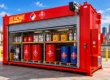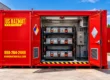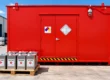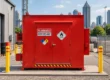
If you are sourcing a lithium battery storage container Houston operations can actually use, the conversation starts with a problem most vendors skip entirely: lithium-ion batteries are not straightforward to store, and the container you choose determines whether you are managing risk or multiplying it.
The energy density that makes lithium-ion batteries valuable in EV fleets, industrial equipment, and grid storage applications is the same property that makes thermal runaway a genuine storage hazard, not a theoretical one. Getting the right enclosure in place before inventory scales up is not a precaution. It is how responsible operations in the Houston energy corridor stay ahead of fire code and insurance requirements.
Houston brings its own set of variables to the storage equation. The Gulf Coast climate drives ambient temperatures and humidity levels that accelerate battery degradation in poorly controlled environments.
The density of petrochemical, refinery, and logistics operations in Harris County means that a lithium battery storage container Houston facilities deploy is likely to sit near other hazardous chemical inventories, which raises the incompatibility management question alongside the battery-specific fire risk.
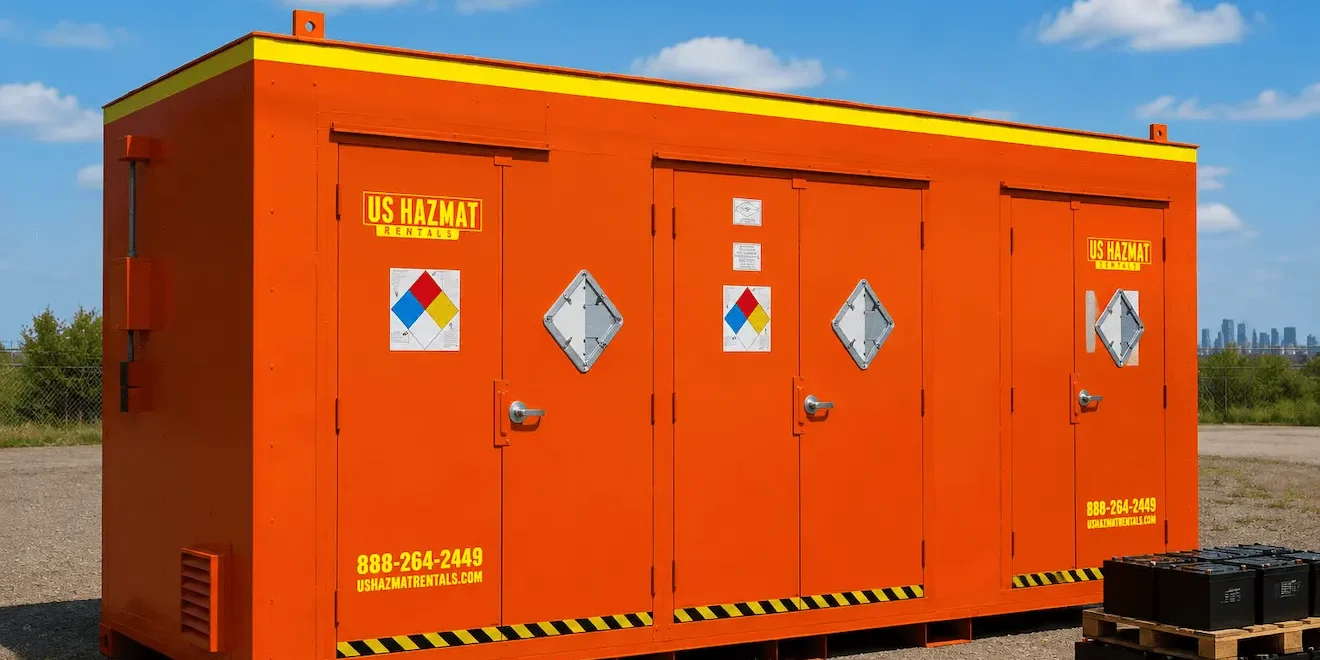
At US Hazmat Rentals, we work with Houston-area EHS managers, project managers, and operations leads who are scaling lithium battery programs without the lead time a permanent construction project requires. A rentable, code-aligned lithium battery storage container Houston teams can deploy in days is a materially different proposition than a six-month capital project, and the compliance outcome does not have to be different.
What a Lithium Battery Storage Container Houston Actually Needs to Do
The functional requirements for a lithium battery storage container Houston operations should specify go beyond keeping batteries dry and locked up. At minimum, the enclosure needs to manage thermal exposure, provide mechanical protection against external fire, enable adequate ventilation to exhaust gases released during charging or a degrading cell event, and maintain physical separation between battery inventory and any incompatible chemicals in the same site.
Thermal management is the starting point. Elevated ambient temperature accelerates cell degradation and lowers the thermal runaway threshold, which is the point at which a failing cell generates enough heat to propagate failure through adjacent cells. In Houston’s summer conditions, an uncontrolled storage environment can push battery packs well past recommended storage temperature ranges without any electrical fault occurring.
Climate control inside the container is not a premium option for Houston deployments. It is a baseline requirement. Ventilation serves a parallel function. A battery in a degraded state or under charge can vent hydrogen fluoride and other toxic gases before any visible fire event. The container needs air exchange rates sufficient to prevent accumulation of those gases to dangerous concentrations.
That design requirement derives from NFPA 855, the Standard for the Installation of Stationary Energy Storage Systems, and is independent of whatever fire rating the enclosure carries. Meeting ventilation requirements for a lithium battery storage container Houston sites is a design question that has to be answered before placement, not after an incident.
Why Houston’s Industrial Context Changes the Storage Specification
Houston’s energy and petrochemical sector creates storage environments where lithium battery inventory is rarely the only regulated material on site. Battery-powered forklifts, ground support equipment, or mobile power systems often share storage areas with hydraulic fluids, cleaning solvents, and industrial acids.
The question of chemical compatibility is not academic when a hydrochloric acid storage container sits within the same facility footprint as a lithium battery charging area. Hydrochloric acid vapors in contact with battery components or electrolyte residue create a corrosion and reaction hazard that has nothing to do with thermal runaway but everything to do with why segregation requirements exist.
Harris County and the City of Houston operate under the International Fire Code with local amendments. The Houston Fire Department enforces storage requirements for both hazardous materials and energy storage systems, and the AHJ review for a lithium battery storage container Houston facilities submit will factor in what else is stored on the site.
The aggregate battery capacity in kilowatt-hours, and whether the installation falls under NFPA 855 thresholds that trigger additional engineered system requirements. Knowing those thresholds before you source a container is not optional planning. It is how you avoid arriving at an AHJ review with a unit that fails on paper before it is ever placed.
The petrochemical maintenance and turnaround market in Houston also means that battery storage needs frequently arise on short timelines. A contractor mobilizing a battery-powered tool fleet for a refinery shutdown does not have six months to commission a permanent installation.
Thermal Runaway: What the Storage Container Needs to Contain
Thermal runaway is the failure mode that drives the most significant structural requirements for a lithium battery storage container Houston or anywhere else. When a lithium-ion cell enters thermal runaway, it generates heat rapidly and can sustain temperatures well above what standard steel enclosures are rated to contain.
A cell in thermal runaway can reach temperatures between 500 and 900 degrees Celsius depending on chemistry and state of charge. The container needs to limit fire spread between cells, contain the thermal event long enough for suppression systems to engage or for personnel to evacuate, and prevent fire from propagating to adjacent structures or chemical storage.
Fire-rated construction is the primary engineering response to that requirement. A two-hour or four-hour fire-rated enclosure provides the thermal barrier needed to contain a battery fire for a defined period. The fire rating is not a guarantee that the container survives intact. It is a time-based performance standard that gives emergency responders a defined window to engage. In a Houston industrial setting where response times from the nearest fire station can vary significantly depending on facility location within Harris County, a four-hour rating provides more meaningful protection than a two-hour rating for high-capacity battery storage.
Suppression system integration is the next layer. Lithium-ion battery fires resist conventional water suppression because the electrochemical reaction can continue even when cells appear extinguished. Suppression systems for battery storage are engineered to manage heat and prevent re-ignition rather than simply extinguishing the visible flame.
Milvan vs. Purpose-Built: Why the Container Type Determines the Outcome
A milvan, or military-spec container, and a standard ISO shipping container are sometimes proposed as low-cost alternatives for lithium battery storage. The logic is understandable: they are durable, widely available in the Houston market, and inexpensive compared to purpose-built hazardous storage enclosures.
The problem is that neither milvan nor standard ISO container meets the structural, ventilation, fire rating, or suppression-readiness requirements that a purpose-built lithium battery storage container Houston operations actually need under NFPA 855 and the IFC.
A milvan is steel construction without fire-rated wall assemblies, without integrated secondary containment, without designed ventilation pathways, and without suppression system mounting provisions. Placing lithium batteries in a milvan and calling it a storage solution creates the appearance of organization without the engineering substance that an AHJ review or an insurance carrier inspection requires.
For a contractor on a Houston refinery site, that distinction matters at the worst possible moment: during a loss event when the insurer examines what storage infrastructure was actually in place. Purpose-built enclosures designed for energy storage and hazardous chemical containment are built to a different standard from the ground up.
Fire-rated wall assemblies, designed ventilation rates, suppression-ready configurations, secondary containment sumps, and code-aligned electrical systems are engineering features, not accessories. When a lithium battery storage container Houston project specifies a purpose-built unit, the AHJ review is a documentation exercise. When it specifies a modified milvan, the AHJ review becomes a negotiation that may not go the project’s way.
Common Mistakes That Get Houston Facilities Cited
The most common compliance mistake for lithium battery storage is not a wrong container choice. It is a wrong placement decision. Facilities frequently store batteries in areas designated for other materials, placing battery packs near chemical storage without reviewing segregation requirements, or leaving charging equipment in spaces not designed for the electrical load or the ventilation requirements that active charging creates.
Storing items on top of flammable cabinets is a documented source of citations that extends directly to battery storage. Facilities that stack battery packs, chargers, or associated equipment on or above flammable storage cabinets create a fire propagation pathway the cabinet’s fire rating was not designed to address.
The flammable cabinet protects its contents. It does not protect items placed above it from a battery fire originating at the same level or higher. Houston Fire Department inspectors cite this configuration regularly, and the required fix is dedicated, separated storage for each hazard class.
Aggregate capacity thresholds under NFPA 855 are another common miscalculation. Facilities that add battery inventory incrementally sometimes cross the thresholds that require engineered suppression systems or fire-rated construction without recognizing that the addition changed their compliance status.
A lithium battery storage container Houston sites should be specified with the total anticipated battery inventory in mind, not just the current quantity on hand. If the program is expected to grow, the container specification and the AHJ submission should account for the projected maximum capacity.
Rent vs. Buy for Houston Operations
The rent-versus-buy decision for a lithium battery storage container Houston operations evaluate has clear logic in most cases. Purpose-built battery storage enclosures carry significant upfront costs, require site-specific engineering and permitting, and take months to commission.
For operations that need compliant storage in weeks, that timeline does not work. For operations with uncertain long-term battery inventory requirements, locking capital into a fixed asset that may need modification as the program evolves is a risk that rental avoids entirely.
Renting also compresses the timeline for AHJ approval. A pre-engineered, purpose-built rental unit with documented fire ratings, ventilation specifications, and suppression-readiness data gives the Houston Fire Department something to review on day one.
A modified container or custom build requires the AHJ to evaluate engineering documentation that may be incomplete or inconsistent. That difference in documentation quality translates directly into approval speed, which matters when a project has a fixed mobilization date.
If your Houston facility is scaling a battery program, responding to a new insurance requirement, or mobilizing for a project with a fixed end date, a rental unit lets you match the storage commitment to the operational timeline rather than the reverse.
The full cost and flexibility case for renting hazmat storage is covered at our Why Rent page. For a lithium battery storage container Houston teams need before the next order cycle, the unit is available now and ready to ship.
Getting the Right Container in Place Before It Matters
A lithium battery storage container Houston project teams specify correctly from the start becomes an operational asset. One specified incorrectly becomes a liability the first time a fire marshal walks the site or an incident puts an insurance carrier’s loss assessment team on the premises. The difference is whether the storage infrastructure was engineered for the hazard it actually contains.
Houston’s industrial density, Gulf Coast climate, and active AHJ enforcement environment make storage decisions more consequential here than in many other markets. The time to evaluate the specification is before deployment.
US Hazmat Rentals has purpose-built units available now, with documented compliance credentials and configuration options matched to your specific battery inventory and site conditions. Speak with an expert about your requirements and get the right unit in place before the next order cycle. Reserve your unit today.
FAQ
What makes a lithium battery storage container Houston compliant under current code?
A compliant lithium battery storage container Houston facilities deploy needs to meet NFPA 855 requirements for energy storage systems, which include fire-rated construction above certain capacity thresholds, adequate ventilation for off-gas management, and suppression system provisions.
Can a standard shipping container or milvan be used for lithium battery storage in Houston?
Standard ISO containers and milvans do not meet the structural, ventilation, fire-rating, or suppression-readiness requirements for compliant lithium battery storage container Houston projects under NFPA 855 and the IFC.
What is thermal runaway and how does it affect the storage container specification?
Thermal runaway is a self-sustaining exothermic reaction in a lithium-ion cell that can reach temperatures between 500 and 900 degrees Celsius.
Does Houston’s climate affect lithium battery storage requirements?
Yes. Elevated ambient temperatures in Houston accelerate cell degradation and lower the thermal runaway threshold. A lithium battery storage container Houston sites use without climate control creates conditions that increase battery failure risk during summer months without any electrical fault occurring.
How does a hydrochloric acid storage container near battery storage affect compliance?
Hydrochloric acid vapors in proximity to lithium battery storage create a corrosion hazard for battery components and electrolyte residue. The IFC and OSHA segregation requirements apply independent of battery fire risk.
Is it a violation to store items on top of flammable cabinets near battery storage?
Yes. Storing items on top of flammable cabinets, including battery packs or charging equipment, creates a fire propagation pathway the cabinet’s fire rating was not designed to address. The Houston Fire Department cites this configuration regularly.