Contact Us

When a Shelby County inspector walks in, the compliance gaps that get picked up on the quickest are often not the most obvious. Choosing the right chemical safety cabinet in Memphis is a code driven purchase and it’s going to be the one that ultimately determines whether your flammable or hazardous liquid inventory is actually stored in accordance with the code, properly documented and defensible should the next inspector come along and ask to see your records.
Memphis and Shelby County have a very broad range of manufacturing, chemical processing, logistics and industrial services operations and the chemicals handled at those sites cover the full range from flammables, corrosives, oxidisers to all manner of specialty chemicals at every scale of operation.
What any chemical safety cabinet in Memphis needs to satisfy will vary from one situation to another depending on the chemicals in question, the quantities on site, the construction class of the building and whether or not the AHJ has previously issued any correction notices. The two regulatory codes that apply to the storage of chemicals indoors are OSHA 29 CFR 1910.106 (for flammable and combustible liquids) and NFPA 30 (the Flammable and Combustible Liquids Code).
For EHS managers and safety officers working to a deadline on an inspection or in response to a correction notice the selection process has to be faster and more targeted than a standard procurement exercise. US Hazmat Rentals work with a wide range of industrial and chemical handling facilities throughout the Mid-South to find the right compliant storage solution for each site based on its particular chemical inventory, footprint and regulatory time frame.
What OSHA 1910.106 and NFPA 30 Require for a Chemical Safety Cabinet in Memphis
The federal standard for flammable liquid storage is the foundational regulatory document for any chemical safety cabinet in Memphis used to hold Class I, Class II, or Class III liquids. The standard specifies that a compliant cabinet must limit its internal temperature rise to no more than 325°F under a 10-minute fire exposure test.
Construction requirements include double-walled steel with a minimum 1.5-inch air space between walls, a bottom sill height of at least two inches to contain incidental spills, self-closing and latching doors on each opening, and an external grounding connection point for static dissipation during liquid transfer operations.
Cabinet Quantity Limits and Placement Rules
OSHA 1910.106(d)(3)(i) limits the amount stored in a single safety cabinet to 60 gallons of Class I and Class II flammable liquids combined or 120 gallons of Class III combustible liquids. More than three such cabinets may not be located in a single fire area unless the building is provided with an approved automatic fire suppression system.
Cabinet placement must provide the required clearances from exits, electrical panels, open flame sources and heat generating equipment as per the minimum clearances specified in NFPA 30 Chapter 9. Cabinets placed in adjacent positions must be separated by a distance which will prevent fire in one cabinet from transferring to the other within the fire rating period.
Shelby County AHJ and Tennessee State Fire Marshal Expectations
Memphis facilities are subject to both TOSHA enforcement and inspection by the Shelby County Fire Prevention Division, which adopts the International Fire Code and cross-references NFPA 30 during cabinet placement reviews.
During plan review or occupancy inspection, compliance officers verify that each chemical safety cabinet in Memphis installation includes posted signage identifying the chemical contents and flammable hazard class, that cabinet placement does not reduce aisle width below minimum egress clearance requirements, and that the total flammable liquid quantity in the fire zone does not exceed the limits established under NFPA 30.
Evaluating a Chemical Safety Cabinet in Memphis: Technical Parameters
Before selecting a chemical safety cabinet in Memphis for a facility that may face a TOSHA audit or Shelby County plan review, the first question is whether the unit carries FM Approval from Factory Mutual or a UL listing, or whether it carries only the manufacturer’s own compliance label without independent third-party verification.
FM-approved cabinets have been tested under fire exposure conditions by an independent certification body and carry documented performance data that holds up in plan reviews, correction notice responses, and OSHA audits.
OSHA’s standard interpretation on flammable cabinet construction confirms that the fire-resistance requirement under 1910.106(d)(3)(ii) is performance-based rather than material-based, which means that a self-certified chemical safety cabinet in Memphis may meet stated dimensional specifications without having been tested to confirm actual fire-resistance performance under realistic conditions.
Ventilation, Grounding, and Secondary Containment
Proper ventilation of a chemical safety cabinet in Memphis installation depends on the volatility of the chemicals stored inside and the proximity of ignition sources within the same space. NFPA 30 does not require ventilation for a cabinet used only for storage, provided that the vent bungs remain sealed.
When a cabinet is vented to the exterior, the vent connection must maintain the unit’s fire rating through an approved fire damper, and the discharge point must be located away from occupied areas, air intakes, electrical panels, and any heat source that could ignite vapors at the vent outlet.
Grounding and bonding are required any time liquid transfer operations occur at or near the cabinet. EHS managers should confirm that cabinets selected for active dispensing use include a marked grounding connection and that bonding procedures are documented in the facility’s written hazard control program and available for review during an inspection.
When a Single Cabinet Is Not Enough
When a facility’s chemical inventory exceeds the quantity limits in OSHA 1910.106, when incompatible categories such as oxidizers and flammables require physical segregation beyond what separate cabinets in the same room can provide or when building codes prohibit indoor quantities above a threshold for the occupancy class, the solution moves to a segmented storage program that includes chemical drums, dedicated storage rooms, or outdoor-rated structures engineered for the chemical class involved.
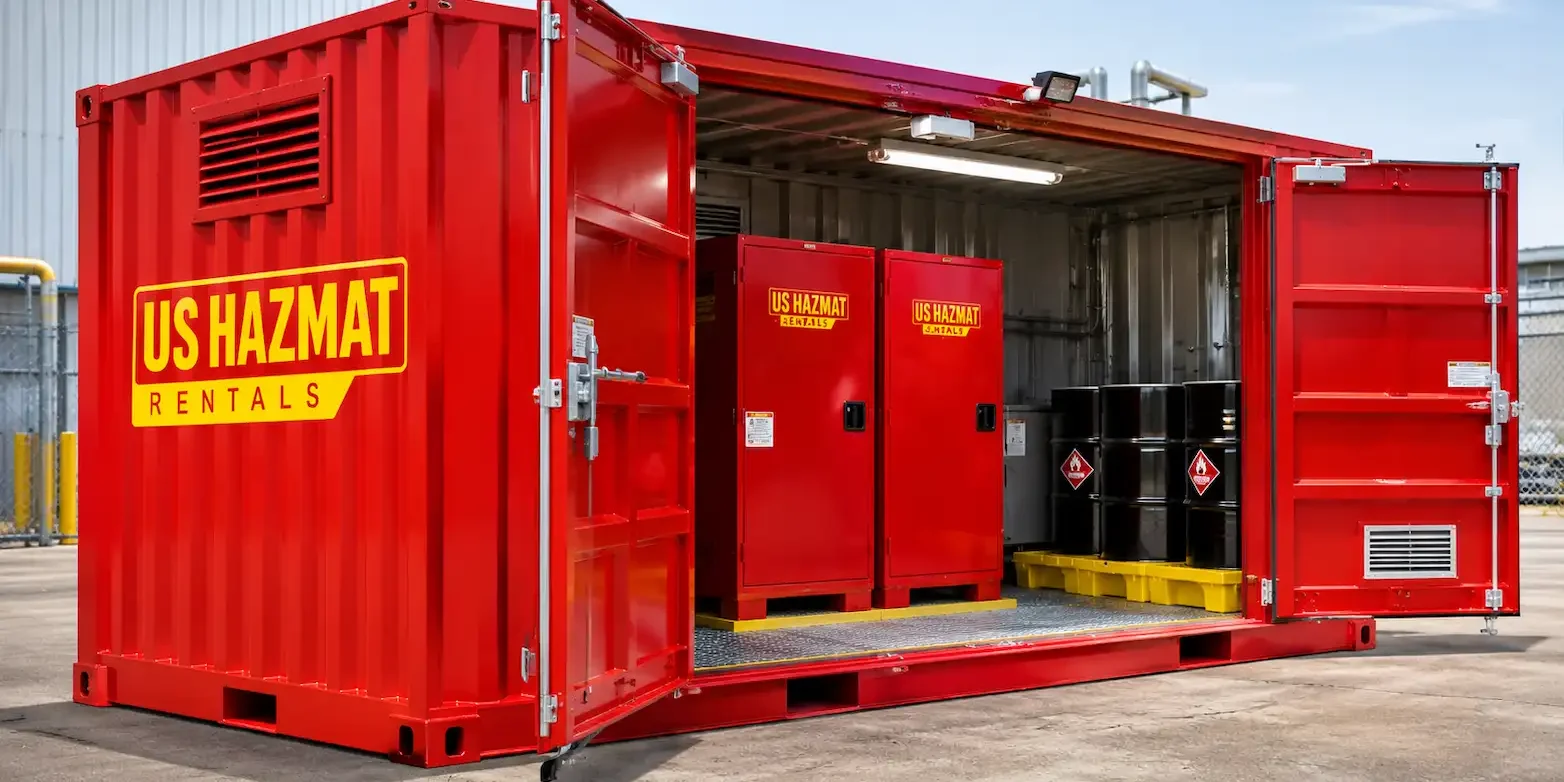
US Hazmat Rentals carries a full range of flammable liquid storage cabinets configured to FM approval standards and sized for the quantity levels most common in Mid-South industrial operations. See live inventory and request pricing now.
Chemical Drum Storage and Outdoor Options for Memphis Industrial Facilities
When chemical inventories outgrow what any chemical safety cabinet in Memphis is rated to hold, the transition typically leads to chemical drum containment programs or outdoor hazmat storage lockers. A chemical drum stored in a compliant secondary containment enclosure allows larger bulk quantities to remain on-site within a legal storage configuration, with the 55-gallon drum serving as the primary container and the enclosure managing any release volume.
This is the standard configuration for petroleum solvents, industrial cleaners in bulk volumes, and pool chemical inventories at commercial and municipal facilities operating in the Memphis area.
Outdoor storage for pool chemicals presents a specific incompatibility challenge: chlorine-based oxidizers must be physically separated from flammables, not simply placed in adjacent cabinets in the same room. An outdoor storage locker dedicated to pool chemical inventory eliminates that incompatibility risk while keeping the material accessible and in a structure designed for the chemical class.
Memphis summer temperatures and the Mississippi River watershed stormwater requirements add additional siting considerations that make a dedicated outdoor structure the more defensible configuration for oxidizer inventories above a threshold quantity.
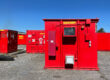
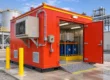
US Hazmat Rentals provides outdoor chemical storage lockers for facilities that need drum-scale segregated storage beyond what an indoor cabinet program can support. Talk to a specialist to match the right outdoor structure to your chemical class and site requirements.
Documenting a Chemical Safety Cabinet in Memphis Before an Inspection
An EHS manager who has selected and installed the right chemical safety cabinet in Memphis still carries a documentation requirement that runs in parallel to the physical installation. OSHA 1910.106 and NFPA 30 require that inspection records, maintenance logs, and chemical inventory data be accessible during an audit.
The cabinet’s FM approval certificate or UL listing documentation should be retained on-site, not discarded with the original packaging, and quantity totals for the fire zone should be captured in a current chemical inventory sheet that reflects the actual contents at any given inspection date.
Shelby County plan review submissions for new cabinet installations typically require cabinet specifications, placement drawings with dimension callouts to exits and electrical panels, and a confirmed quantity total showing that the fire zone does not exceed NFPA 30 limits.
Any chemical safety cabinet in Memphis deployed in response to a prior correction notice carries an accelerated documentation burden: the correction closure submission must include the installation record and the supporting compliance documentation together in a single package, submitted within the timeframe the inspector specified in the original notice.
The Right Chemical Safety Cabinet in Memphis Starts With the Right Supplier
Every chemical safety cabinet in Memphis decision carries a compliance consequence that arrives before, during, or after the next AHJ inspection. Getting the cabinet specification right, the placement documented, and the inventory limits verified is work that an EHS manager cannot compress without risk.
A supplier who can deliver a certified, compliant unit with documentation support reduces the inspection preparation window from weeks to days and positions the facility to close correction notices rather than accumulate them.
Request a quote from US Hazmat Rentals and get the right cabinet for your Memphis facility before your next inspection. Our team serves industrial and chemical handling facilities across Memphis, TN and the Mid-South with compliant storage solutions, delivery scheduling, and documentation support.
FAQ
What OSHA standard governs chemical safety cabinet requirements in Memphis?
OSHA 29 CFR 1910.106 is the federal standard that governs indoor storage of flammable and combustible liquids, including the construction and quantity requirements for safety cabinets. Memphis facilities are subject to enforcement by the Tennessee Occupational Safety and Health Administration (TOSHA) under a state plan approved by federal OSHA, and TOSHA inspectors apply the same 1910.106 standards as federal compliance officers.
How many gallons can a chemical safety cabinet hold under OSHA 1910.106?
OSHA 1910.106(d)(3)(i) limits a single safety cabinet to no more than 60 gallons of Class I and Class II flammable liquids combined, or 120 gallons of Class III combustible liquids. No more than three cabinets may be in the same fire area unless an approved automatic fire suppression system protects that area.
Does a chemical safety cabinet in Memphis need to be vented?
NFPA 30 does not require ventilation of a chemical safety cabinet used for storage only, provided the vent bungs remain sealed. When a cabinet is vented to the exterior, the vent connection must maintain the cabinet’s fire rating through an approved damper, and the discharge point must be located away from occupied areas, air intakes, and ignition sources.
What is the difference between an FM-approved cabinet and a self-certified one?
FM-approved cabinets have been independently tested and listed under fire exposure conditions by Factory Mutual Research. Self-certified cabinets are labeled as compliant by the manufacturer without independent test validation. During an OSHA audit or Shelby County AHJ review, FM-approved or UL-listed cabinets provide documented fire-resistance performance data that self-certified units cannot supply.
When does a facility need more than a chemical safety cabinet in Memphis?
When a facility’s chemical inventory exceeds the quantity limits in OSHA 1910.106, when incompatible chemical categories require physical segregation beyond what separate cabinets in the same room can provide, or when chemicals must be stored outdoors due to building occupancy restrictions or quantity thresholds, the solution expands to outdoor drum lockers, chemical storage buildings, or dedicated hazmat rooms rated for the specific chemical class involved.