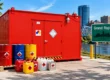

When a facility stores chemicals in IBC totes, one weak valve, damaged fitting, forklift impact, or weather-exposed container can turn a normal workday into a spill response problem. That is why secondary spill containment should be treated as part of the storage plan from the beginning, not as an accessory added after the first leak.
IBCs make bulk chemical storage more efficient because they allow facilities to handle larger volumes with fewer individual containers. The tradeoff is direct: one failed tote can release enough material to affect drains, walkways, soil, equipment, and active work areas if the site is not prepared.
For project managers, EHS teams, logistics managers, contractors, and manufacturing crews, the real question is not whether an IBC is convenient. It is whether the site is ready if that IBC fails.
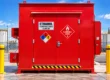
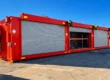
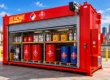
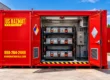
US Hazmat Rentals supports that need with IBC tote container storage options built for temporary and project-based operations. Their rental lockers include fire-rated and non-fire-rated configurations, large roll-up doors, forklift-friendly access, ramps, shelving, push-back racking, and layouts designed for totes, pallets, and drums.
Why Secondary Spill Containment Matters for IBC Storage
Secondary spill containment is the backup system that keeps a leak, rupture, overfill, or discharge from spreading beyond the storage area. With IBC totes, that backup matters because each container can hold a large volume of liquid.
EPA guidance under the SPCC rule states that bulk storage container installations must provide containment for the capacity of the largest single container, plus enough freeboard for precipitation. That point is especially important for outdoor or semi-exposed storage where rainwater can reduce available containment volume.
Even when a project is not covered by SPCC, the same logic still applies. A tote failure is easier to manage when the product stays inside a controlled containment area. It becomes harder, slower, and more expensive when liquid reaches a storm drain, gravel pad, loading lane, or nearby work zone.
For rental projects, containment also protects timelines. A spill can stop work, trigger reporting, require cleanup contractors, delay inspections, or force a site to redesign storage mid-project. Containment is not only a compliance issue. It is a schedule protection tool.
The IBC Risk Profile Is Different from Drum Storage
A 55-gallon drum can create a serious spill. An IBC tote can create a much larger release in less time. That changes how facilities should think about containment capacity, access, inspections, and emergency response.
The larger volume creates a different planning problem. If several totes are grouped together, the storage area needs more than a small drip tray or basic housekeeping plan. It needs a containment system sized around the inventory, the material, the site exposure, and the way workers move around the area.
OSHA’s Safety Data Sheet guidance notes that SDS information includes precautions for safe handling and conditions for safe storage. For IBC tote storage, that means SDS review should help guide decisions about compatibility, temperature, ventilation, cleanup methods, and protective equipment.
A facility should never treat all IBCs the same. Water-based materials, solvents, oils, corrosives, flammable liquids, and waste streams can require different storage logic. The tote may look similar from the outside, but the hazard profile may be completely different.
How Secondary Spill Containment Supports Compliance
Secondary spill containment helps facilities create a more defensible storage system. It shows that the site has considered what happens if the primary container fails. That matters during internal audits, client safety reviews, regulator visits, insurance inspections, and project closeout.
EPA’s hazardous waste generator guidance explains that hazardous waste must be managed according to applicable generator requirements, including standards tied to containers and accumulation. Facilities handling hazardous waste in totes should review their generator category and applicable storage duties before assuming a temporary setup is enough.
Containment does not make a site automatically compliant. It has to work with proper labeling, closed containers, chemical compatibility, employee training, inspection routines, spill response materials, and documentation.
For project-based operations, rental containment can make this easier. Instead of building a permanent pad, ordering custom steel, or modifying a container after the fact, teams can rent a purpose-built IBC storage unit with containment already integrated into the design.
What a Good IBC Containment Setup Should Include
A good containment setup is matched to the material, tote size, volume, location, access needs, and rental duration. A temporary construction site does not have the same workflow as a manufacturing plant expansion or environmental remediation project.
A strong IBC containment setup usually includes:
- A sump or containment area sized for the largest container
- Freeboard planning for rain when storage is outdoors
- A stable floor or support structure for loaded totes
- Forklift or pallet jack access without container damage
- Clear separation between incompatible chemicals
- Weather protection when required by the material
- Ventilation or fire-rated construction when chemicals require it
- Accessible inspection points for leaks, corrosion, or pooling
- Spill kits and PPE near the storage area
- Documentation for inspections and maintenance
US Hazmat Rentals’ IBC tote storage page describes fire-rated and non-fire-rated lockers, large access bays, roll-up doors, ramps, shelving, push-back racking, and single or double-depth capacity options. Those details matter because containment only works if workers can load, inspect, and remove totes without creating new risks.
Rental Storage vs. Permanent Containment Construction
Permanent containment has its place, especially in fixed facilities with long-term storage needs. But many projects do not need a permanent containment asset. They need fast, compliant, temporary, scalable IBC storage that can be removed or relocated when the work changes.
For remediation projects, seasonal operations, plant upgrades, utility work, emergency response, and temporary production surges, rental containment is often the better operational fit.
| Factor | Rental IBC Storage with Containment | Permanent Containment Construction |
| Deployment | Faster for urgent or temporary needs | Slower due to design, permitting, and construction |
| Cost model | Project-based operating expense | Larger upfront capital expense |
| Flexibility | Can be removed or relocated | Fixed to one site |
| Best fit | Temporary, seasonal, mobile, or uncertain needs | Long-term fixed chemical storage |
| Containment | Integrated into rental unit or locker | Built into pad, room, or permanent structure |
| Project closeout | Unit can be returned | May require ongoing maintenance or decommissioning |
This is where secondary spill containment becomes more than a safety feature. It becomes a practical rental advantage. The project gets the containment it needs without turning a temporary storage problem into a permanent construction commitment.
Common Mistakes Facilities Make with IBC Spill Containment
Most containment failures start with a layout decision that looked harmless at first. A tote is placed on a pallet outside. A sump is too small. Rainwater fills the containment area. A forklift route passes too close to the valve. Incompatible materials are grouped together because they fit in the same bay.
Common mistakes include:
- Sizing containment by floor space instead of tote volume
- Forgetting freeboard for outdoor rain exposure
- Blocking inspection access with extra pallets or equipment
- Using damaged or unsupported totes
- Mixing incompatible chemicals in the same containment area
- Leaving valves exposed to forklift traffic
- Treating spill pallets as permanent storage buildings
- Failing to document routine inspections
- Not keeping spill kits near the IBC storage area
- Assuming rented equipment removes site responsibility
The fix is not complicated, but it has to be deliberate. Build the storage layout around the largest credible release, the movement of equipment, and the people who have to inspect the area every day.
When Your Facility Should Rent IBC Containment Storage
A rental IBC containment solution makes sense when speed, flexibility, and risk control matter more than owning permanent infrastructure. It is especially useful when the project timeline is defined, the location may change, or the facility needs extra compliant capacity without disrupting existing operations.
Facilities should consider rental storage when:
- A project needs bulk chemical storage quickly
- Existing containment capacity is full
- A shutdown or expansion changes material flow
- Outdoor storage needs better weather and spill protection
- A remediation project generates temporary hazardous waste
- Seasonal demand increases chemical inventory
- A jobsite must store totes away from active traffic
- Permanent construction would take too long or cost too much
In these situations, secondary spill containment helps keep bulk materials organized, accessible, and isolated from the surrounding site. It also gives project teams a clearer path to safer storage while longer-term decisions are being made.
Build Containment Around the Project, Not After the Spill
IBC totes are useful because they simplify bulk chemical handling. But the larger the container, the more important the backup plan becomes. Secondary spill containment gives that backup plan a physical structure: a place for liquid to go, a boundary that protects the site, and a safer starting point for response.
For temporary, project-based, or high-volume storage needs, US Hazmat Rentals helps teams match IBC tote containers with rental storage buildings designed around containment, access, fire rating, ventilation, and site logistics. The right rental unit can protect the schedule, reduce spill exposure, and support safer chemical handling without forcing a permanent build.
If your facility is adding IBC totes, expanding storage, or managing temporary bulk chemicals, now is the right time to review containment before the first shipment arrives. A properly selected rental solution can turn containment from a last-minute concern into a controlled part of the project plan.
FAQ
What is secondary spill containment for IBCs?
It is a backup system designed to hold liquid if an IBC tote leaks, ruptures, overfills, or fails.
Do all IBC totes need secondary containment?
Requirements depend on material, volume, location, and regulations. Many facilities use containment as a best practice when rules vary.
How much containment capacity does an IBC need?
For SPCC-covered oil storage, EPA requires capacity for the largest container plus freeboard for precipitation.
Can IBC tote storage be rented?
Yes. US Hazmat Rentals offers rental IBC storage options with fire-rated and non-fire-rated configurations for project-based needs.
Is a spill pallet enough for IBC storage?
Sometimes, but not always. Larger inventories, outdoor exposure, fire risks, or forklift workflows may require a more complete unit.