
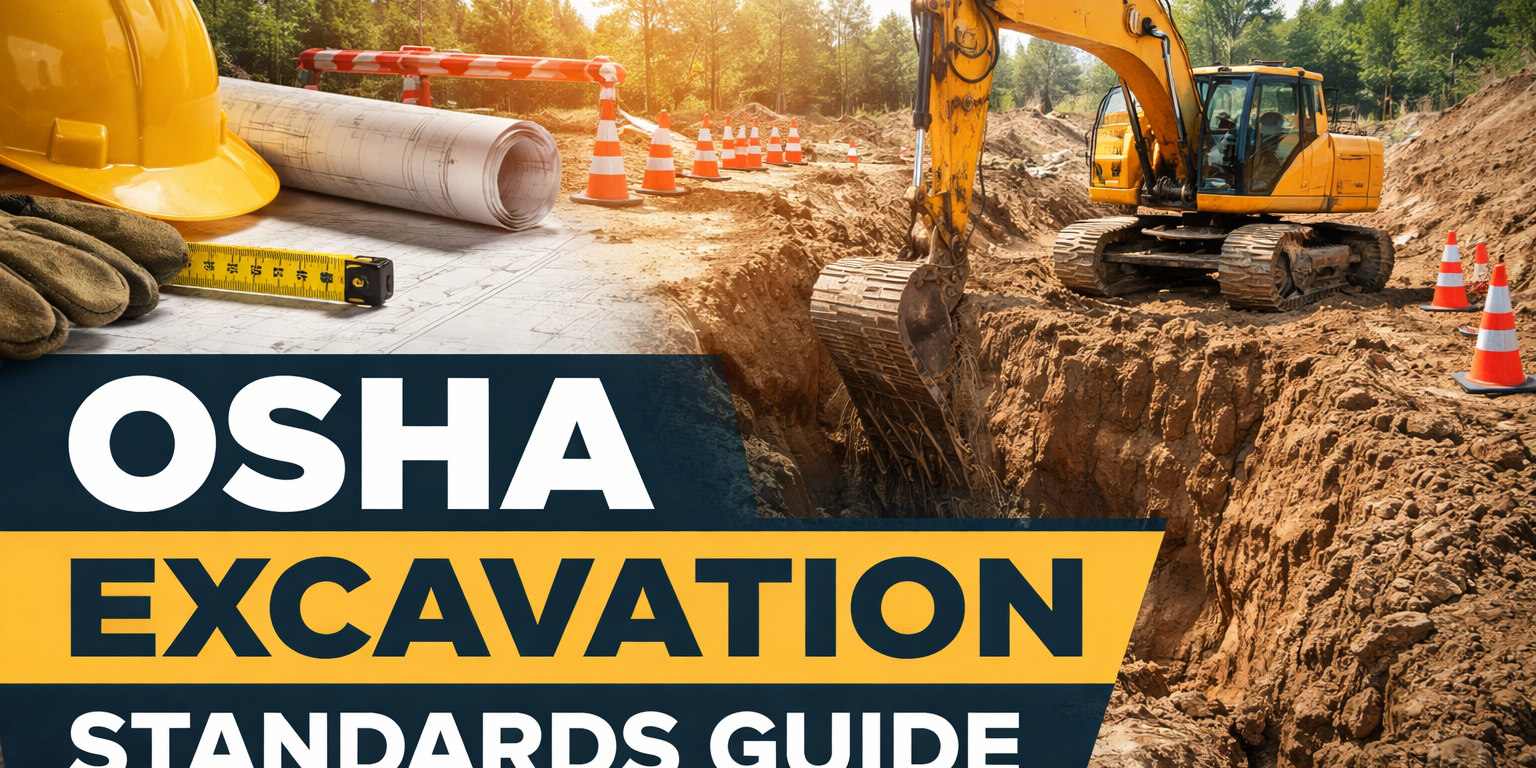
Excavation work is among the most hazardous operations in the construction industry. According to the Occupational Safety and Health Administration (OSHA), excavation-related accidents are preventable but consistently rank among the leading causes of worker injuries and fatalities. Understanding OSHA excavation standards is critical for safety managers, site supervisors, and construction workers alike. This comprehensive guide provides a detailed overview of OSHA regulations, best practices, and practical tips to maintain compliance and protect your team.
What Are Excavation Hazards?
Excavation refers to any man-made cut, cavity, trench, or depression formed by earth removal. Despite appearing straightforward, excavation work carries significant risks. Common hazards include:
- Cave-ins: The most dangerous excavation hazard, accounting for most fatalities. Soil collapses can trap workers within seconds.
- Falls: Workers can fall into trenches or excavated areas, especially if proper barriers are not installed.
- Falling loads: Equipment, tools, or materials can fall into trenches, causing injuries.
- Hazardous atmospheres: Oxygen deficiency or toxic gases may accumulate in deep excavations.
- Water accumulation: Rain or groundwater can destabilize trench walls, increasing the risk of collapse.
Understanding these hazards is the first step toward complying with OSHA excavation standards and implementing effective safety measures.
Overview of OSHA Excavation Standards
OSHA regulates excavation safety under 29 CFR Part 1926, Subpart P – Excavations. These regulations establish requirements for:
- Protective systems
- Access and egress
- Soil classification
- Hazard assessment
- Inspections and monitoring
Compliance ensures both legal adherence and the safety of personnel working on-site.
Key OSHA Excavation Requirements:
- Protective Systems
OSHA mandates protective systems for excavations deeper than 5 feet unless the excavation is in stable rock. Protective systems include:
- Sloping: Cutting back the trench wall at an angle to prevent collapse.
- Shoring: Using supports such as hydraulic or timber braces to hold trench walls.
- Shielding: Employing trench boxes or other structures to protect workers from cave-ins.
- Sloping: Cutting back the trench wall at an angle to prevent collapse.
- Soil Classification
Proper identification of soil type is critical. OSHA classifies soil into:
- Type A: Cohesive soil with high stability.
- Type B: Medium stability soils, including angular gravel and silt.
- Type C: Least stable soils such as sand, loam, or submerged soils.
- Type A: Cohesive soil with high stability.
- Each type requires different protective strategies to mitigate cave-in risks.
- Access and Egress
Excavations 4 feet deep or more must have safe means of entry and exit, such as ladders, steps, or ramps. OSHA specifies that these access points must be within 25 feet of workers. - Inspections
A competent person must inspect excavations daily and after rainstorms or any event that could affect stability. A competent person is defined as someone capable of identifying hazards and authorized to take corrective action. - Hazard Awareness
Workers must be trained to recognize hazards such as:
- Underground utilities
- Heavy equipment movement
- Water accumulation and soil erosion
- Underground utilities
- OSHA requires that warning systems and barriers be in place to protect workers and the public.
Best Practices for Excavation Safety
Beyond compliance, following industry best practices ensures safer worksites and operational efficiency.
1. Conduct a Pre-Excavation Assessment
Before digging, evaluate the site for:
- Soil type and condition
- Proximity to buildings or infrastructure
- Potential underground utilities
Use utility maps, ground-penetrating radar, or calling 811 (in the U.S.) to mark utilities before excavation begins.
2. Implement Protective Systems
Based on soil type and excavation depth, select the appropriate protective method:
- Shoring for Type B or C soils
- Sloping in less cohesive soils
- Trench boxes for deeper trenches
Ensure that protective systems are installed and maintained correctly. Even minor deviations from OSHA standards can compromise safety.
3. Monitor Weather Conditions
Rain or groundwater can destabilize excavation walls. Inspect and reinforce trenches after weather events, and never allow standing water to accumulate.
4. Provide Worker Training
OSHA emphasizes the importance of training. Workers must:
- Understand soil classification
- Know proper protective systems
- Identify and report hazards
Training improves situational awareness, reducing the likelihood of accidents.
5. Maintain Clear Communication
Use signals, radios, or spotters to ensure heavy equipment operators and ground workers are aware of trench locations and personnel positions.
OSHA Excavation Standard Violations and Penalties
Non-compliance with OSHA excavation standards can result in serious penalties. Common violations include:
- Failing to provide protective systems
- Ignoring soil classification requirements
- Inadequate inspections or lack of a competent person
- Unsafe access and egress
Penalties can range from $14,000 to over $150,000 depending on the severity and nature of the violation. More importantly, non-compliance can result in severe injuries or fatalities, costing lives and project credibility.
Tools and Equipment for Safe Excavation
Investing in proper tools and equipment reduces risk:
- Trench boxes and shields for deeper excavations
- Hydraulic shoring systems for rapid installation
- High-visibility barriers to prevent falls
- Gas detectors for hazardous atmosphere monitoring
- Ladders and ramps within 25 feet of all workers
Choosing the right equipment based on OSHA standards and excavation conditions is critical for safe operations.
Real-World Examples of OSHA Excavation Compliance
- Construction Site Compliance
A major urban construction project in New York implemented daily inspections, protective shoring, and worker training. As a result, the site maintained zero cave-ins or injuries over two years, demonstrating the effectiveness of OSHA-compliant practices. - Preventing Utility Strikes
A contractor in California mapped underground utilities and marked all excavation areas. Workers were trained to recognize hazards. This prevented a potentially fatal gas line accident, highlighting the value of pre-excavation assessment.
Expert Tips for Maintaining OSHA Compliance
- Hire a Competent Person
Always designate a knowledgeable individual to monitor excavation conditions, train workers, and make immediate corrections. - Document Inspections
Maintain logs of daily inspections and any corrective actions taken. Documentation can protect your company in audits or legal situations. - Regularly Review OSHA Updates
OSHA standards may evolve, so keep up-to-date with changes, industry guidance, and state-specific regulations. - Invest in Continuous Training
Refresher courses and hands-on training sessions ensure workers stay vigilant and knowledgeable about evolving safety practices.
Conclusion
Excavation work is inherently risky, but OSHA standards provide a clear roadmap to ensure worker safety and regulatory compliance. By understanding soil types, employing protective systems, training workers, and maintaining vigilant oversight, construction teams can minimize accidents and save lives. Compliance is not just about avoiding fines, it’s about building a culture of safety where every worker returns home unharmed.
By following this OSHA Excavation Standards Guide, construction companies can not only meet legal obligations but also enhance operational efficiency, project reliability, and workforce confidence. Prioritizing safety is always the most profitable and ethical choice.