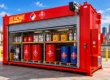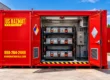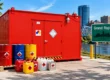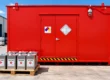
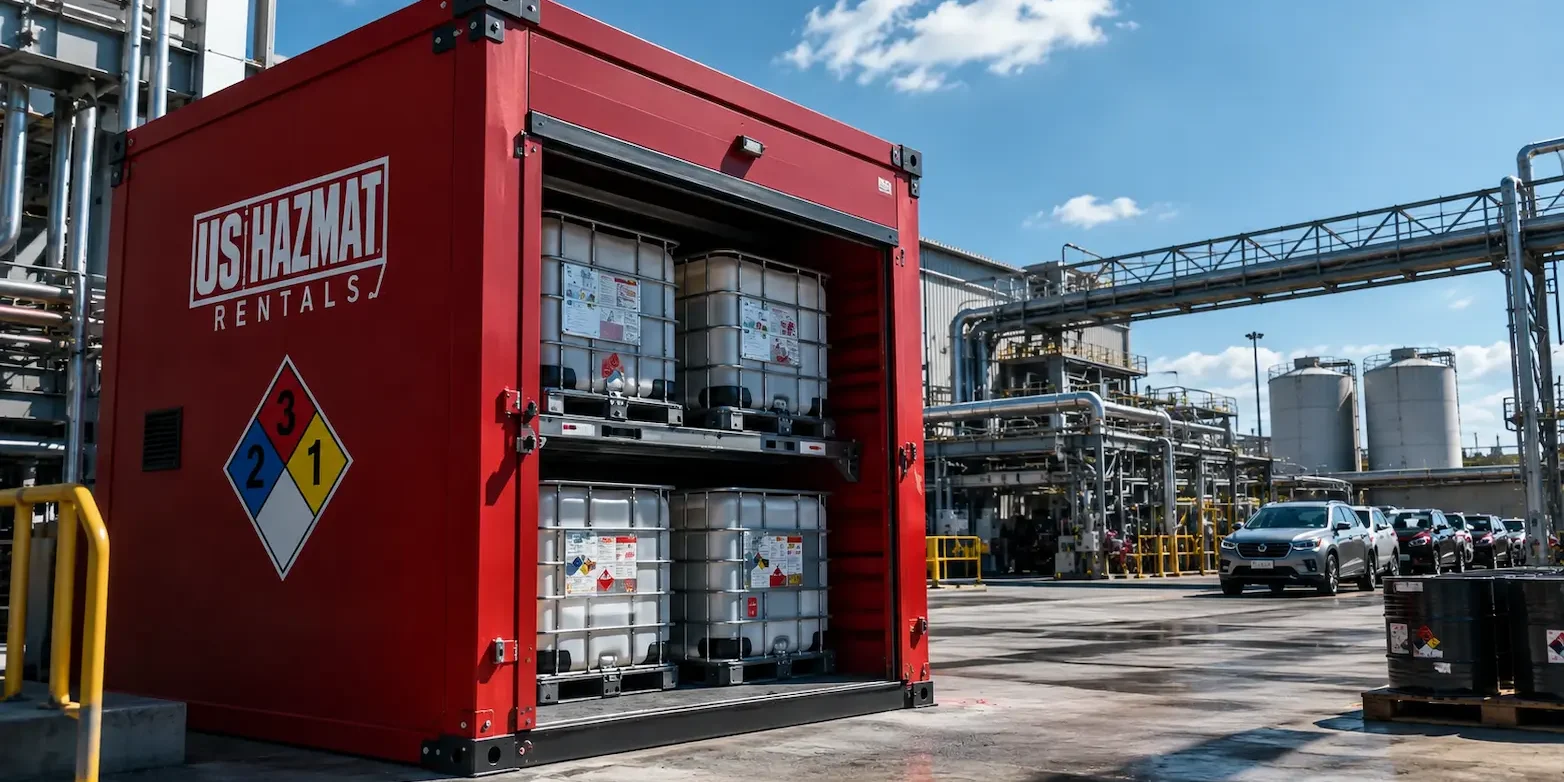
IBC storage becomes a serious safety and logistics issue when a Detroit automotive plant needs to manage chemicals at production scale. A single tote may seem simple enough when it is sitting on a warehouse floor. The real risk appears when multiple IBC totes move through receiving, staging, maintenance, production support, and waste-handling areas without a storage plan built around containment, access, compatibility, and daily workflow.
Detroit’s automotive environment does not leave much room for loose material management. Plants, suppliers, fabrication teams, maintenance contractors, coating operations, and parts manufacturers often work around lubricants, coolants, cleaners, solvents, additives, and other industrial liquids that need better control than an open corner of the facility can provide.
At US Hazmat Rentals, we support industrial teams that need temporary, project-based, or flexible chemical storage solutions. For automotive operations, IBC storage is not just about putting totes somewhere. It is about creating a safer, cleaner, easier-to-manage system around bulk chemical storage before spills, congestion, weather exposure, or access problems create avoidable risk.
IBC Storage Starts With the Reality of Automotive Scale
Automotive plants operate through movement. Materials arrive, forklifts circulate, production zones stay active, maintenance teams respond quickly, and contractors may enter the site for shutdowns, upgrades, repairs, or expansion work. In that environment, chemical storage has to fit the pace of the plant without weakening safety.
IBC storage helps organize larger liquid volumes in a format that industrial teams can recognize and manage. IBC totes are commonly used because they allow bulk liquids to be stored, moved, and dispensed more efficiently than smaller containers. That efficiency is useful, but it also increases the importance of containment and site planning.
A Detroit automotive facility may need IBC storage for:
- Lubricants and oils used in equipment support
- Coolants and process fluids
- Cleaning and degreasing chemicals
- Paint-related or coating-support materials
- Waste liquids awaiting proper handling
- Temporary materials during shutdowns or line changes
- Contractor-supplied chemicals for maintenance projects
The storage decision should account for more than volume. It should consider forklift routes, worker access, drainage, weather exposure, emergency response visibility, chemical compatibility, and whether the rental setup supports the actual work being done.
That is where a heavy-duty rental solution can help. It gives teams a clearer place to stage IBC totes while keeping spill containment, separation, and operational control in the conversation from the beginning.
Why Detroit Plants Need More Than Open-Floor Tote Staging
Open-floor tote staging may feel convenient at first. It is fast. It uses available space. It keeps materials close to the work. The problem is that convenience can disappear quickly once production traffic, weather, leaks, incompatible materials, or unclear responsibility enter the picture.
For large-scale automotive plants, IBC storage should help reduce confusion. Workers should know where totes belong, which materials are being staged, who has access, how spills would be contained, and whether the storage area creates unnecessary obstruction.
A weak tote staging setup can create problems such as:
- Containers placed too close to active traffic lanes
- No clear spill containment plan
- Totes stored near incompatible materials
- Poor visibility for labels and Safety Data Sheets
- Unclear separation between full, partial, and waste containers
- Weather exposure for outdoor staging
- Hard-to-defend documentation during internal review
- Slower emergency response because storage areas are not clearly defined
These issues are not just housekeeping concerns. They affect safety, uptime, environmental control, and inspection readiness.
US Hazmat Rentals approaches IBC storage as part of a working industrial system. The goal is not to complicate plant operations. The goal is to make chemical staging easier to understand, easier to manage, and easier to defend when safety leadership needs clear answers.
Bulk Chemical Storage Needs Containment Built Into the Plan
Bulk chemical storage carries a different level of responsibility than small-container storage. When one tote can hold a large amount of liquid, a leak or damaged valve can create a larger cleanup problem in less time. That is why spill containment should not be treated as an optional accessory after the storage location is chosen.
A better planning sequence starts with containment.
Before placing IBC totes, plant teams should ask:
- What liquid is being stored?
- Is the material hazardous, flammable, corrosive, oily, or environmentally sensitive?
- Is the tote full, partial, empty, or waste-related?
- Could the material react with nearby substances?
- Where would liquid travel if a leak occurred?
- Is the area protected from stormwater, drains, soil, traffic, and impact?
- Who is responsible for daily checks?
EPA containment rules for certain container storage areas emphasize the importance of bases, containment capacity, drainage control, and protection against releases. Automotive teams should not treat that as a box-checking exercise. The practical point is simple: if liquid escapes, the storage system should help keep the problem controlled.
For Detroit plants, spill containment becomes even more important when temporary projects add new materials to the site. A shutdown, equipment upgrade, coating project, or maintenance phase may bring chemicals that are not normally stored in that area. Rental IBC storage can help create a defined temporary zone rather than forcing teams to improvise inside an already busy plant.
How IBC Storage Supports Automotive Workflow
The best storage plan does not fight the work. It supports it.
In automotive environments, chemical storage has to work around receiving, production, maintenance, waste handling, safety inspections, and internal movement. If a storage setup is too far from the work, teams may create unofficial staging points. If it is too close, it may interfere with movement or increase exposure risk.
Effective IBC storage finds the balance between access and control.
| Planning Area | Why It Matters in Automotive Plants | What to Review |
| Material type | Different liquids may require different controls | SDS, compatibility, hazard class, handling notes |
| Tote volume | Larger volumes increase spill consequences | Number of totes, fill level, turnover rate |
| Traffic flow | Forklifts and carts increase impact risk | Aisles, barriers, approach angles, visibility |
| Containment | Leaks need to be controlled quickly | Sumps, containment capacity, drainage control |
| Access | Workers need safe, clear access | Loading points, dispensing points, restricted areas |
| Weather exposure | Outdoor staging may add stormwater risk | Covers, enclosed units, drainage, surface conditions |
| Documentation | Safety teams need a defensible record | Inventory, inspections, SDS access, responsible owner |
This is where a rental model can be useful for Detroit automotive teams. A plant may not need a permanent structure for every chemical storage need. It may need a flexible system that can support a production change, contractor phase, temporary material surge, or maintenance window without turning the facility into a patchwork of unofficial tote zones.
US Hazmat Rentals provides rental solutions for teams that need practical chemical storage support without overbuilding for a temporary need.
IBC Totes Should Be Organized by Use, Risk, and Responsibility
Not every tote belongs in the same zone. That is one of the easiest mistakes to make when a plant is moving quickly.
IBC totes should be grouped and managed according to use, risk, compatibility, and ownership. Full totes, partially used totes, waste totes, returnable totes, and contractor-owned totes should not blend into one unclear storage area. When everything looks the same, accountability gets weaker.
A stronger IBC storage setup can help Detroit facilities separate materials in a way that makes sense for daily work.
For example:
- Production-support liquids can be staged near approved access points.
- Maintenance chemicals can be separated from production inventory.
- Waste-related totes can be clearly marked and controlled.
- Incompatible materials can be separated instead of placed together by convenience.
- Contractor materials can be assigned a defined storage zone.
- Empty or return-ready totes can be kept out of active chemical staging areas.
This kind of organization protects more than the safety team. It helps supervisors, forklift operators, contractors, maintenance crews, and environmental managers all work from the same map.
The cleaner the storage logic, the easier it is to inspect.
Spill Containment Is Also a Communication Tool
Spill containment is physical protection, but it is also a form of communication. A defined containment setup tells workers that the area has a purpose. It signals that the materials inside require attention. It gives safety teams a clearer place to inspect. It helps emergency responders understand where bulk liquids may be concentrated.
That matters in large facilities where workers may not know every material on-site.
A well-planned IBC storage area should communicate:
- What is stored there
- Who manages the area
- Which materials should not be mixed nearby
- How containers should be positioned
- Where spill response materials are located
- What route workers should use for access
- When the area should be inspected
This is especially useful in Detroit automotive plants with layered teams. A single site may include plant employees, vendor crews, maintenance contractors, environmental personnel, logistics teams, and safety managers. A defined storage setup helps reduce guesswork between those groups.
US Hazmat Rentals supports that level of practical clarity. We do not see IBC storage as a passive place to park totes. We see it as a working part of safer material control.
Rental IBC Storage Can Help During Shutdowns and Plant Changes
Automotive plants do not stay still. Lines change. Equipment gets upgraded. Coatings, cleaning, fabrication, maintenance, and production support needs shift as projects move forward. During those windows, chemical storage needs can change faster than permanent infrastructure.
Rental IBC storage can help bridge that gap.
A Detroit plant may need short-term support during:
- Scheduled shutdowns
- Equipment installation
- Maintenance outages
- Paint shop or coating work
- Contractor mobilization
- Temporary bulk liquid staging
- Waste collection before pickup
- Production changes or expansion phases
- Seasonal or surge-volume storage needs
The advantage of a rental solution is not only speed. It is fit. Plants can match the storage approach to the project instead of forcing temporary chemical needs into permanent spaces that were not designed for them.
That flexibility can protect schedules. It can also reduce the pressure to place IBC totes in poor locations just because the project is moving quickly.
Fast work still needs a controlled storage plan.
What Detroit Teams Should Review Before Choosing IBC Storage
Before selecting an IBC storage rental, the safest first step is a site-specific conversation. The right setup depends on the material, the location, the project duration, the volume, and the operational risks around the storage area.
A practical review should include:
- Chemical inventory and SDS review
- Number and size of IBC totes
- Expected storage duration
- Indoor or outdoor placement
- Spill containment needs
- Forklift and loading access
- Separation from drains, doors, traffic, and ignition sources when relevant
- Compatibility between stored materials
- Inspection and documentation responsibilities
- Local, state, federal, and site-specific requirements
OSHA’s flammable liquids standard may also become relevant when the stored material is flammable or combustible. That is why material identity matters before storage decisions are made. A tote is not just a tote. The substance inside determines the level of planning required.
US Hazmat Rentals helps customers think through these questions before the rental conversation becomes purely logistical. The better the review, the stronger the storage plan.
Heavy-Duty Storage Helps Protect Safety, Uptime, and Accountability
In automotive manufacturing, downtime is expensive. So is confusion. A spill, blocked route, poorly staged tote, or undocumented storage area can pull attention away from production and into corrective action.
Heavy-duty IBC storage supports a more disciplined operation by giving bulk liquids a defined place, a clearer containment strategy, and a more practical path for inspection. It can also help teams avoid the habit of scattering totes across the site as needs change.
A strong storage setup should help answer simple but important questions:
- Where are the IBC totes?
- What materials are inside them?
- Are they compatible with nearby materials?
- Is there spill containment?
- Who checks the area?
- Can forklifts access the space safely?
- Would the setup make sense to safety leadership?
- Would the storage plan still make sense if the project timeline changes?
When a storage area can answer those questions clearly, the operation is in a better position.
That is the standard Detroit automotive teams should expect from industrial chemical storage support.
Build IBC Storage Around the Plant, Not Around the Container
The wrong first question is “where can we put these totes?” The better question is “what storage setup protects the plant, the workers, the schedule, and the surrounding environment?”
That shift changes the entire conversation.
IBC storage should be planned around the real conditions of the site. A large-scale Detroit plant may need containment, access, weather protection, forklift coordination, material separation, and temporary flexibility at the same time. Treating those needs separately can create gaps. Bringing them into one storage plan creates more control.
At US Hazmat Rentals, we help industrial teams approach chemical storage as a practical safety decision. For automotive plants, that means connecting IBC totes, bulk chemical storage, spill containment, and rental flexibility into one clearer system.
When the project is temporary, the storage still needs to be serious. When the plant is busy, the plan still needs to be easy to understand. When the material volume increases, the containment strategy needs to keep up.
For Detroit automotive teams, heavy-duty IBC storage can support safer staging, cleaner workflows, and stronger accountability from the first tote to the final pickup.
FAQ
What is IBC storage?
IBC storage refers to the planned storage of intermediate bulk containers used for larger volumes of industrial liquids, chemicals, oils, or related materials.
Why is IBC storage important for automotive plants?
Automotive plants often handle bulk liquids near production, maintenance, and contractor areas. Proper storage helps control spills, access, traffic, and material organization.
Can IBC totes be stored outside?
Yes, but outdoor storage should review weather exposure, containment, drainage, material compatibility, access, and site-specific safety requirements before placement.
Does every IBC tote need spill containment?
Containment needs depend on the material, volume, location, and applicable requirements. Hazardous or environmentally sensitive liquids need careful review.
Why rent IBC storage instead of building permanent storage?
Rental storage can support temporary projects, shutdowns, maintenance work, surge volumes, or changing plant needs without overbuilding permanent infrastructure.
Can US Hazmat Rentals replace regulatory guidance?
No. US Hazmat Rentals supports practical storage planning, but facilities should review applicable laws, standards, permits, and qualified professional guidance.