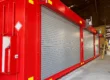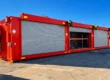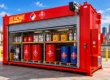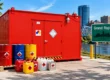
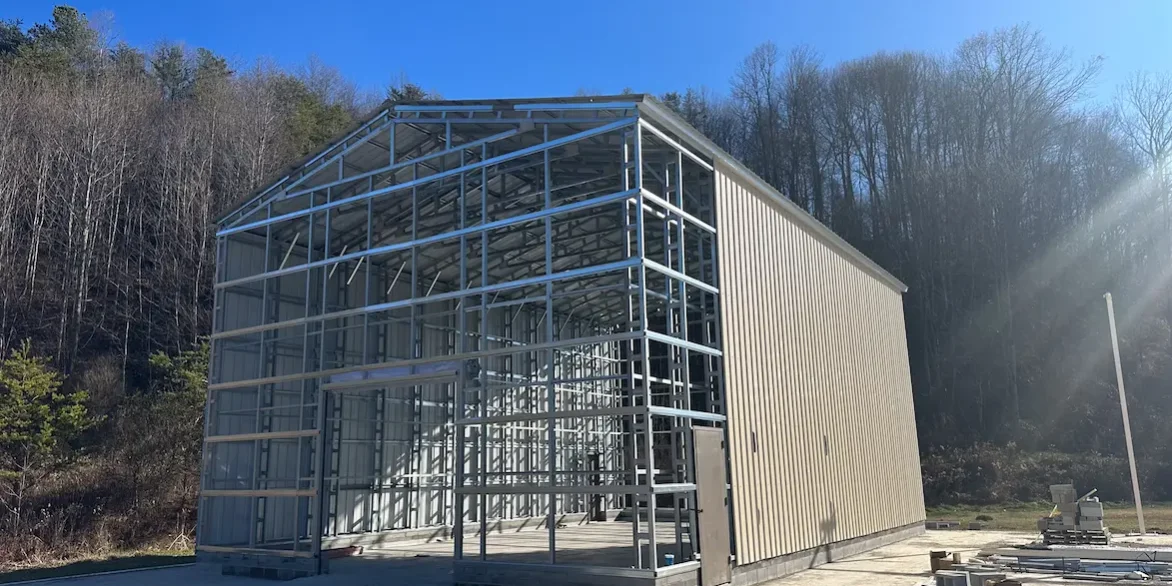
A pesticide storage building is not just a place to keep containers out of the way. For Central Valley farms, it can be the difference between controlled agricultural chemical storage and a storage area that creates avoidable risk for workers, crops, livestock, property, soil, water, and emergency response teams.
That matters in California agriculture because farms rarely operate under one simple condition. Inventories change by crop cycle. Products vary by season. Weather shifts. Temporary crews come and go. Contractors may access the site. Storage areas may sit near shops, fields, irrigation equipment, fuel, fertilizers, vehicles, or employee gathering points. A small storage decision can quickly become a safety and compliance issue if it is not planned correctly.
At US HazMat Rentals, we approach pesticide storage as a controlled system, not a shed with warning signs. The right building should support security, containment, ventilation, product separation, clear labeling, emergency access, and safer day-to-day work. For Central Valley farms, that kind of structure is especially important because agricultural operations often need reliable storage without committing to permanent construction that may not fit future seasons.
Why Central Valley Farms Need a Better Pesticide Storage Building Plan
Central Valley farms operate in one of the most productive agricultural regions in the United States. That productivity often requires careful crop protection planning, which can involve pesticides and other agricultural chemicals. The storage side of that work deserves the same attention as the application side.
A farm may need to store:
- Herbicides
- Fungicides
- Insecticides
- Rodenticides
- Adjuvants
- Plant growth regulators
- Sanitizers or disinfectants
- Empty pesticide containers awaiting proper handling
- Spill response supplies
- Personal protective equipment
- Records and SDS documentation
A pesticide storage building helps bring that inventory into one controlled location. Without a dedicated space, chemicals can end up scattered across shops, trailers, containers, garages, or field support areas. That makes inspections harder, increases the risk of incompatible storage, and creates confusion when employees need to find or identify products quickly.
A good storage building does not only hold materials. It helps the farm manage them with less guesswork.
Pesticide Storage Requirements Should Start With the Label and Inventory
Before choosing a pesticide storage building, the farm should understand exactly what will be stored. The pesticide label, Safety Data Sheet, container size, signal word, hazard category, and quantity all affect how storage should be planned.
The first step is a clear inventory review:
| Storage Question | Why It Matters |
| What products are stored? | Identifies hazard classes and compatibility concerns |
| What signal words appear on labels? | Helps determine posting and access concerns |
| Are products in original containers? | Supports safer identification and label compliance |
| How much is stored at peak season? | Drives building size and containment needs |
| Are liquids, powders, and granules separated? | Reduces contamination and cleanup issues |
| Are products flammable, corrosive, oxidizing, or toxic? | Affects building features and segregation |
| Is the storage seasonal or year-round? | Helps decide whether rental or permanent storage fits better |
This review should happen before selecting the unit. A building that looks large enough may still be wrong if it lacks appropriate containment, ventilation, access control, or internal organization.
Security and Access Control Matter on Working Farms
Pesticide storage should not be casually accessible. Farms may have full-time workers, seasonal crews, mechanics, delivery drivers, contractors, family members, visitors, and equipment operators moving through the property. A pesticide storage building should help keep unauthorized people away from regulated materials.
Security features to consider include:
- Lockable doors
- Controlled access points
- Clear warning signage
- Exterior lighting where appropriate
- Durable door hardware
- Separation from public or visitor areas
- Placement away from casual traffic
- Space for inventory logs and emergency information
Security is not only about theft. It is about preventing accidental exposure, product misuse, unauthorized handling, and confusion during busy operations. If a worker does not need access to pesticides, the storage layout should make that boundary clear.
For Central Valley farms, this is especially important during peak season when many people may be on site and work is moving fast.
Secondary Containment Is a Core Storage Feature
A pesticide storage building should be evaluated for containment as carefully as it is evaluated for size. Pesticide containers can leak, break, corrode, tip, or be damaged during handling. If liquids escape, the storage building should help keep the release controlled.
Containment planning should consider:
- The largest container stored
- Total liquid volume
- Compatibility with stored products
- Whether fire suppression water could create runoff
- Whether rainwater can enter outdoor units
- How cleanup would happen
- Whether spills could reach soil, drains, or irrigation pathways
For farms, containment has a practical purpose. It gives the team time to respond before a leak reaches areas where cleanup becomes harder. It also helps protect fields, equipment yards, soil, water channels, and work areas.
A modular chemical storage building with integrated containment can help farms avoid makeshift solutions that are hard to inspect and harder to defend.
Ventilation and Temperature Should Match the Products
A pesticide storage building should support the products stored inside. Some chemicals may require protection from excessive heat, freezing, moisture, or direct sun. Others may release vapors or odors that need better air movement. Labels and SDS documents should guide those decisions.
Important storage building features may include:
- Passive or mechanical ventilation
- Weather-resistant construction
- Insulated options where needed
- Shade or placement planning
- Moisture control
- Separation from ignition sources
- Compatibility with electrical requirements, when applicable
California farms can face long periods of heat. A poorly placed storage area can intensify product degradation, container stress, odor issues, or worker discomfort. The storage building should be selected with local climate and product stability in mind.
Ventilation is not a decorative feature. It is part of storage performance.
Internal Layout Can Prevent Daily Storage Problems
A pesticide storage building should make safe organization easier. If the interior is cramped, poorly arranged, or hard to inspect, workers are more likely to store products wherever they fit. That can create compatibility issues, blocked labels, leaking containers that go unnoticed, or products being used out of order.
A better interior layout should support:
- Separate zones for different product types
- Visible labels
- Room for inspection
- Spill kit access
- PPE storage nearby, where appropriate
- Clear floor space
- Stable shelving or containment platforms
- Separation of liquids from dry materials
- Separation from fertilizers, feed, seed, or food-related materials
- Space for empty containers awaiting proper handling
This kind of organization helps during routine work and during inspections. It also helps when new employees or seasonal workers need to understand the storage system quickly.
The building should reduce friction, not add more confusion.
Modular Chemical Storage Buildings Fit Seasonal Agriculture
Permanent construction can make sense for some large operations, but many farms need more flexibility. Product inventory may change by crop, pest pressure, weather, acreage, contract requirements, or regulatory needs. A modular chemical storage building can give farms a faster and more flexible way to create controlled storage without committing to a permanent structure.
A rental or modular approach may help when:
- Storage demand changes by season
- A farm is expanding temporarily
- A new crop program requires different products
- A permanent structure is not practical
- A site needs fast deployment
- A remediation, transition, or emergency storage need appears
- The operation wants to avoid long permitting and construction timelines
This flexibility is valuable for Central Valley farms because agricultural operations can shift quickly. A farm may need additional storage during a high-pressure season, then reduce capacity later. Modular storage can support that reality better than fixed construction in many cases.
Choosing Between Basic Storage and Fire-Rated Storage
Not every pesticide storage building needs fire-rated construction. The decision depends on the products stored, their classifications, quantities, proximity to other structures, and local authority requirements. Some agricultural chemicals may not create a flammable storage concern. Others may include solvents, petroleum-based carriers, aerosols, or products that deserve additional fire protection review.
A simple comparison can help frame the discussion:
| Storage Need | Basic Chemical Storage Building | Fire-Rated Chemical Storage Building |
| Non-flammable products | Often suitable if containment and security are adequate | May not be necessary |
| Mixed chemical inventory | Requires compatibility review | May be needed if flammables are present |
| Higher fire exposure | May be insufficient | Stronger option |
| Close to shops or equipment | Requires careful site review | Often worth evaluating |
| Insurance or AHJ concern | May need added documentation | May better support approval |
| Long-term high-risk storage | May not be ideal | Usually a stronger planning path |
The safest choice is not always the most expensive building. It is the building that fits the hazard and the site. Fire-rated construction should be considered when the inventory and placement justify it.
Where a Pesticide Storage Building Should Be Placed
Placement is one of the most important decisions. A storage building that is well-designed but poorly located can still create risk.
Central Valley farms should consider:
- Distance from offices, housing, and worker gathering areas
- Distance from wells, canals, ditches, and drainage paths
- Access for emergency responders
- Access for authorized workers
- Vehicle and forklift traffic
- Flooding or stormwater concerns
- Security and visibility
- Proximity to fertilizers, fuel, seed, feed, or harvested crops
- Ground stability and site preparation
- Separation from ignition sources
The best location is usually accessible to authorized staff but not in the middle of daily traffic. It should allow safe delivery, inspection, and emergency response without placing pesticides near sensitive areas.
Site planning should happen before delivery. Moving a storage building after the fact can be expensive and disruptive.
Documentation Makes the Storage Program Easier to Defend
A good storage building should be supported by clear documentation. The farm should be able to explain what is stored, where it is stored, who can access it, and how the storage area is inspected.
Useful documentation may include:
- Current pesticide inventory
- Safety Data Sheets
- Product labels
- Site map showing storage location
- Emergency contact information
- Inspection logs
- Employee training records
- Spill response procedures
- Building specifications
- Containment capacity information
- Fire rating documents, if applicable
Documentation helps the farm stay organized. It also helps during audits, insurance reviews, internal safety meetings, and emergency situations. If the storage decision cannot be explained clearly, it may need more planning.
Common Mistakes Farms Should Avoid
Most pesticide storage issues are preventable. They usually come from treating storage as an afterthought.
Common mistakes include:
- Storing pesticides in multiple informal locations
- Leaving containers unlocked
- Ignoring label storage instructions
- Storing incompatible products together
- Storing pesticides near feed, seed, fertilizer, or food-related materials
- Using damaged or unmarked containers
- Allowing labels to become unreadable
- Overcrowding the storage area
- Forgetting spill containment
- Placing storage near drains, wells, or high-traffic lanes
- Treating empty containers as harmless
- Failing to update inventory records
A pesticide storage building helps reduce these problems only when it is used as part of a real storage program. The building provides structure. The operation still needs procedures.
What to Look for in a Pesticide Storage Building
A strong pesticide storage building should match the farm’s hazard profile and daily workflow. The right features depend on the products stored, but most agricultural operations should evaluate:
- Lockable access
- Proper warning signage
- Secondary containment
- Ventilation
- Chemical-resistant surfaces
- Weather protection
- Stable shelving or internal organization
- Spill response access
- Fire-rated options, when needed
- Easy inspection access
- Durable construction
- Delivery and relocation flexibility
- Documentation support
For rental buildings, farms should also ask how quickly the unit can be deployed, what site preparation is needed, and whether the building can be scaled or changed if the operation’s needs shift.
A building should not only solve today’s storage issue. It should support the farm’s next season too.
How US HazMat Rentals Supports Central Valley Farms
US HazMat Rentals helps agricultural operations choose chemical storage buildings that fit real farm conditions. We understand that Central Valley farms need storage that can handle seasonal demand, changing inventory, safety expectations, and site constraints without turning every storage need into a permanent construction project.
Our modular chemical storage building options can help farms manage pesticide storage, agricultural chemical storage, spill containment, security, and safer access in a more controlled way.
We help teams evaluate:
- Product inventory
- Storage volume
- Building size
- Containment needs
- Ventilation options
- Fire-rated requirements
- Indoor vs outdoor placement
- Access control
- Delivery logistics
- Site conditions
- Seasonal rental needs
The goal is not to overcomplicate storage. The goal is to make the storage area safer, clearer, and easier to manage.
A Safer Farm Storage Plan Starts With the Right Building
A pesticide storage building should protect more than containers. It should help protect workers, crops, soil, water, equipment, emergency responders, and the farm’s ability to keep operating without avoidable storage problems.
For Central Valley farms, the right storage solution begins with the materials, the season, the site, and the real way the farm works. Once those details are clear, the building decision becomes easier. The farm can choose the right size, containment level, ventilation approach, security features, and rental structure with more confidence.
At US HazMat Rentals, we help agricultural teams move from improvised chemical storage to safer modular solutions. If your farm needs a better way to store pesticides or agricultural chemicals, our chemical storage buildings can help you create a more controlled, practical, and safety-focused storage plan.
FAQ
Do Central Valley farms need locked pesticide storage?
Pesticides should be secured from unauthorized access when not under direct control. A lockable building helps support that expectation.
What should a pesticide storage building include?
Common features include lockable doors, containment, ventilation, warning signage, chemical-resistant surfaces, and organized interior storage.
Can pesticides be stored with fertilizer or feed?
No. Pesticides should not be stored with food, feed, fertilizers, or materials that could become contaminated.
Is a modular chemical storage building good for farms?
Yes. Modular storage can help farms manage seasonal inventory, temporary needs, and changing chemical storage demands without permanent construction.
How can US HazMat Rentals help?
US HazMat Rentals can help farms evaluate chemical inventory, containment, ventilation, building size, site placement, and modular rental options.