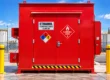
Warehouses, data centers, and logistics hubs across Des Moines have landed on the same storage problem: lithium ion batteries are everywhere, and the regulatory framework around them is not always where facility teams expect it to be. Lithium ion battery NFPA 704 Des Moines compliance starts with a colored diamond posted on the door, but the actual picture runs deeper than a placard. NFPA 704 assigns a hazard profile to materials stored in a facility so emergency responders and AHJ inspectors understand what they are walking into before they enter.
For lithium ion batteries, the IDLH profile has specific numbers for fire, health, and reactivity that dictate how a storage facility will be designed, what secondary containment is required, what type of fire suppression is needed, and how the permit will be processed.
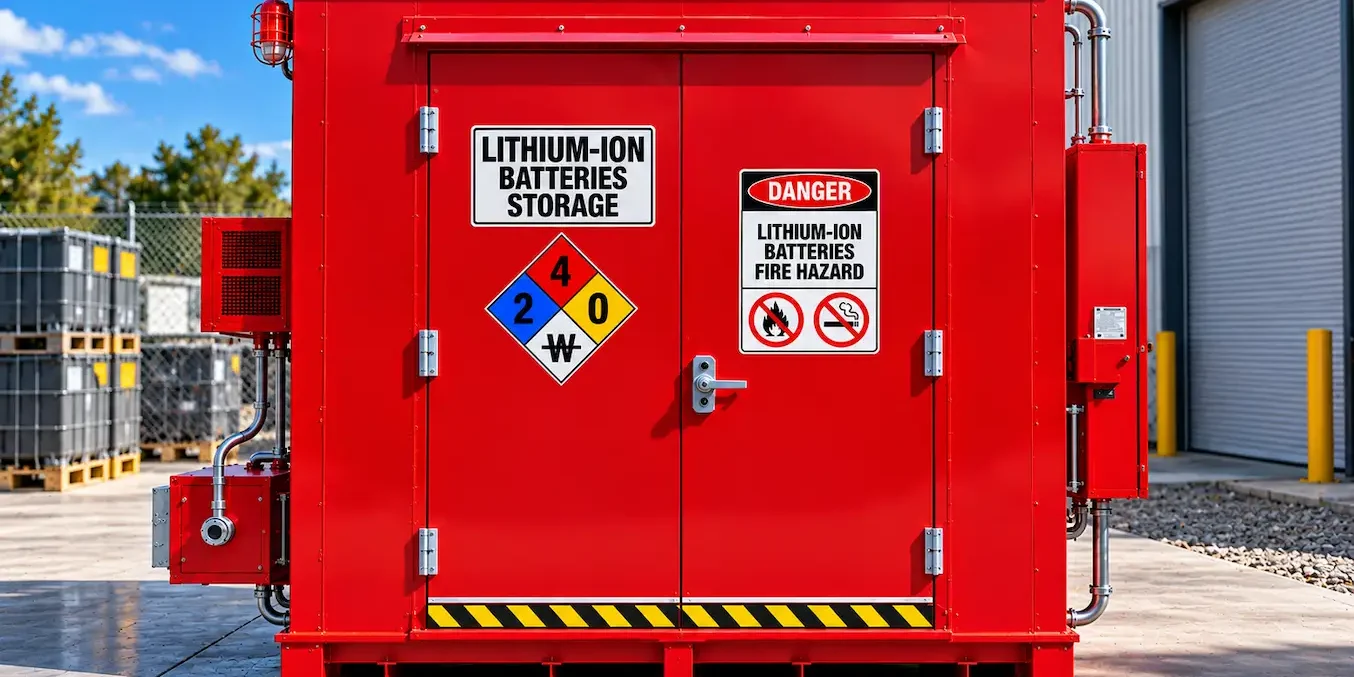
Facilities that store, charge, or recycle lithium ion batteries on a commercial or industrial scale are regulated by the International Fire Code adopted by the Iowa State Fire Marshal. As noted on the diamond on the door, NFPA codes and standards are incorporated throughout the International Fire Code and regulate the hazards of facilities. It is a code-enforceable hazard communication requirement with installation and update obligations tied directly to what is stored inside, and the lithium ion battery NFPA 704 Des Moines classification has site-specific consequences that vary with battery chemistry and installation scale.
US Hazmat Rentals helps EHS managers, project managers, and operations teams across central Iowa plan storage configurations that align with the full NFPA framework, before inspection season forces the issue.
What NFPA 704 Actually Classifies for Lithium Ion Batteries
NFPA 704 is a system to classify the hazard of chemicals in four categories: health hazard (blue left), flammable hazard (red top), reactivity hazard (yellow right), and special hazard (white bottom). Each category of the NFPA 704 diamond is rated from 0 to 4. For the lithium ion battery NFPA 704 Des Moines assessment, the ratings for each are not fixed by a single published standard, because the chemistry varies across cell types, form factors, and manufacturers.
Notice that the hazard categories for all forms of lithium ion cells are generally similar, i.e. elevated flammability due to organic solvent-containing electrolytes. However, specific failure modes introduce reactivity considerations not normally present for a bulk chemical stored in a stable configuration.
Flammability rating of 3: red quadrant, material will ignite under nearly all ambient conditions, similar to what is observed for lithium ion electrolytes during a thermal runaway. A reactivity rating of 2 in the yellow quadrant indicates a material that may react violently with water or produce self-sustaining decomposition under certain conditions.
Not all lithium ion chemistries carry a 2 in the yellow quadrant, but the ones that do, including some lithium nickel manganese cobalt oxide cells used in commercial energy storage, require segregation from water-based suppression in the immediate vicinity of the battery rack. Every lithium ion battery NFPA 704 Des Moines classification review begins with confirming which of these ratings applies to the specific chemistry the facility holds.
The NFPA 704 Yellow Quadrant and What It Means for Battery Storage
The NFPA 704 yellow quadrant is where most facilities discover the complication in lithium ion battery planning, and it is the first value a fire protection engineer pulls in any lithium ion battery NFPA 704 Des Moines assessment. A yellow quadrant rating of 0 or 1 requires little special handling. A rating of 2 introduces restrictions on water compatibility and self-reaction potential.
A rating of 3 covers materials capable of detonation or explosive decomposition under strong initiating conditions. For lithium ion batteries in large-format or high-density configurations, a yellow quadrant rating of 2 is the most common assignment, and it changes the suppression specification for the entire storage area.
The significance for Des Moines facilities is direct. A warehouse storing battery packs for resale or a charging station for fleet vehicles does not design its fire protection the same way a facility storing a conventional Class IB flammable liquid does. The yellow quadrant number shapes the suppression type, the detection sensitivity, and in some occupancies the setback requirements from other materials and building openings.
Any lithium ion battery NFPA 704 Des Moines permit package that omits the yellow quadrant analysis consistently generates correction notices from the Des Moines Fire Department’s plan review process, adding months to a timeline that is already under pressure.
NFPA 704 SA Meaning and When It Applies to Lithium Ion Batteries
The NFPA 704 sa meaning refers to a special hazard designation in the white quadrant indicating that a material reacts hazardously with water. SA stands for “reacts with water in an unusual or dangerous manner.” In the context of lithium ion batteries, the SA designation appears in some manufacturer safety data sheets and in fire protection engineering guidance for large-format lithium metal or lithium polymer cells, though it is not universal across all lithium ion chemistries in commercial use.
When the SA designation is confirmed by the battery manufacturer’s safety data sheet or identified by a fire protection engineer reviewing the cell chemistry, it modifies the suppression strategy beyond what the standard yellow quadrant analysis prescribes. A facility that installs a wet-pipe sprinkler system above a battery rack carrying an SA designation without a suppression engineering review has created a direct conflict between the hazard profile and the protection method.
For any lithium ion battery NFPA 704 Des Moines installation where the SA question surfaces, it belongs in the pre-design phase, not in the post-installation correction process. Addressing it early is a standard step in the lithium ion battery permit package for any chemistry with water-reactive potential.
NFPA 704 Number Meaning Across Battery Storage Zones
The NFPA 704 number meaning framework applies across every zone in a lithium ion battery NFPA 704 Des Moines facility, not just to the battery cells themselves but to the full storage zone, including the charging infrastructure, the containment equipment, and the adjacent materials.
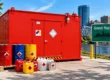
A warehouse that stores lithium ion battery packs in one aisle and flammable cleaning solvents in the next aisle has two NFPA 704 hazard profiles converging in a single occupied space, and the permit application needs to address both the individual profiles and their proximity.
In commercial energy storage installations, the lithium ion battery NFPA 704 Des Moines compliance picture involves a site-specific hazard analysis that maps each zone’s aggregate profile. A single cell carries a defined rating. A rack of 100 cells in a ventilated enclosure carries a different aggregate rating.
A 10-rack room containing water-reactive chemistry with no suppression system for that room would constitute a hazard of this nature and require a classified zone analysis in accordance with IFC and NFPA 855, the Standard for Stationary Energy Storage Systems. The number in each quadrant of the placard also tells emergency response personnel how far Des Moines Fire Department crews use the placard numbers to determine approach distance and suppression method before they have any other information on the scene.
How NFPA 30 Interacts With Battery Storage in Des Moines
NFPA 30 applies to any lithium ion battery storage where there are co-located flammable or combustible liquids such as solvents for electrolyte solutions stored separately for manufacturing, repair or reclamation purposes. Liquid components for battery storage in refurbish, repair at the cell level in facilities in Des Moines, Iowa where battery refurbishment or cell-level repair occurs, the storage of those liquid components falls under NFPA 30 Class IB requirements depending on flash point, and the NFPA 704 placard for the liquid must be assessed independently of the battery cell placard.
In a facility where fully assembled battery packs are stored without any electrolyte being stored separately, the NFPA 30 connection point is through the suppression and containment design of the facility. A storage room designed to NFPA 855 standards for thermal event containment requires a secondary containment system of sufficient size for the electrolyte volume that could be released during a worst-case thermal runaway event, and that sizing calculation borrows directly from the NFPA 30 methodology for liquid spill containment.
The full lithium ion battery NFPA 704 Des Moines compliance picture works best when NFPA 30, NFPA 704, and NFPA 855 are treated as a coordinated set. Book a call with our engineering team through the US Hazmat Rentals NFPA 30 compliance page to review how these standards interact for your specific inventory.
Secondary Containment for Battery Storage in Des Moines
Secondary containment is one of the physical elements in a lithium ion battery NFPA 704 Des Moines compliance package that most clearly scales with installation size and the chemistry in use. For small commercial storage, a curbed floor area or a listed containment tray under the battery rack may satisfy the AHJ.
For large-format commercial energy storage systems, the containment design must account for the electrolyte volume from a full thermal runaway cascade, the suppression water discharge, and the runoff from any cooling water applied during the fire response.
The Des Moines metropolitan area includes commercial and light industrial developments along the I-80/I-35 corridor where battery storage installations have expanded alongside logistics and data center growth. Several facilities have completed the Des Moines Fire Department permit process for NFPA 855-compliant battery rooms, establishing local precedent for what plan review expects.
That precedent includes a secondary containment calculation using the full aggregate electrolyte volume of the installed battery system. For facilities approaching a lithium ion battery NFPA 704 Des Moines compliance deadline, prefabricated containment solutions with integral sumps can shorten the lead time between permit approval and a commissioned system.
Electrical Classification and Charging Infrastructure
The electrical classification requirements for a lithium ion battery NFPA 704 Des Moines installation cover the charging infrastructure as well as the storage area. A battery charging room where cells are regularly connected and disconnected from charging systems generates hydrogen gas during certain fault conditions, and the gas accumulation potential is sufficient to trigger a Class I, Division 2 classification under NEC Article 500 in some configurations. The specific classification depends on ventilation rate, charging current, battery chemistry, and room volume.
Iowa electrical code adopts the NEC with modifications, and the Des Moines area enforces those requirements through both the city’s electrical permit process and the state’s electrical inspection program. A lithium ion battery storage or charging facility that installs standard commercial lighting and unrated electrical panels in a zone that an electrical engineer would classify as Division 2 is looking at a correction notice, a required retrofit, and potentially an occupancy hold.
The coordination between the NFPA 704 placard, the classified locations drawing, and the electrical permit is where most lithium ion battery NFPA 704 Des Moines projects generate their longest delays. Starting the classified locations drawing before finalizing equipment specifications avoids the most common cause of that delay.
Modular and Prefabricated Battery Storage Options in Des Moines
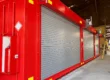
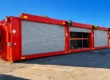
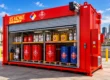
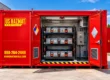
Prefabricated storage buildings listed to NFPA 855 and designed around the lithium ion battery NFPA 704 Des Moines hazard profile are a practical option for facilities that need compliant capacity quickly.
These units ship with pre-installed ventilation rated for the classified zone, integrated containment sumps sized for the battery volume they are designed to hold, listed electrical components, and a manufacturer documentation package that the Des Moines Fire Department plan review team can evaluate without requesting a custom engineering analysis for each component.
The lead time advantage over permanent construction is significant. A prefabricated battery storage building can be site-delivered and commissioned in two to four weeks once the permit is approved. A permanent concrete structure with the same capabilities typically runs three to six months from permit approval to occupancy, depending on contractor availability in central Iowa.
For any lithium ion battery NFPA 704 Des Moines facility where the permit timeline is already running against an operational deadline, the prefabricated route removes one of the largest schedule variables from the project. US Hazmat Rentals works with Des Moines facilities on modular storage configurations matched to battery chemistry, inventory volume, and compliance timeline; book a call with our engineering team to review your project before the permit window closes.
Permit Coordination With Des Moines Fire Department
The permit path for any lithium ion battery NFPA 704 Des Moines storage installation runs through the Fire Prevention Bureau, which reviews for compliance with the Iowa-adopted edition of the International Fire Code and the NFPA standards it references. For installations above the IFC’s exempt quantities for energy storage systems, NFPA 855 triggers additional review requirements including a hazard mitigation analysis, an emergency response pre-plan, and a commissioning inspection.
The pre-application meeting with the Fire Prevention Bureau is the most efficient step in the lithium ion battery NFPA 704 Des Moines permit process. Bureau staff will confirm which edition of NFPA 855 and NFPA 704 they are enforcing, which local amendments apply, and what format they expect for the classified locations drawing and the hazard mitigation analysis.
Submitting based on the base standard alone, without that pre-application step, produces correction cycles that add months to a timeline that is already constrained. Book a call with our engineering team. The team at US Hazmat Rentals can review your Des Moines battery storage project, confirm the applicable code editions, and identify the right prefabricated or rental solution for your permit package and commissioning schedule.
FAQ
What is the NFPA 704 rating for lithium ion batteries?
Lithium ion batteries do not carry a single universal NFPA 704 rating because the hazard profile varies by chemistry. Most lithium ion cells present a flammability rating of 3, a health rating of 2, and a reactivity rating between 1 and 2 depending on the specific chemistry. Obtain the NFPA 704 rating from the battery manufacturer’s safety data sheet and confirm it with a fire protection engineer for large-format installations.
What does the NFPA 704 yellow quadrant mean for battery storage?
The NFPA 704 yellow quadrant indicates reactivity hazard on a 0–4 scale. For lithium ion batteries with a yellow quadrant rating of 2, the material may react with water or undergo self-sustained decomposition under certain conditions. A rating of 2 changes the suppression specification and affects the secondary containment sizing calculation for the storage area.
What does NFPA 704 SA mean?
The NFPA 704 sa meaning is “reacts with water in an unusual or dangerous manner.” The SA designation in the white quadrant applies to materials where water-based suppression may intensify rather than suppress a fire event. For battery installations, the SA designation requires a suppression engineering review before the fire protection system is specified.
Does NFPA 855 apply to lithium ion battery storage in Des Moines?
Yes. NFPA 855, the Standard for the Installation of Stationary Energy Storage Systems, applies to commercial and industrial lithium ion battery installations in Des Moines once quantities exceed the IFC’s exempt amounts. It requires a hazard mitigation analysis, specific suppression and detection provisions, and an emergency response pre-plan coordinated with the local fire department.
Do I need a classified electrical zone for a lithium ion battery charging room?
Depending on battery chemistry, charging current, room volume, and ventilation rate, a lithium ion battery charging area may require a Class I, Division 2 electrical classification under NEC Article 500. A licensed electrical engineer must prepare the classified locations drawing before electrical equipment is selected for the charging room.
How does NFPA 704 interact with battery storage near flammable liquids in Des Moines?
Each material in a shared storage area carries its own NFPA 704 hazard profile, and the configuration must address both. Lithium ion batteries stored near Class IB flammable liquids require segregation analysis, combined containment sizing, and a suppression strategy compatible with both hazard profiles. The permit application must document the aggregate hazard for the shared zone.