Contact Us

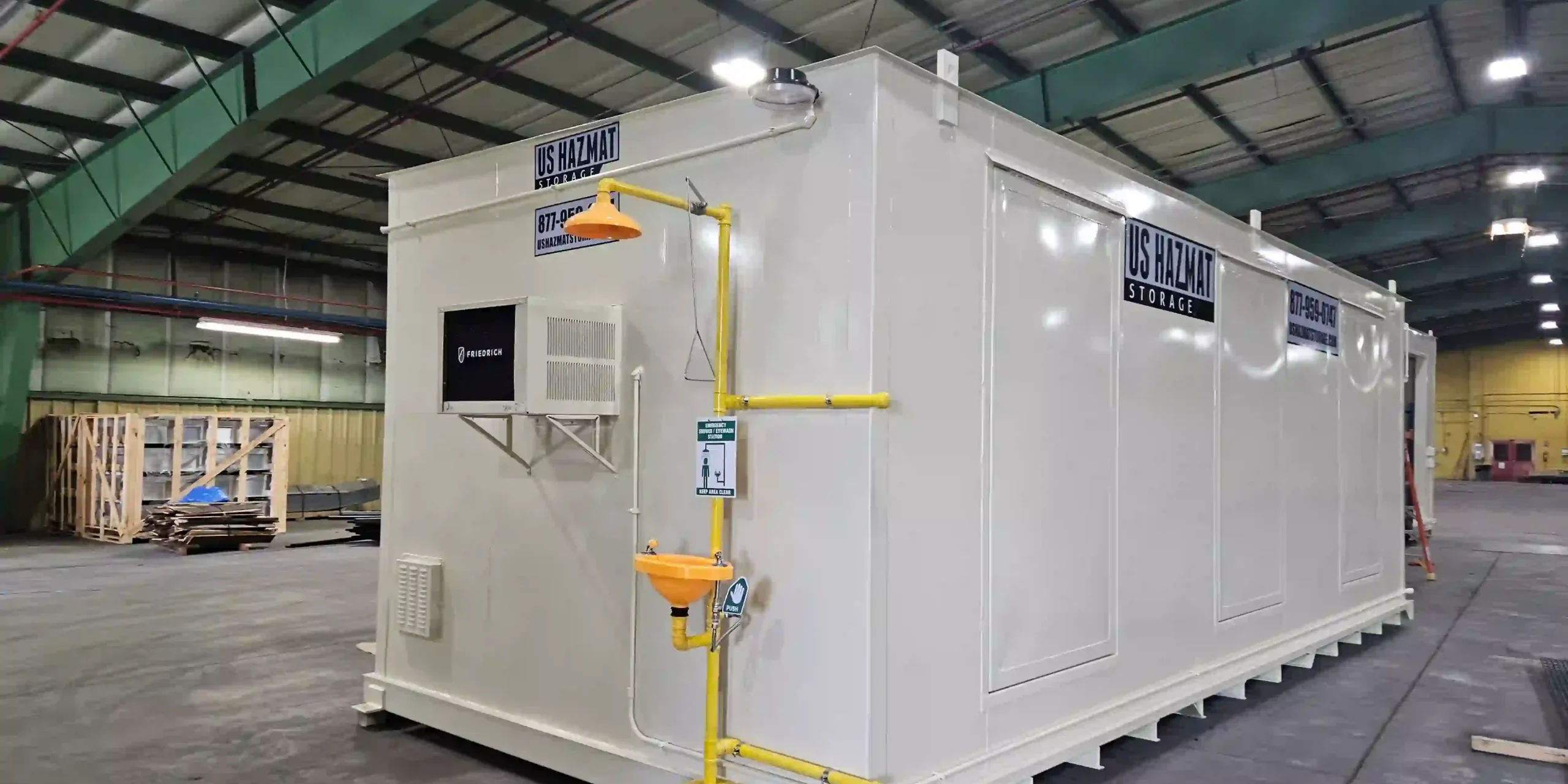
OSHA regularly points out that many workplaces do not have emergency portable safety shower and eyewash Columbus, OH. This is a problem when it comes to safety compliance. Many sites lack the right equipment, which puts workers at risk and puts companies in violation of safety rules.
Portable safety shower and eyewash solutions are essential in places where there is no access to tempered water near chemical hazards. Even though some might think that temporary setups can be ignored, ANSI Z358.1 does not make exceptions. All emergency equipment must meet the standard no matter where it is used or when it was bought.
Compliance starts with understanding the rules. The standard says the unit must do three things: deliver flushing fluid to both the eyes and the body at the time start working within one second without any help from the user and reach the injured person within ten seconds. If a safety shower and eyewash Columbus unit fails any of these it is not compliant. That means the company could be held responsible even if the equipment was purchased years ago.
US Hazmat Rentals helps companies in Columbus and central Ohio by providing and supporting emergency equipment. They offer a range of systems self-contained units, versions for cold weather and trailer-mounted setups for remote or temporary work zones. These options keep workers safe where permanent water lines are not available.
What ANSI Z358.1 Actually Requires
ANSI Z358.1 is the standard in the U.S. For emergency eyewash and shower equipment. It is often referenced by OSHA when inspecting workplaces. The 2014 version outlines the requirements for portable safety shower and eyewash Columbus units, emergency showers and combination systems. Any safety shower and eyewash Columbus unit that does not meet these rules is not compliant no matter what it says on the label or how much it costs.
For a safety shower and eyewash Columbus system to be compliant it must meet three main performance criteria. The eyewash must provide at least 0.4 gallons per minute of flushing fluid for 15 minutes. The shower needs to deliver 20 gallons per minute for the amount of time. Both must use water between 60 and 100 degrees Fahrenheit so that flushing is effective and safe. This ensures that anyone exposed to hazards can be treated properly and quickly.
In winter, portable units in Columbus struggle with temperature compliance. Unheated tanks deliver water below 60°F, failing ANSI Z358.1 standards for emergency eyewash stations; heated units with thermostatically controlled tanks are necessary to meet the standard, making them essential for construction sites operating in winter.
Portable vs. Plumbed: When Portable Is the Right Answer
A permanent plumbed eyewash and shower station is preferred where infrastructure exists. When it does not, ANSI Z358.1 allows for portable and self-contained units. In central Ohio, portable safety shower and eyewash units are essential for several site conditions.
Construction sites that do not yet have plumbing often use units because chemicals from admixtures, adhesives and cleaners can cause immediate danger. Self‑contained units with 16‑ to 32‑gallon tanks and gravity‑fed shower heads work until permanent plumbing is finished. Temporary outdoor work areas, such as maintenance in chemical storage yards or construction staging areas also rely on solutions.
ANSI Z358.1 requires that eyewash stations be within ten seconds of travel from hazards so portable units at the worksite become necessary. Remote and seasonal operations, like chemical distribution and pipeline construction also need portable safety shower and eyewash units.
Trailer‑mounted options are effective because Trailer‑mounted options keep ANSI Z358.1 standards with a self‑contained water supply and can be moved as needed. Battery charging rooms and areas with lithium‑based equipment form an increasingly common category.
Emergency eyewash station OSHA requirements apply wherever electrolyte splash, acid exposure, or alkaline battery fluid contact is a credible first-aid scenario, and a dedicated portable unit positioned at the charging station resolves the compliance gap without modifying the facility’s plumbing layout. Compare options with a free consultation through the US Hazmat Rentals storm safe and emergency equipment page.
Self-Contained Units: Tank Sizing and Maintenance Obligations
A self-contained portable safety shower and eyewash Columbus unit holds its own flushing fluid supply, which means the compliance burden extends beyond installation to maintenance. Sourcing the right portable safety shower and eyewash Columbus configuration requires matching the tank capacity to the actual performance requirements before the unit arrives on site.
ANSI Z358.1 says self-contained units must be checked every week. The check should make sure the fluid is clean when the unit turns on right. The tank has enough water for 15 minutes straight at the flow rate it’s rated for.
A 16-gallon tank can run an eyewash at 0.4 gallons per minute for 40 minutes.. It can’t also run a 20-gallon-per-minute shower for 15 minutes at the same time. If a unit has to supply both the shower and eyewash it needs at least 320 gallons. Portable units that big are usually trailer-mounted, not station units. Most self-contained station units are eyewash or eyewash plus a drench hose. The buyer should make sure the unit they choose actually includes the parts needed before saying it meets ANSI Z358.1 portable safety shower and eyewash Columbus standards.
If a full combination unit is needed and a trailer isn’t practical you can use a gravity-fed shower tower with a separate self-contained eyewash station next to it. This setup can meet the need for both to run at the time. Both units must turn on within one second of each other. They must be placed so one worker can use both. The authority having jurisdiction or the safety officer must check that this setup is okay, under the standard before it’s put in place.
Using preservatives or saline in the tank helps keep the water longer. It also cuts down on bacteria in units that sit in warm places between uses. Potable water tanks without an additive need fluid replacement every 3 to 6 months at minimum, and the replacement date needs to be logged for inspection records.
Heated Portable Units for portable safety shower and eyewash Columbus Winter Operations
Central Ohio’s climate creates a compliance problem for unheated equipment from approximately November through March. Any portable safety shower and eyewash Columbus unit deployed outdoors or in an unheated space during those months needs a documented temperature management plan to maintain ANSI Z358.1 tepid water compliance.
Average low temperatures in Columbus drop below 32 degrees Fahrenheit on more than 90 days per year, and outdoor or unheated indoor spaces present freezing risk to any standing water supply.
An unheated self-contained tank that freezes does not activate. A tank that has thawed but has not been checked after a freeze can give water that’s colder than the 60‑degree ANSI Z358.1 minimum. Either of these conditions means the unit is not compliant and the path from a freeze event to a failed inspection is short.
I have seen many sites get this wrong. Heated portable units use thermostatically controlled tank heaters to keep supplies warm no matter what the outside temperature is. Electric units require a 120‑volt or 240‑volt connection and cord management must be part of safety plans. Battery‑powered units do not need cords making them good for areas without power. They must balance battery capacity, runtime and ambient conditions.
For outdoor installations in Columbus, a freeze‑protected plumbed unit with a self‑draining valve and heat trace cable is the long‑term solution. For rental deployments a heated self‑contained unit with a documented winter maintenance protocol is the ANSI Z358.1 compliant answer to the Columbus cold season. Explore 4‑hour fire‑rated storage buildings and emergency equipment configurations that are designed for chemical exposure environments at US Hazmat Rentals.
Placement, Signage and the Ten‑Second Rule
The ten‑second travel rule in ANSI Z358.1 is the placement requirement that most sites get wrong. It is the first thing an OSHA inspector checks when evaluating any portable safety shower and eyewash Columbus installation.
Ten seconds of travel at a normal walking pace equals about 55 feet. Any chemical hazard zone that is then 55 feet from a compliant portable safety shower and eyewash Columbus unit is a placement violation even if a compliant unit exists elsewhere on the site.
Unobstructed is the word. A unit that is 50 feet away but separated from the hazard by a door, a staircase or a material storage area that an injured worker would need to move around does not satisfy the ten‑second requirement.
The travel path must be clear, level and passable by a worker who may have vision from a chemical splash. That condition eliminates paths that cross vehicle traffic require opening latches or involve any elevation change without a ramp.
The sign language and format are not prescribed by the standard. The intent is that a worker unfamiliar with the site can locate the unit without assistance. Green background, symbol and “Emergency Eyewash” or “Emergency Shower” text, in minimum 1‑inch height satisfies that intent across most AHJ interpretations.
For portable safety shower and eyewash Columbus deployments at temporary sites, the signage responsibility belongs to the site safety officer or the equipment operator, not the equipment supplier. Confirming that signs are in place, visible from the hazard zone, and consistent with the site safety plan is a pre-activation checklist item that belongs in the unit’s weekly inspection record.
Documentation and Weekly Inspection Records
ANSI Z358.1 requires weekly activation of all emergency eyewash and shower equipment to verify that the unit activates in one second, that the flushing fluid flows at the correct rate, and that the unit stays active without the user holding it open. For plumbed units, the weekly activation also flushes stagnant water from the supply line, which is a water quality requirement as much as a performance check.
For self-contained portable safety shower and eyewash Columbus units, the weekly inspection record must include the activation test result, tank fluid level, fluid condition (color and odor), physical condition of the unit (hose integrity, nozzle condition, eyewash guard cleanliness), inspector’s name, and date.
This record is essential for OSHA compliance evaluation of emergency eyewash stations; failure to produce 12 months of records results in citations regardless of equipment presence or functionality. Successful Columbus programs have current, complete, and accessible inspection logs.
Although OSHA or ANSI doesn’t prescribe a specific record format, a consistent layout with designated data point locations aids audits and maintenance. Both a paper log at the unit and a digital record from the site’s safety management system are acceptable, provided they’re retrievable during inspections.
Get the Right Unit for Your Columbus Site
The portable safety shower and eyewash Columbus configuration that passes inspection is the one sized for the actual chemical hazard, maintained at tepid temperature through the winter, placed within ten seconds of the hazard zone, and documented through a weekly inspection log that is current on the day the inspector arrives. No single factor covers all four; all four have to be right at the same time.
Compare options with a free consultation. The team at US Hazmat Rentals can assess your Columbus site, identify the ANSI Z358.1 compliant unit for your specific hazard and footprint, and provide the documentation to support your inspection file needs.
FAQ
What does ANSI Z358.1 require for a portable safety shower and eyewash?
ANSI Z358.1 mandates a combination portable safety shower and eyewash unit to deliver at least 20 gallons per minute from the shower and 0.4 gallons per minute from the eyewash for 15 minutes, using tepid water (60-100°F), activating in one second or less, within ten seconds from hazards.
Are portable eyewash stations OSHA compliant in Columbus, OH?
Yes, provided they meet ANSI Z358.1 performance standards. OSHA’s 29 CFR 1910.151(c) requires that suitable facilities for quick drenching or flushing of the eyes and body be provided where workers may be exposed to corrosive materials, and OSHA references ANSI Z358.1 as the applicable performance standard. A portable unit that meets that standard is compliant in Columbus under federal OSHA jurisdiction, which applies to most general industry and construction sites in Ohio.
What is the tepid water requirement and why does it matter in Columbus winters?
ANSI Z358.1 defines tepid water as 60 to 100 degrees Fahrenheit. Below 60 degrees, flushing may stop prematurely, risking injury. With Columbus experiencing over 90 freezing days annually, unheated portable units can’t maintain tepid temperatures. Heated portable units are necessary to comply with ANSI standards during winter.
How often do portable eyewash and safety shower units need to be inspected?
ANSI Z358.1 requires weekly activation and inspection of all emergency eyewash and shower equipment. The inspection must confirm that the unit activates within one second, that flushing fluid flows at the correct rate and for the required duration, and that the unit remains active without operator assistance. Self-contained units also require tank level and fluid condition checks. Inspection records must be maintained and available for OSHA review.
How far can a portable safety shower and eyewash be from the hazard?
ANSI Z358.1 requires that emergency equipment be reachable within ten seconds of unobstructed travel from the hazard zone. Ten seconds of travel at normal walking pace corresponds to approximately 55 feet. The path must be clear of obstructions, level, and passable by a worker with impaired vision. A unit that is within 55 feet but separated by a closed door, stairs, or active vehicle traffic does not satisfy the ten-second requirement.
What are the safety codes and standards for battery room showers in Columbus?
Battery charging and energy storage areas with electrolyte splash or acid exposure must comply with ANSI Z358.1 for emergency shower and eyewash placement, OSHA 29 CFR 1910.151(c) for emergency flush facilities, and the International Fire Code for battery electrolyte handling. In Columbus, the Ohio Building Code and IFC require emergency flush equipment placement in battery room design, as indicated on permit drawings by the AHJ.