Contact Us

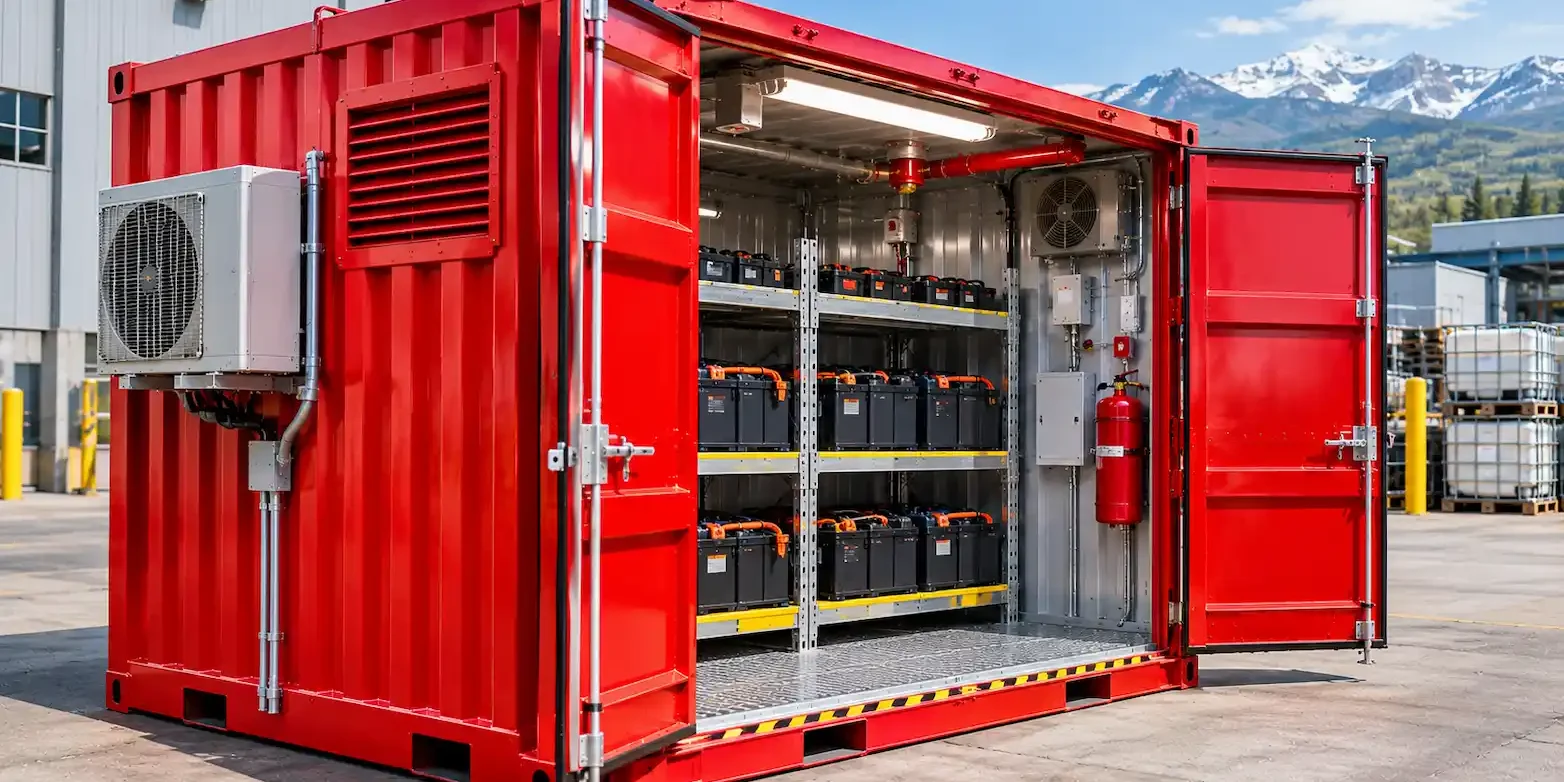
When a battery storage building in Denver procurement team submits a site plan to the Denver Fire Department without the right specifications documented, the revision cycle starts over. The 2021 IFC, adopted by the City and County of Denver with local amendments, governs energy storage system installations across the Front Range.
The procurement decision for a battery storage building in Denver facilities order comes down to four variables before the first supplier conversation: required fire rating, ventilation configuration, suppression system integration, and documentation package.
Each is determined by the energy storage quantity, the adjacent occupancy class, and the specific DFD amendments that apply to the site. Getting those answers confirmed with the AHJ before specifying a configuration is the most effective way to compress the approval timeline.
US Hazmat Rentals works with procurement and operations teams across the Denver metro and Front Range to match compliant storage configurations to local site requirements before the permit application goes in. This guide covers the specifications, pricing factors, and documentation requirements that determine how quickly a battery storage building in Denver operations teams order gets permitted, delivered, and occupied.
What the Denver Fire Code Requires for Battery Storage Buildings
The 2021 IFC places energy storage systems under Chapter 12 of the fire code, with NFPA 855 as the technical reference standard. For lithium-ion systems, the quantity thresholds that trigger a permit and a plan review are set by energy storage capacity in kilowatt-hours within a control area.
A battery storage building in Denver Fire Department inspectors’ review for a mid-scale ESS installation requires a site plan, construction documentation, ventilation design, and confirmation of suppression requirements tied to the specific energy storage quantity and occupancy configuration.
For facilities in Denver’s industrial zones, the AHJ may apply local amendments that increase separation distances or add suppression requirements beyond the NFPA 855 baseline. Those amendments are confirmed during a pre-application meeting with DFD, not discovered during plan review.
That means the procurement team needs that conversation before the building is specified, not after the purchase order is issued. Denver’s high-altitude environment also creates site-specific ventilation and suppression considerations that differ from facilities in lower-elevation metropolitan areas, and those site conditions are most efficiently resolved during the pre-application stage rather than as correction items on a plan review response.
Fire Rating Requirements for Denver ESS Installations
Determining the fire rating for a battery storage building in Denver site plan means knowing the total energy stored and the adjacent occupancy class. The IFC and NFPA 855 set the thresholds at which 2-hour or 4-hour rated separation is required. For most mid-scale Front Range industrial ESS installations, a 2-hour fire-rated building satisfies the code requirement.
Sites with higher energy densities or process occupancies adjacent require a 4-hour rated building; the battery storage building in Denver procurement team should confirm the required rating with DFD before ordering to avoid re-specification delays.
US Hazmat Rentals carries 2-hour fire-rated buildings sized for the energy storage quantities most common in Denver and Front Range operations. Talk to a specialist to confirm whether a 2-hour or 4-hour rating fits your installation before committing to a configuration.
Ventilation Specifications at Denver’s Elevation
NFPA 855 requires ventilation systems designed to maintain flammable vapor concentrations below 25 percent of the lower flammability limit. For a battery storage building in Denver procurement teams are sourcing at 5,280 feet above sea level, reduced air density at that altitude affects mechanical ventilation rates and gas detection sensor calibration. Ventilation packages configured for sea-level performance deliver less mass flow per unit volume at Denver’s elevation.
Any battery storage building in Denver buyers intend to use at Front Range sites should come with a ventilation design that accounts for local altitude conditions, confirmed in the documentation package before DFD plan review.
AHJ Permit Process for Denver Battery Storage Buildings
The Denver Fire Department’s plan review process for an ESS installation typically requires a site plan showing the battery storage building in Denver placement relative to property lines and adjacent structures, the building’s fire-rating certificate, the ventilation system design, and suppression documentation where required by the energy storage quantity.
Permit review timelines for a standard ESS installation with a complete submittal package run two to four weeks in Denver. Sites with citing variances, mixed-occupancy complications, or missing documentation run longer.
Procurement managers who build the documentation file before delivery avoid the scenario where a building is on-site but cannot be occupied because the permit review is still open. The order of operations matters: permit submittal before delivery, not delivery before permit.
For facilities operating on a phased project schedule, the pre-application meeting with DFD can begin as early as the site selection phase, giving the procurement team a confirmed specification and a permit timeline that integrates with the broader project schedule rather than creating a bottleneck at the end.
What to Confirm Before You Buy
Before issuing a purchase order, three questions need AHJ confirmation: the required fire rating for the specific energy storage quantity and occupancy configuration, whether suppression system integration is required as part of the building structure, and whether the siting requires a variance review under Denver’s local fire code amendments.
Those three answers determine the final battery storage building in Denver specification and the realistic project timeline. Any procurement manager who skips that pre-application meeting is building a schedule around assumptions the AHJ may not share.
Corrosive Chemical Storage and Mixed-Use Building Configurations
Facilities that need both lithium-ion ESS storage and corrosive chemical storage on the same compound face a segregation requirement under NFPA 400 and NFPA 855. The Denver Fire Department applies both standards to mixed-chemical installations and in most cases requires separate structures with rated separation rather than a combined building that handles both chemical classes.
A corrosive chemical storage section located within or adjacent to a battery ESS building creates a documentation load that most procurement managers find is better managed with two discrete structures: the permitting timeline for a single-purpose building is shorter, the inspection footprint is smaller, and the ongoing compliance documentation is cleaner.
NFPA 400 establishes the minimum separation distances for corrosive storage relative to other chemical classes, and those distances apply whether the corrosive inventory is in a dedicated structure or in a shared building. Procurement managers sourcing both structure types simultaneously can often coordinate delivery and placement to meet the separation requirement while keeping the project on a single timeline.
Pool Chemical Storage Containers and Site Layout
Facilities that also manage pool chemical storage containers on the same compound face the same incompatibility logic. Oxidizers used in pool chemical applications and battery chemistry off-gases require rated separation.
A site layout that places pool chemical storage containers adjacent to the ESS building without the separation distances required under applicable NFPA standards and Denver Fire Code creates a combined fire load that requires additional engineering review. The practical solution is discrete zones with the required separation documented in the site plan submitted to DFD.
Pricing Factors for a Battery Storage Building Denver Operations Teams Budget
The final price of a battery storage building in Denver facility managers order is determined by fire rating, ventilation configuration, climate control, and suppression system integration. A 2-hour fire-rated building with standard ventilation is the base configuration for most Denver ESS installations. Each additional option adds to the base price and to the documentation package that supports AHJ approval.
Climate control for temperature-sensitive battery inventory, explosion relief panels, and integrated suppression are the most common additions Front Range procurement managers spec beyond the base.
Rental versus purchase also affects the pricing calculation for Denver operations. Rental eliminates the capital expenditure and allows the facility to match the building configuration to the current ESS installation size, with the option to scale up as the energy storage program grows. For facilities with permit timelines that need to move quickly, a rental unit with a standard compliant configuration often ships faster than a custom-built purchased structure.
US Hazmat Rentals’ full range of chemical storage buildings is configured for the fire rating, ventilation, and accessory specifications most commonly required by Denver and Front Range AHJs. Delivery timelines from order to on-site placement typically run two to four weeks for standard configurations. Start your quote request, get answers in 24 hours.
Getting Your Battery Storage Building in Denver Ready for Inspection
A battery storage building in Denver facility teams place on-site correctly specified, documented before delivery, and sited per the approved plan moves from purchase order to occupied installation on schedule.
The variables that extend timelines are mismatched fire ratings, incomplete permit submittals, and ventilation packages not adjusted for local altitude conditions. Each of those is resolvable before the building ships, provided the procurement team has the right conversations with the AHJ and the supplier before the order goes in.
Get specs, pricing, and delivery timelines confirmed before your next DFD plan review. Contact US Hazmat Rentals to get a battery storage building in Denver operations teams can occupy from day one of the inspection window.
FAQ
What fire rating does a battery storage building in Denver require?
The required fire rating depends on the total energy storage capacity in kilowatt-hours and the occupancy class of adjacent buildings. For lithium-ion ESS installations above certain thresholds, the Denver Fire Department requires 2-hour or 4-hour rated separation based on NFPA 855 and the 2021 IFC with local amendments. Confirm the required rating with DFD’s plan review team before ordering.
Does Denver require a permit for battery storage buildings?
Yes. The City and County of Denver requires an ESS permit for battery storage installations above the quantity thresholds defined in IFC Chapter 12 and NFPA 855. The permit application requires a site plan, building specifications, ventilation design, and suppression documentation where applicable. Submitting a complete package is the most effective way to hold the two-to-four-week review timeline.
How does Denver’s altitude affect battery storage building ventilation?
Denver sits at 5,280 feet above sea level. Reduced air density at that elevation means mechanical ventilation packages configured for sea-level performance deliver less mass flow per unit volume, which affects both the ventilation rate and the calibration of gas detection sensors. Buyers should confirm that their ventilation package has been designed for Front Range altitude conditions before the DFD plan review submission.
Can a battery storage building also store corrosive chemicals?
Mixed-use configurations that combine battery ESS storage and corrosive chemical storage in a single building or in adjacent structures without rated separation require engineering review and may not be approved by the Denver Fire Department. In most cases, separate structures with the segregation distances required under NFPA 400 and NFPA 855 are the more permittable configuration and the shorter path to occupancy.
What is the difference between renting and buying a battery storage building in Denver?
Renting allows a facility to match the building to its current ESS installation without a capital commitment, with the option to reconfigure or return the building as the energy storage program evolves. Buying provides a permanent asset but typically involves a longer lead time and a fixed specification that cannot be adjusted without additional capital expenditure. For Denver facilities with dynamic battery storage, rental is often the faster path to a compliant, permitted installation.