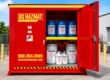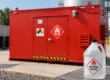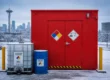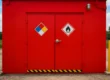
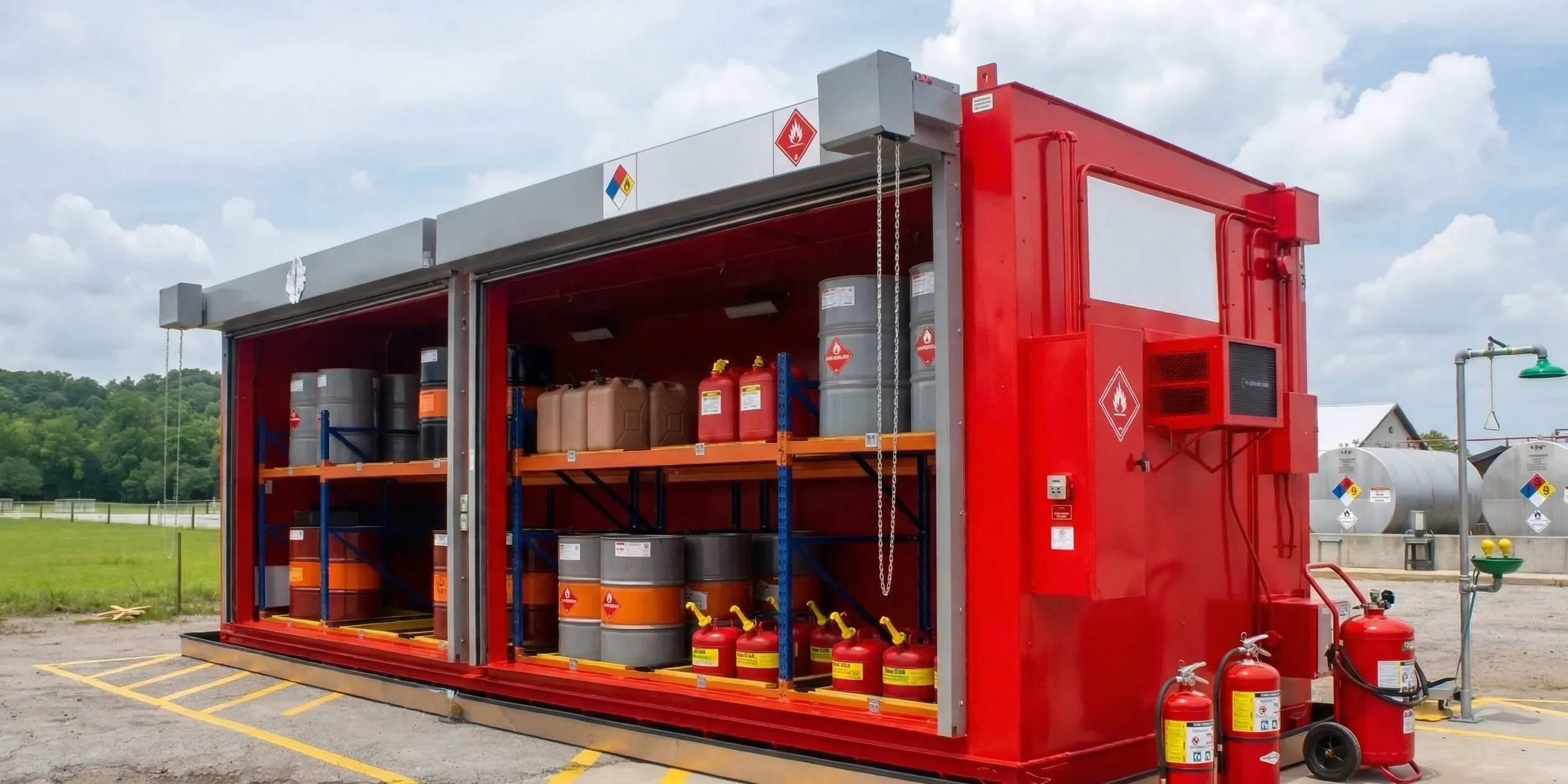
In the high-stakes world of industrial safety, staying compliant isn’t just about avoiding fines—it’s about protecting lives and assets. For facility managers and safety officers, the terminology surrounding chemical containment can often feel like an alphabet soup of acronyms. Specifically, understanding the interplay between OSHA flammable storage guidelines and NFPA standards is critical for any operation handling hazardous materials.
When you are storing volatile substances, you aren’t just looking for a metal box; you are looking for a barrier against catastrophe. Navigating the nuances of flammable cabinet requirements ensures that your facility remains a “safe harbor” even in the event of an accidental ignition. By aligning your protocols with both federal law and industry best practices, you establish a culture of authority and safety that resonates with employees and inspectors alike.
Understanding the Dual Pillars of Safety: OSHA and NFPA
Before diving into the technical specifications, it is essential to distinguish between these two entities. While they often work in tandem, their roles in your facility’s compliance strategy are distinct.
- OSHA (Occupational Safety and Health Administration): This is the federal regulatory body. Their standards, specifically 29 CFR 1910.106, carry the weight of law. Failure to comply with OSHA can lead to significant legal liabilities and heavy financial penalties.
- NFPA (National Fire Protection Association): This is a global self-funded nonprofit organization. Their standards, such as NFPA 30, are considered “best practices.” However, OSHA often incorporates NFPA standards by reference, making them practically mandatory in many jurisdictions.
By adhering to the most stringent interpretation of both, you provide your team with the highest level of flammable storage protection, ensuring that the “scarcity” of safety incidents remains a permanent feature of your workplace.
29 CFR 1910.106: The Foundation of OSHA Flammable Storage
OSHA’s primary regulation for flammable liquids is 29 CFR 1910.106. This standard classifies liquids based on their flashpoints and boiling points, which dictates exactly how they must be stored.
The Classification System
Historically, OSHA used “Classes” (Class IA, IB, etc.), but in recent years, they have aligned more closely with the Globally Harmonized System (GHS), using “Categories.”
| Category | Flashpoint | Boiling Point |
| Category 1 | < 73.4°F (23°C) | <= 95°F (35°C) |
| Category 2 | < 73.4°F (23°C) | <= 95°F (35°C) |
| Category 3 | >= 73.4°F (23°C) and <= 140°F (60°C) | – |
| Category 4 | > 140°F (60°C)$ and <= 199.4°F (93°C) | – |
Understanding these categories is the first step in determining your specific flammable cabinet requirements. For example, the volume of Category 1 liquids allowed outside of a dedicated storage room is significantly lower than that of Category 4.
Maximum Capacities for Storage Cabinets
OSHA is very specific about how much “fuel” you can keep in one spot. According to 1910.106(d)(3):
- No more than 60 gallons of Category 1, 2, or 3 flammable liquids may be stored in a single cabinet.
- No more than 120 gallons of Category 4 liquids may be stored in a single cabinet.
Deep Dive: NFPA 30 and Industry Best Practices
While OSHA sets the legal floor, NFPA 30 (Flammable and Combustible Liquids Code) often sets the ceiling for safety. Most modern fire marshals and insurance providers will look for NFPA 30 compliance as the gold standard.
The Logic of “The Flammable Cabinet”
The primary purpose of a flammable storage cabinet is not to keep the fire out forever, but to provide a 10-minute “window of safety.” This time allows employees to evacuate and fire suppression systems to activate. According to NFPA.org, the internal temperature of a cabinet must not exceed $325°F$ during a standard 10-minute fire test.
Venting: To Vent or Not to Vent?
This is one of the most debated topics in osha flammable storage.
- OSHA’s Stance: OSHA does not strictly require cabinets to be vented for fire protection purposes.
- NFPA’s Stance: NFPA 30 states that venting is not required for fire protection, but if you do vent, it must be done in a way that does not compromise the cabinet’s integrity (usually involving steel piping to the outdoors).
Expert Note: Venting is typically only recommended if the stored chemicals produce toxic or noxious vapors that could harm workers when the cabinet is opened.
Essential Flammable Cabinet Requirements: A Checklist
When selecting a rental unit or a permanent fixture, ensure it meets the following structural criteria to satisfy both OSHA and NFPA inspectors.
Construction Material (Metal vs. Wood)
While metal is the most common, wood is actually permitted under specific conditions:
- Metal Cabinets: Must have a double-walled construction with a 1.5-inch air space. Joints must be riveted, welded, or made tight by some equally effective means.
- Wood Cabinets: Must be constructed of at least 1-inch exterior grade plywood. All joints must be rabbeted and fastened in two directions with flathead wood screws.
The 2-Inch Liquid-Tight Sill
One of the most overlooked flammable cabinet requirements is the bottom sill. The floor of the cabinet must be liquid-tight to a height of at least 2 inches to contain spills. This prevents a leaking drum from creating a “river of fire” that flows across your warehouse floor.
Labeling and Visibility
Authority is projected through clarity. All cabinets must be conspicuously labeled: “FLAMMABLE – KEEP FIRE AWAY.” This warning isn’t just for staff; it’s a critical marker for first responders who need to identify high-risk zones instantly.
Comparing 29 CFR 1910.106 with NFPA Standards
While they are mostly in sync, there are subtle “gray areas” where a Content Strategist or Safety Lead must be careful.
The “Approval” Factor
OSHA requires cabinets to be “approved.” In the United States, this typically means the cabinet has been tested and listed by a Nationally Recognized Testing Laboratory (NRTL), such as Underwriters Laboratories (UL) or Factory Mutual (FM). For detailed technical listings, you can consult the OSHA NRTL program page.
Storage Limits per Fire Area
NFPA 30 offers more granular guidance on how many cabinets can be grouped together. While OSHA focuses on the cabinet itself, NFPA looks at the “Fire Area.” Generally, no more than three cabinets should be located in a single fire area unless they are separated by a sufficient distance or fire-rated walls.
Internal Safety Protocols: Beyond the Cabinet
Safety doesn’t end at the cabinet door. True flammable storage protection involves the entire environment.
- Grounding and Bonding: When dispensing liquids from a drum inside or near a cabinet, you must use grounding wires to prevent static discharge—a common cause of industrial explosions.
- Temperature Control: Flammable liquids should be kept in a cool, dry environment. Extreme heat can increase internal pressure in containers, leading to leaks.
- Segregation: Never store incompatible materials (like oxidizers and flammables) in the same cabinet. This is a primary focus for both OSHA and NFPA.
The Cost of Non-Compliance
Ignoring flammable cabinet requirements is a gamble with diminishing returns.
- Legal Fines: OSHA “Serious” violations can exceed $15,000 per instance, while “Willful” violations can top $150,000.
- Insurance Liability: If a fire occurs and your storage is found to be non-compliant with NFPA 30, your insurance provider may deny the claim.
- Operational Downtime: A single incident can shut down a facility for weeks or months, resulting in lost revenue that far outweighs the cost of a compliant rental solution.
FAQs: Navigating OSHA and NFPA Rules
1. Can I store aerosols in my flammable storage cabinet?
Yes, but they contribute to your total gallon limit. Aerosols are often Category 1 or 2 flammables and must be accounted for when calculating the 60-gallon limit for high-risk liquids.
2. Do all flammable cabinets need to be self-closing?
While OSHA does not federally mandate self-closing doors, many state and local fire codes (based on NFPA 1) do. It is always safer to opt for self-closing models to ensure the cabinet isn’t accidentally left open.
3. How many cabinets can I have in one room?
According to NFPA 30, you can have up to three cabinets in a single fire area. However, some jurisdictions allow more if the building is equipped with an automatic sprinkler system.
4. Is a “yellow box” enough to be OSHA compliant?
No. Just because a cabinet is painted yellow doesn’t mean it meets osha flammable storage standards. You must check for the UL or FM “Approved” stamp and ensure it meets the 2-inch sill and double-wall requirements.
5. Can I stack flammable cabinets to save space?
Generally, no. Stacking compromises the structural integrity and the fire-resistance rating of the units. Each cabinet should be on a level, stable surface.
Securing Your Facility with US Hazmat Rentals
Navigating the complexities of OSHA flammable storage and NFPA 30 doesn’t have to be a solo journey. By choosing a partner who understands the deep technical requirements of 29 CFR 1910.106, you ensure that your facility is not only compliant but truly safe. Whether you are operating a chemical plant in Houston, TX, a pharmaceutical lab in New Jersey, or a manufacturing hub in Los Angeles, local and federal regulations remain your roadmap to operational excellence.
Don’t leave your compliance to chance or subpar equipment. Ensure your team has the protection they deserve with industry-leading containment solutions.Ready to secure your site? Contact US Hazmat Rentals today for a consultation on our fully compliant storage lockers. Whether you need short-term rentals or long-term safety solutions, we provide the authority and reliability your project demands.