An IBC tote rack can look like a simple storage upgrade at first. For many facilities, the immediate goal is clear: get bulky intermediate bulk containers off the floor, recover usable square footage, and create a cleaner storage area. But in chemical storage environments, vertical space is never just a space-saving decision. It affects access, inspection, spill control, forklift movement, inventory rotation, and the way teams respond when something goes wrong.
Facilities that store IBC totes often deal with more than one challenge at the same time. A warehouse may be running out of floor space. A production team may need faster access to high-use liquids. A safety manager may be trying to reduce clutter before an inspection. A compliance team may need a better way to separate incompatible materials. When IBC totes sit wherever space is available, the storage area can become harder to manage and easier to overlook.
US HazMat Storage helps businesses think through these decisions with a practical lens. A professional IBC tote rack should support daily operations, but it should also fit the chemical profile, containment plan, site layout, equipment access, and safety expectations of the facility.
Why Vertical Storage Matters for IBC Tote Management
IBC totes are efficient containers, but they are not small. A standard tote can take up a significant amount of floor space, especially when facilities store multiple products, batches, waste streams, or raw materials. Without a clear storage system, totes can quickly create congestion in receiving areas, production zones, outdoor yards, and warehouse aisles.
A professional IBC tote rack helps a facility use height more intentionally. Instead of spreading totes across the floor, the storage layout can be organized upward while preserving access at ground level. That can make inventory easier to identify, reduce unnecessary handling, and create more predictable movement paths for forklifts and personnel.
The value is not only about fitting more containers into the same footprint. Vertical storage can also make the site easier to inspect. When totes have assigned rack positions, teams can see what belongs where, which containers need attention, and whether any tote is damaged, leaking, mislabeled, or stored in the wrong area.
For facilities handling regulated chemicals, this kind of organization matters. A cleaner layout can support better housekeeping, easier SDS matching, clearer signage, and stronger separation between materials that should not be stored together.
What an IBC Tote Rack Actually Needs to Do
A rack system should never be selected only by dimensions. The right IBC tote rack must be matched to the weight, liquid type, handling method, containment needs, and storage environment. A tote filled with water-based material does not create the same risk profile as a tote filled with flammable, corrosive, reactive, or environmentally sensitive liquid.
At a minimum, a professional rack solution should support:
- The full weight of loaded IBC totes
- Safe forklift loading and unloading
- Clear access for inspection and labeling
- Stable storage without shifting or leaning
- Compatibility with containment systems
- Separation of incompatible chemicals
- Safe aisle width and traffic flow
- Emergency access and spill response routes
This is where many basic storage layouts fall short. A generic warehouse rack may create vertical space, but that does not automatically make it appropriate for chemical storage. Facilities need to think about what happens if a tote leaks, if a valve fails, if a forklift strikes a rack, or if a product needs to be isolated quickly.
A properly planned IBC tote rack becomes part of a larger storage system, not just a structure that holds containers.
Chemical Compatibility Should Shape the Rack Layout
Chemical compatibility is one of the most important details in IBC tote storage. Two containers may look identical from the outside while holding materials that should never be stored close together. Acids, bases, oxidizers, solvents, flammables, and reactive chemicals all create different storage concerns.
A professional IBC tote rack layout should help a facility create separation by chemical family, not just by available space. That may mean assigning certain rack bays to specific products, keeping incompatible materials in different storage zones, or using separate containment systems for materials that should not mix during a spill.
A safer rack layout may include:
- Dedicated rack rows for specific chemical groups
- Clear labels on rack bays and tote positions
- Physical separation between incompatible materials
- Spill containment matched to the stored liquid
- Restrictions on placing certain chemicals above others
- Routine checks to confirm totes remain in assigned areas
Chemical compatibility should be guided by SDS documentation, internal EHS procedures, and applicable regulatory or fire code requirements. The goal is not simply to store totes neatly. The goal is to prevent a small storage mistake from becoming a larger safety or environmental event.
Secondary Containment for IBC Totes Cannot Be an Afterthought
An IBC tote rack should be planned alongside containment. If a tote leaks while stored above floor level, the facility needs a clear path for capturing that liquid safely. Without containment planning, vertical storage can make spills harder to control.
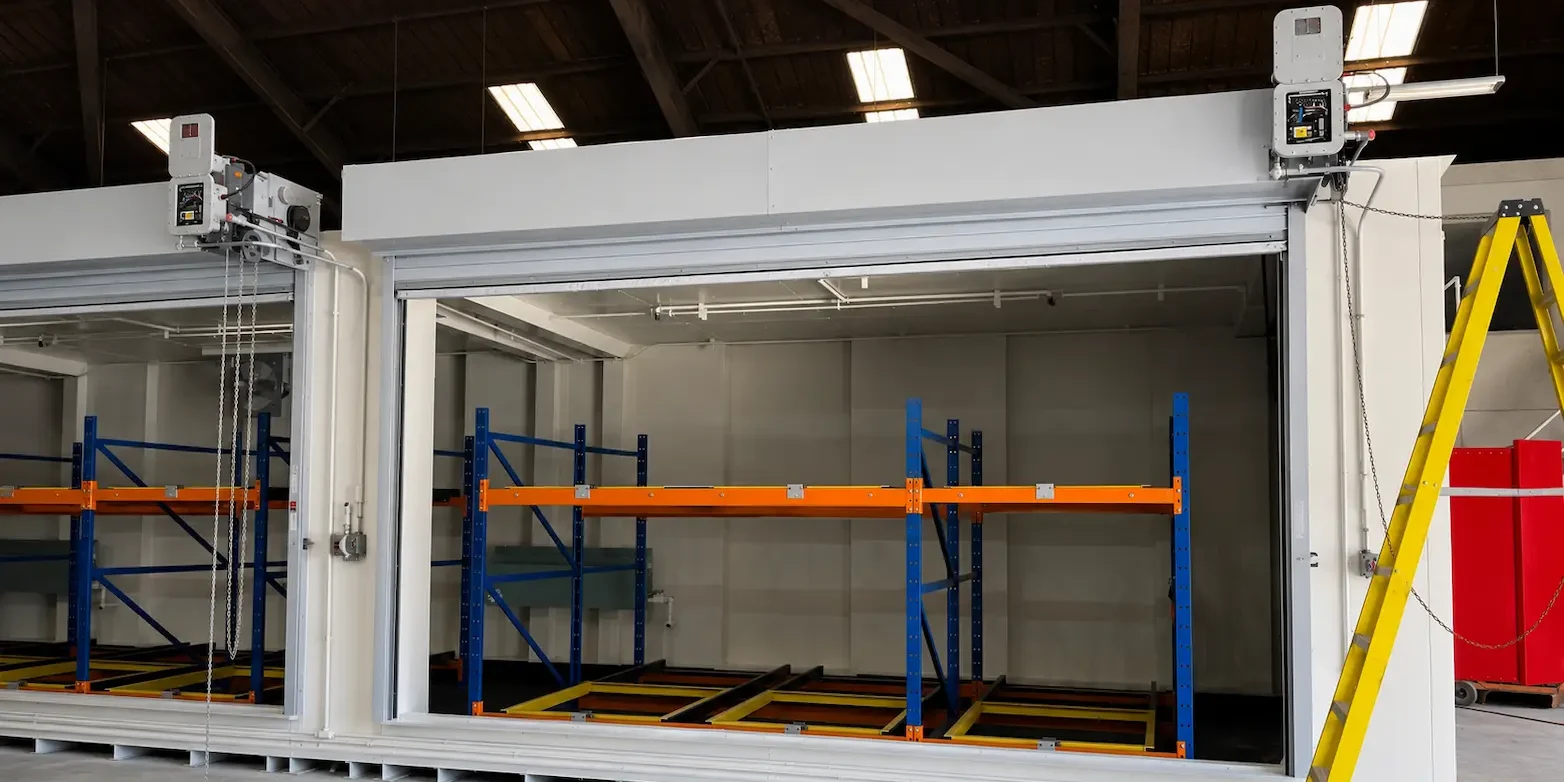
Secondary containment for IBC totes may involve containment sumps, spill decks, rack-integrated containment, curbed storage areas, or engineered chemical storage buildings. The right option depends on the material, volume, site conditions, and whether the tote is stored indoors or outdoors.
Facilities should ask these questions before finalizing a rack system:
- What is the largest container volume being stored?
- Can the containment area capture a full release?
- Are multiple totes sharing the same containment system?
- Could rainwater affect outdoor containment capacity?
- Are the stored materials compatible if they enter the same sump?
- Can employees safely access the containment area for cleanup?
- Is the containment system protected from vehicle impact?
Containment planning is also important for inspection readiness. A rack may look efficient, but if leaks can escape into drains, soil, traffic areas, or production spaces, the facility still has a serious gap.
For businesses needing container-based chemical storage, US HazMat Rentals provides additional support through IBC tote containers and chemical storage building options that can help teams plan around containment, access, and project-based storage needs.
Indoor vs. Outdoor IBC Tote Rack Planning
The best IBC tote rack setup depends heavily on where the totes will be stored. Indoor and outdoor environments create different safety, access, and durability concerns.
| Storage Location | Key Advantages | Main Concerns |
| Indoor rack storage | Better weather protection, easier supervision, closer production access | Ventilation, floor loading, fire separation, aisle clearance |
| Outdoor rack storage | Frees indoor space, supports bulk storage, can improve separation | Weather exposure, containment freeboard, security, temperature control |
| Covered exterior storage | Protects from rain and sun while keeping totes outside main operations | Drainage, wind exposure, access control, code review |
| Chemical storage building | More controlled environment for regulated materials | Site planning, ventilation, fire rating, containment design |
Indoor storage may work well for facilities with stable floor capacity, proper access, and controlled chemical volumes. Outdoor storage may be better when totes need separation from production areas or when indoor square footage is limited. In either case, the rack should be treated as one part of the full storage environment.
When Chemical Storage Racks Improve Operations
A strong IBC tote rack system can improve more than safety. It can make daily operations smoother, especially in facilities where totes are moved, replaced, dispensed, or inspected frequently.
Operational benefits may include:
- More usable floor space
- Cleaner traffic paths
- Faster inventory checks
- Easier product identification
- Better separation between materials
- Reduced tote handling
- More predictable forklift movement
- Improved housekeeping before audits or inspections
These benefits matter because storage problems rarely stay isolated. Poor tote organization can slow production, create staging delays, increase forklift congestion, and make employees work around clutter. A better storage layout helps the entire facility feel more controlled.
For operations managers, this can be especially valuable. The right rack setup can reduce small daily frustrations while supporting a stronger long-term safety program.
Common Mistakes Facilities Make with IBC Tote Rack Storage
Many storage issues begin with practical pressure. A shipment arrives early. A production area runs out of space. A tote is placed temporarily in an open bay. Over time, temporary storage becomes normal storage, and the facility loses control of the layout.
Common mistakes include:
- Using warehouse racks not evaluated for loaded IBC tote weight
- Storing incompatible chemicals in the same rack area
- Placing totes without clear labels or assigned positions
- Blocking access to valves, labels, or inspection points
- Ignoring floor loading limits
- Failing to plan for forklift impact protection
- Using vertical storage without secondary containment
- Allowing damaged pallets or tote cages to remain in use
- Storing outdoor totes without weather or security planning
- Treating rack capacity as the only buying factor
A professional IBC tote rack should help correct these issues, not hide them. The best systems make the storage area easier to understand at a glance.
A Practical Checklist Before Installing an IBC Tote Rack
Before selecting or installing an IBC tote rack, facilities should complete a basic readiness review. This does not replace engineering, EHS, or code review, but it does help teams identify the most important questions early.
Storage Profile
- List every liquid stored in IBC totes
- Confirm SDS documentation for each product
- Identify flammable, corrosive, reactive, or toxic materials
- Confirm whether totes are full, partial, waste, or in active use
Site Conditions
- Review available floor space and ceiling height
- Confirm floor loading capacity
- Check forklift access and aisle width
- Identify nearby drains, doors, exits, panels, and ignition sources
Rack Planning
- Confirm loaded tote weights
- Match rack capacity to real stored volume
- Plan rack positions by chemical compatibility
- Keep labels and valves visible where possible
- Add impact protection where forklifts operate
Containment and Emergency Planning
- Review containment capacity
- Separate incompatible liquids where needed
- Place spill kits near the storage area
- Keep emergency access routes open
- Train employees on inspection and response procedures
This checklist gives teams a practical starting point. The final design should still reflect the facility’s chemicals, volumes, local code requirements, and operating conditions.
How Professional Rack Solutions Support Compliance Planning
An IBC tote rack does not create compliance by itself. Compliance depends on the full storage system, including containers, containment, labeling, employee training, inspection routines, fire protection, ventilation, and site-specific procedures.
However, a properly selected rack can support compliance by making the storage system easier to manage. When totes are organized, separated, labeled, and accessible, it becomes easier for teams to maintain control. It also becomes easier to identify problems before they grow.
This matters for facilities preparing for internal audits, insurance reviews, environmental inspections, or fire marshal walkthroughs. A cluttered tote area sends the wrong message. A structured storage system shows that the facility has thought through risk, access, containment, and daily use.
US HazMat Storage works with businesses that need storage solutions built around real operational needs, not generic equipment assumptions. For teams managing hazardous materials, that difference matters.
FAQ
What is an IBC tote rack used for?
An IBC tote rack stores intermediate bulk containers vertically to improve space use, access, organization, and material handling.
Can any warehouse rack hold IBC totes?
No. Rack capacity, floor loading, tote weight, chemical risk, containment, and forklift access must all be reviewed first.
Do IBC tote racks need secondary containment?
In many chemical storage settings, yes. Containment helps capture leaks or spills before they spread into work areas or the environment.
Can flammable liquids be stored on an IBC tote rack?
Possibly, but only with proper review of fire code, ventilation, containment, separation, ignition sources, and approved storage conditions.
Should incompatible chemicals share the same rack?
No. Incompatible chemicals should be separated according to SDS guidance, facility procedures, and applicable safety requirements.
Is outdoor IBC tote rack storage allowed?
Outdoor storage may be possible when the site accounts for weather, containment, security, access, and local code requirements.
How often should IBC tote racks be inspected?
Facilities should inspect racks, totes, labels, valves, and containment routinely, with frequency based on chemical risk and site procedures.
Who should help plan an IBC tote rack system?
A qualified storage specialist, EHS lead, engineer, or compliance advisor should review the facility’s chemicals, volumes, layout, and handling process.