Facilities that store 200 proof alcohol face a compliance picture most teams do not anticipate: two separate regulatory frameworks operating simultaneously. NFPA 30 governs the flammable liquid storage requirements that apply to any anhydrous ethanol above certain quantities.
The Alcohol and Tobacco Tax and Trade Bureau (TTB) governs the permit and tax status requirements that determine whether pure ethanol can be purchased and held without paying federal alcohol excise tax. Getting only one of those right is not a complete compliance plan. Getting neither right is how a storage arrangement simultaneously triggers a fire code deficiency and an excise tax liability.
The term 200 proof alcohol refers to ethanol at 100 percent concentration, completely anhydrous with no water content. On the U.S. proof scale, proof is twice the alcohol percentage by volume. This product is hygroscopic: it absorbs atmospheric moisture immediately on contact with air, which means it begins degrading in purity the moment a container is opened. That property drives storage container requirements, handling protocols, and the practical limits on how long an opened container can maintain its stated concentration in an industrial setting.
At US Hazmat Rentals, we work with EHS managers, lab managers, and plant managers setting up storage for 200 proof alcohol alongside other flammable solvents, including acetone, who need infrastructure that satisfies NFPA 30 for the flammable liquid classification, the applicable electrical hazardous location classification, and secondary containment requirements.
What “200 Proof” Actually Means for Storage and Handling
200 proof alcohol has a flash point of 55 degrees Fahrenheit, placing it in NFPA 30’s Class IB flammable liquid category: flash point below 73 degrees Fahrenheit and boiling point above 100 degrees Fahrenheit. Its lower explosive limit is 3.3 percent by volume in air and its upper explosive limit is 19 percent.
With a flash point of 55 degrees Fahrenheit, anhydrous ethanol produces flammable vapors at virtually any indoor or sheltered outdoor temperature, year-round, which defines the storage and ventilation requirements that follow.
The anhydrous nature creates a degradation risk that lower-proof ethanol products do not carry. Standard 95 percent ethanol forms an azeotrope with water and is relatively stable in properly sealed containers. Pure ethanol at full concentration has no such equilibrium point. Any exposure to ambient air introduces moisture.
Facilities storing the product for laboratory or pharmaceutical applications where purity is critical need containers that minimize headspace, limit access time, and are designed to exclude atmospheric moisture during storage.
The storage challenges are similar in principle to acetone, also a Class IB flammable liquid with a flash point well below ambient temperatures. Flashpoint acetone is negative 4 degrees Fahrenheit versus 55 degrees Fahrenheit for anhydrous ethanol, making acetone more volatile at cold temperatures. Both require the same NFPA 30 storage infrastructure for regulated quantities, but the container compatibility considerations differ.
NFPA 30 Classification and What It Requires
200 proof alcohol as a Class IB flammable liquid triggers the same NFPA 30 storage requirements as acetone, methanol, and lower-proof ethanol. Outside of an approved flammable storage cabinet or dedicated storage building, OSHA limits flammable liquid storage in a room to 25 gallons. An approved safety cabinet extends that limit to 60 gallons of Class I liquids per cabinet, with a maximum of three cabinets per fire area.
The Class IB classification also drives the electrical hazardous location designation of the storage area. NFPA 70 classifies spaces where Class I flammable vapors may be present as Class I hazardous locations, subdivided into Division 1 or Division 2 based on whether those concentrations are expected under normal or only abnormal conditions.
Mechanical ventilation design determines which division applies. All electrical equipment within the hazardous location zone must be rated for the applicable Class I designation, including lighting, exhaust fans, and any instrumentation in the space.
For pharmaceutical, laboratory, and manufacturing operations using pure ethanol in volume, the 25-gallon room limit is typically exceeded within normal operating cycles. A research laboratory running DNA extraction protocols with anhydrous ethanol as a precipitation solvent may require several gallons at a time while storing larger quantities centrally. That storage location needs NFPA 30-compliant infrastructure for the total Class I flammable liquid inventory, not just the ethanol portion alone.
TTB Permits and the Tax Status Question
This is the part of the 200 proof alcohol compliance picture that surprises most purchasing and EHS teams. Pure ethanol, including anhydrous grades, is subject to federal excise tax unless it is denatured or the user holds a TTB permit exempting their use from that tax. For industrial or laboratory users who need large quantities of tax-exempt ethanol, the TTB permit process is not optional.
Industrial users typically access tax-exempt ethanol through two pathways. The first is denatured alcohol: ethanol rendered unfit for beverage use by specific denaturing agents per TTB formulas. Specially Denatured Alcohol (SDA) formulas are use-specific, and the TTB formula the facility is licensed for determines which applications the alcohol can be used in.
Completely Denatured Alcohol (CDA) has broader permitted uses but is more aggressively denatured, making it unsuitable for applications where the denaturing agent would interfere with the process.
The second pathway is a TTB User’s Basic Permit (Form 5150.31), authorizing tax-free, non-denatured ethanol for industrial or research purposes. This requires filing, approved premises, and TTB record-keeping compliance. Facilities that purchase what they believe is industrial-grade anhydrous ethanol without verifying the TTB status of the product or their own permit requirements may hold untaxed beverage alcohol without authorization, which creates a federal compliance problem entirely separate from the fire code picture.
Container Requirements: What “Approved” Actually Means
For 200 proof alcohol in regulated industrial quantities, NFPA 30 requires approved containers: UL-listed or FM-approved safety cans for quantities up to five gallons, and DOT-compliant metal drums or approved IBC configurations for larger volumes. The same framework applies to acetone container requirements, which come up at facilities storing both products.
The question of can you put acetone in a plastic container extends to anhydrous ethanol as well: general-purpose plastic containers are not appropriate for either product in an NFPA 30-regulated context.
For pure ethanol specifically, the container also has to maintain purity. Laboratory-grade anhydrous ethanol is often stored in amber glass bottles with tight-sealing closures that minimize headspace and exclude atmospheric moisture. Larger quantities for industrial or pharmaceutical production may use nitrogen-blanketed stainless steel containers that purge oxygen and humidity from the headspace before sealing.
200 Proof vs. Denatured Alcohol: Which One Does Your Facility Need?
Many facilities that request 200 proof alcohol for industrial applications actually need denatured alcohol, specifically a TTB-approved SDA formula. The distinction matters for both regulatory and economic reasons. Pure, non-denatured anhydrous ethanol carries federal excise tax at rates that make it economically impractical for most industrial uses without a TTB permit.
SDA formulas are tax-exempt and appropriate for most industrial cleaning, solvent extraction, and manufacturing applications where beverage-grade purity is not required.
The cases where non-denatured 200 proof alcohol is genuinely required include: pharmaceutical manufacturing where SDA denaturing agents would cause regulatory or product quality issues, laboratory applications requiring ACS or USP grade ethanol for analytical purposes, and specific chemical synthesis protocols where denaturing agents would interfere with the reaction.
For most industrial cleaning, surface preparation, and general solvent applications, an appropriate SDA formula provides equivalent performance without the TTB permit requirement or the excise tax burden.
Understanding which product your application actually requires before purchasing simplifies both the regulatory pathway and the storage planning. Our flammable chemicals storage resource covers the NFPA 30 classification, quantity limits, and storage building specifications that apply to Class IB flammable liquid applications including anhydrous ethanol.
Getting 200 Proof Alcohol Storage Right Before the First Delivery Arrives
Anhydrous ethanol presents a three-layer compliance challenge: NFPA 30 for the flammable liquid storage requirements, TTB for the permit and tax status, and OSHA for occupational exposure and HazCom training obligations. Addressing one layer without the others leaves compliance gaps that surface during a fire inspection, a TTB audit, or an OSHA workplace review depending on which layer was overlooked.
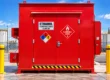
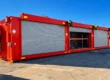
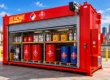
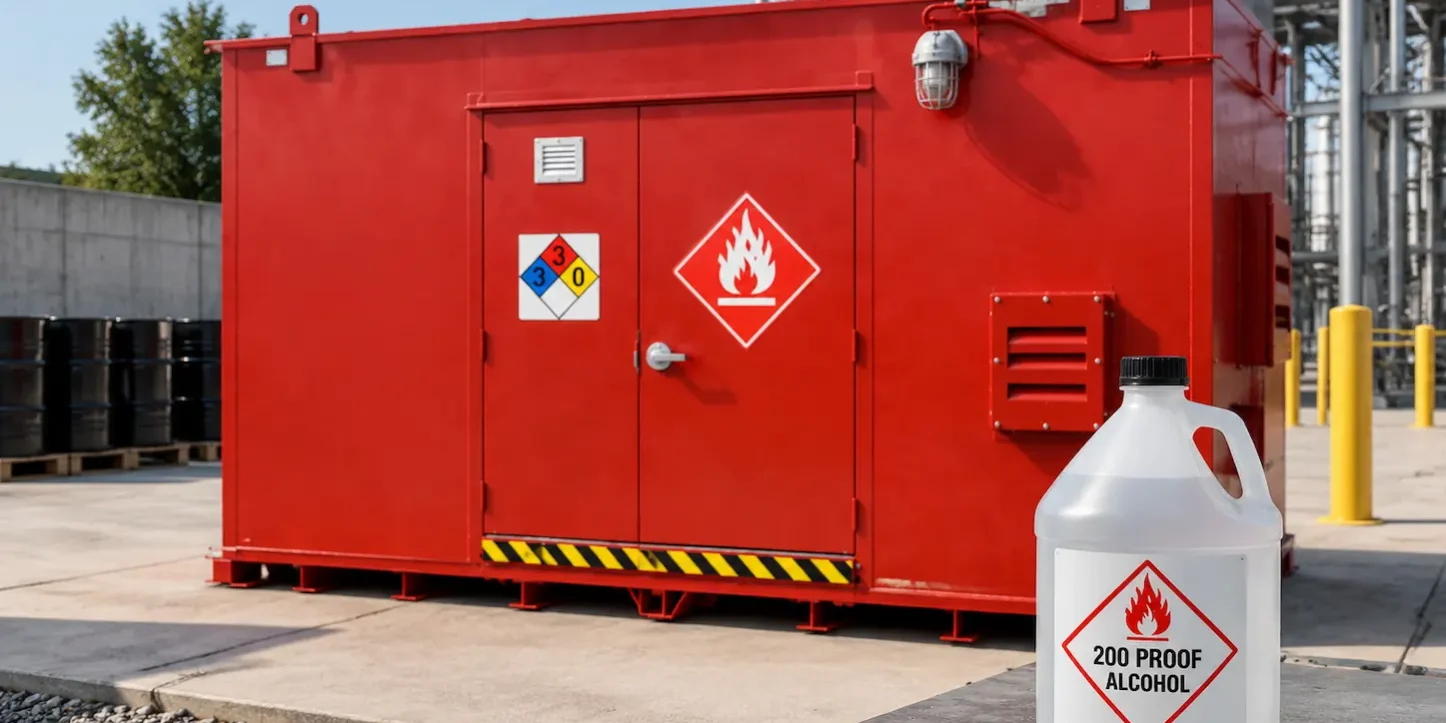
US Hazmat Rentals has fire-rated flammable storage buildings in inventory for Class IB flammable liquid applications, with ventilation, secondary containment, and explosion-proof electrical infrastructure ready to deploy. Talk to our compliance team before you buy or rent to confirm the right configuration, the applicable quantity thresholds, and the storage building specification that fits your actual inventory. Schedule your consultation here.
FAQ
What is 200 proof alcohol and why does it require special storage?
200 proof alcohol is 100 percent anhydrous ethanol with a flash point of 55 degrees Fahrenheit. That flash point places it in NFPA 30’s Class IB flammable liquid category, triggering storage requirements including approved containers, quantity limits of 25 gallons outside approved cabinets or storage buildings, ventilation, and Class I electrical equipment classification for the storage area. The anhydrous nature also requires moisture-excluding container design to maintain purity.
Does storing 200 proof alcohol require a TTB permit?
Yes, in most cases. Pure, non-denatured anhydrous ethanol is subject to federal excise tax unless the user holds a TTB User’s Basic Permit or is using a TTB-approved denatured alcohol formula. Industrial users accessing large quantities of tax-exempt ethanol typically do so through Specially Denatured Alcohol (SDA) formulas with a TTB permit, or through Completely Denatured Alcohol (CDA) for broader applications.
What containers are appropriate for anhydrous ethanol storage?
NFPA 30 requires approved containers: UL-listed or FM-approved safety cans for dispensing quantities up to five gallons, and DOT-compliant metal drums for larger volumes. General-purpose plastic containers are not appropriate for industrial anhydrous ethanol under NFPA 30. Moisture-excluding features such as tight seals, minimal headspace, and nitrogen blanketing are required to maintain product purity in storage.
How does 200 proof alcohol compare to acetone for storage requirements?
Both are Class IB flammable liquids under NFPA 30. Flashpoint acetone is negative 4 degrees Fahrenheit versus 55 degrees Fahrenheit for anhydrous ethanol, making acetone more volatile at cold temperatures. Both require the same class of approved storage infrastructure. The primary difference is that anhydrous ethanol requires moisture-excluding container design to maintain its purity, while acetone container selection focuses on chemical compatibility with the container material.
What happens when anhydrous ethanol quantities exceed cabinet limits?
When the aggregate Class I flammable liquid inventory in a fire area exceeds 60 gallons per approved cabinet or 180 gallons across three cabinets, a purpose-built flammable storage building is required. The building must have fire-rated construction at the level NFPA 30 specifies for the quantity and occupancy type, mechanical ventilation with explosion-proof equipment, secondary containment, and Class I electrical rating based on the ventilation design.
Can 200 proof alcohol be stored with other flammable solvents?
Yes, but the aggregate quantity of all Class I flammable liquids in the storage area counts against the NFPA 30 quantity limits. A facility storing anhydrous ethanol alongside acetone or methanol must use the combined volume of all Class I products for the limit calculation. Chemical compatibility between co-stored products should also be reviewed, as pure ethanol may react with strong oxidizers or concentrated acids stored nearby.