A flammable storage decision in New York City should never start with a quick equipment order. The safer starting point is compliance. Businesses reviewing flammable cabinet osha requirements in NYC need to think beyond the cabinet itself. The storage area, liquid classification, quantity, documentation, FDNY permitting, employee access, ventilation, fire protection, and daily handling process all matter.
That is especially true across the five boroughs. A contractor in Queens, a print shop in Brooklyn, a maintenance team in Manhattan, a production facility in the Bronx, or a warehouse in Staten Island may all store flammable or combustible liquids under very different site conditions. Space is tighter. Inspections can be more detailed. Mixed-use buildings create additional concerns. Storage decisions are rarely isolated from the larger fire safety picture.
At US Hazmat Rentals, we approach flammable storage as a regulated safety decision, not a simple product category. A cabinet, locker, or rental storage solution only makes sense when it fits the chemicals, quantities, site layout, access needs, and local compliance expectations involved.
Why Flammable Cabinet OSHA Requirements Are Stricter in NYC
For NYC businesses, flammable cabinet osha requirements should be reviewed with one clear goal: create a storage plan that is easier to explain, easier to inspect, and safer for the people working around hazardous liquids every day.
New York City does not leave much room for casual hazardous material storage. Businesses often operate in compact buildings, shared industrial properties, basements, high-traffic service areas, or job sites where flammable liquids may be close to employees, customers, tenants, vehicles, equipment, or ignition sources.
That makes flammable storage planning more sensitive than it might be in a larger rural or suburban facility. Even a small quantity of solvent, gasoline, adhesive, coating, or cleaning chemical can create risk when it is stored in the wrong location or handled without clear procedures.
A compliance-first review helps answer important questions before the storage plan moves forward:
- What liquids are being stored?
- Are they flammable or combustible?
- How much is stored at one time?
- Is the liquid kept in approved containers?
- Does the site need a cabinet, storage room, locker, or rental unit?
- Are FDNY permits or Certificates of Fitness involved?
- Are employees trained and able to access SDS information?
- Is the storage area protected from heat, sparks, blocked exits, or vehicle impact?
A business that can answer those questions is in a stronger position than one that simply buys a cabinet and hopes the setup is acceptable.
Flammable Cabinet OSHA Requirements Start with the Liquid
Before choosing a cabinet, businesses need to understand the liquid. OSHA rules for flammable liquids depend on classification, flash point, container type, storage quantity, handling method, and whether the liquid is used in general industry or construction settings.
That classification step matters in NYC because different operations may store different materials under the same general label of “flammables.” Auto shops, painting contractors, labs, commercial maintenance teams, manufacturing operations, and restoration crews may all use flammable liquids, but their storage risks are not identical.
A basic review should begin with the product name, flash point, quantity stored, and container type. Those details help confirm what is actually on site, whether the liquid is flammable or combustible, how much storage capacity may be needed, and whether the containers are appropriate for the material being handled.
The review should also include SDS access, use location, and incompatible materials. Employees need clear hazard information, and the business needs to understand whether the liquid is stored indoors, outdoors, temporarily, or near work activity. Compatibility also matters because unsafe storage combinations can create risks that a cabinet alone cannot solve.
OSHA Flammable Storage Cabinet Basics
When businesses search for flammable cabinet osha requirements, they usually want to know what makes a cabinet acceptable. OSHA addresses flammable liquids under 29 CFR 1910.106 for general industry, and construction settings may also look to OSHA 1926.152 when flammable liquids are used on job sites.
A compliant storage approach may involve approved containers, quantity limits, proper cabinet construction, labeling, fire separation, and restricted placement near exits or ignition sources. Businesses should also review whether their specific operation falls under additional local fire code requirements.
Common OSHA-related cabinet considerations include:
- Approved cabinet construction
- Clear flammable warning signage
- Proper container storage inside the cabinet
- Quantity limits by liquid category or class
- Doors that remain closed when not in use
- Protection from ignition sources
- No storage in exits, stairways, or normal paths of egress
- Employee training under hazard communication rules
The key point is simple: flammable cabinet osha requirements are not only about the cabinet’s label. They are about how the cabinet is used, where it is placed, what it contains, and whether the surrounding process supports safe storage.
NYC Fire Code Adds a Local Layer
Federal OSHA rules matter, but NYC businesses cannot stop there. The New York City Fire Code and FDNY requirements can add local expectations around permits, supervision, storage quantities, site conditions, and inspection readiness.
That local layer is especially important for businesses storing flammable or combustible liquids in dense urban spaces. FDNY may require permits for certain storage, handling, or use activities, and Certificates of Fitness may be required depending on the amount stored, handled, or used.
For businesses in Manhattan, Brooklyn, Queens, the Bronx, and Staten Island, the safer approach is to treat OSHA and FDNY as part of the same planning conversation.
Where NYC Businesses Often Lose Compliance Clarity
Many flammable storage issues begin with ordinary operational pressure. A team receives a shipment. A project requires more solvent than usual. A cabinet is full. A contractor stores extra fuel temporarily. A maintenance room becomes a storage area because it is convenient.
Those small decisions can create larger compliance gaps.
Common risk points include:
- Storing liquids outside approved cabinets
- Keeping flammables near exits, stairways, heaters, or electrical panels
- Exceeding cabinet capacity
- Mixing incompatible materials
- Missing or outdated SDS records
- Using unlabeled or damaged containers
- Leaving cabinet doors open
- Blocking access to fire extinguishers
- Storing flammables in shared tenant areas
- Assuming a regular metal cabinet is acceptable
In NYC, these mistakes can be more serious because storage areas are often compact and close to other building functions. A small room may serve as maintenance storage, janitorial storage, staging space, and chemical storage at the same time. That overlap can create confusion unless the business has a clear system.
When Rental Storage Can Support a Safer Plan
Not every business has the right permanent storage area. Some operations need temporary capacity during construction, remediation, restoration, painting, manufacturing changes, shutdowns, or emergency response work. Others need to move flammable storage away from interior work areas while maintaining better access control.
That is where rental solutions can become part of the planning conversation.
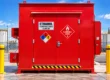
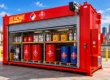
US Hazmat Rentals supports regulated storage needs with options designed for hazardous material handling, flammable storage, and project-based protection. Businesses reviewing flammable cabinet osha requirements may also need to consider whether a cabinet is enough or whether a more controlled storage solution is more appropriate.
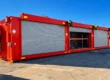
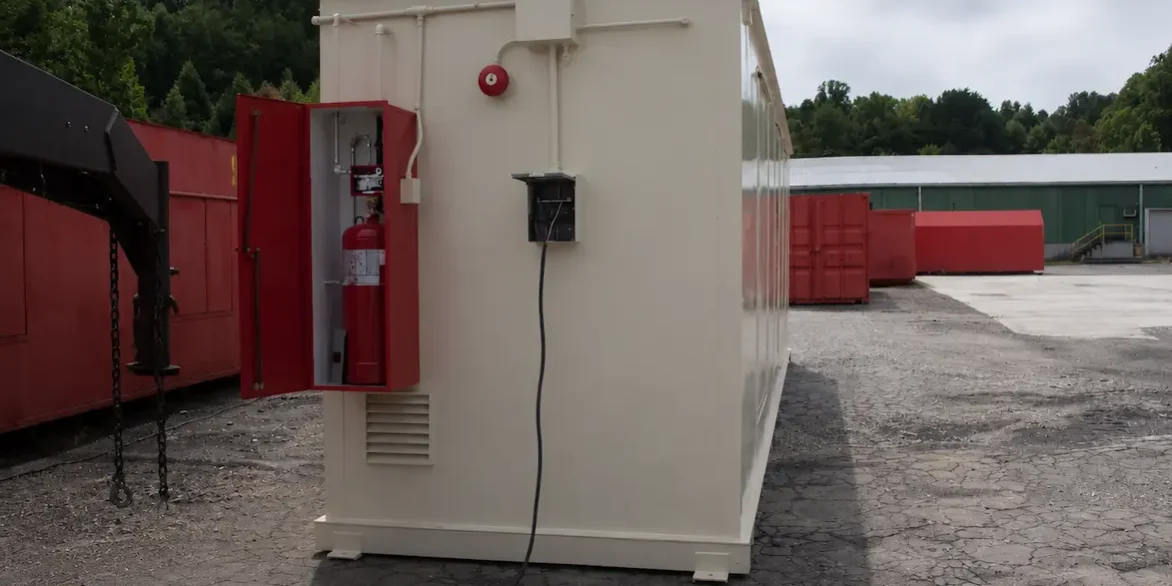
For teams needing a stronger setup, our flammable storage protection options can support safer separation, containment, and site-specific planning.
Rental storage may be useful when:
- The project is temporary
- Indoor space is too limited
- Quantities exceed what a cabinet can reasonably manage
- Materials need to be separated from work areas
- Fire-rated or specialized storage is needed
- A site needs a cleaner, more controlled storage process
- A business needs support during renovation, shutdown, or relocation
The right rental option should not be chosen casually. It should be matched to the chemical profile, location, project timeline, access needs, and applicable requirements.
Documentation Should Be Ready Before the Inspection
A flammable storage setup is easier to defend when the documentation is organized. Businesses should not wait for an inspection, incident, insurance review, or internal audit to find missing records.
A basic compliance file for NYC flammable storage may include:
- Current Safety Data Sheets
- Chemical inventory list
- Storage quantity records
- Cabinet or storage unit specifications
- Employee training records
- FDNY permits if applicable
- Certificate of Fitness information if applicable
- Emergency procedures
- Spill response plan
- Inspection logs
- Corrective action records
Documentation is not only paperwork. It shows that the business understands what is stored, who is responsible, what controls are in place, and how the site is maintained.
For flammable cabinet osha requirements, this matters because the cabinet is only one part of the safety story. A business should be able to explain why the cabinet was selected, what it stores, how employees are trained, and how the storage area is reviewed.
NYC Industries That Should Pay Close Attention
Flammable storage is not limited to large chemical companies. Many NYC businesses may store flammable or combustible liquids as part of daily operations.
Industries that should review their storage setup include:
- Auto repair and detailing shops
- Painting and coating contractors
- Printing and graphic production businesses
- Commercial cleaning operations
- Construction and demolition contractors
- Restoration and remediation companies
- Manufacturing and fabrication shops
- Laboratories and technical facilities
- Building maintenance teams
- Warehouses and distribution spaces
- Film, production, and event support operations
- Marine, transportation, and fleet service companies
For these businesses, flammable cabinet osha requirements are not abstract. They affect where materials are stored, who can access them, how containers are labeled, and whether the operation is ready for review.
The Five Boroughs Require Site-Specific Thinking
A storage approach that works in one NYC property may not work in another. A Bronx warehouse, a Brooklyn mixed-use building, a Queens auto service facility, a Manhattan contractor staging area, and a Staten Island industrial yard may all face different layout and access challenges.
That is why local storage planning should account for:
- Building occupancy
- Available floor space
- Fire department access
- Ventilation conditions
- Shared tenant areas
- Loading dock constraints
- Outdoor storage limitations
- Security and restricted access
- Neighboring properties
- Emergency egress routes
Flammable cabinets may look like a standard safety product, but their use depends heavily on the building, stored liquid, quantity, access conditions, and local fire code expectations. In New York City, the same cabinet may support one operation well and create placement or inspection concerns in another.
Hazmat Rentals Supports Safer Flammable Storage Planning
At US Hazmat Rentals, we understand that regulated storage decisions involve more than availability. Businesses need practical support that respects safety, documentation, site conditions, and compliance expectations.
A responsible flammable storage plan should help the customer ask better questions:
- Is a cabinet enough for the quantity stored?
- Does the site need a rental storage unit instead?
- Are materials separated from ignition sources?
- Are employees trained on handling and emergency response?
- Are permits or local approvals involved?
- Is the storage plan easy to inspect?
- Can the business explain the decision clearly?
That is the difference between casual storage and compliance-first planning. A safer plan is traceable, organized, and matched to the actual site.
For NYC businesses, this approach is especially important. Dense properties, strict fire code expectations, and busy operations can make small storage mistakes harder to manage. A better plan reduces confusion before it becomes a bigger problem.
The Safest First Step Is a Storage Review
The wrong first question is “which cabinet is cheapest?” The better first question is “what does this site actually need to store flammable liquids safely?”
That shift changes the entire decision. It puts chemical classification, quantity, location, permits, employee training, documentation, and local code review ahead of convenience.
Businesses reviewing flammable cabinet osha requirements in NYC should not treat the cabinet as the whole solution. The cabinet is one part of a larger system. The storage area, records, supervision, access control, and emergency planning all shape whether the operation is ready.
US Hazmat Rentals helps businesses approach this category with that level of seriousness. Before choosing a cabinet or rental unit, confirm the chemicals, review the site, organize documentation, and determine whether a more controlled storage solution is needed.
For New York City operations, that is the responsible path. Plan first. Document clearly. Store with safety, access, and compliance in mind.
FAQ
What are flammable cabinet OSHA requirements?
They are OSHA-related rules and expectations for storing flammable liquids safely in approved cabinets, containers, and controlled workplace areas.
Do NYC businesses also need to follow FDNY rules?
Yes. NYC businesses may need to review FDNY permits, Fire Code requirements, and Certificates of Fitness depending on storage conditions.
Can a regular metal cabinet store flammable liquids?
No. Flammable liquids should be stored in cabinets designed and approved for flammable liquid storage when required.
When should a business consider rental flammable storage?
Rental storage may help when space is limited, quantities increase, projects are temporary, or materials need stronger separation.
Are Safety Data Sheets required for flammable liquids?
Yes. Employees need access to SDS information for hazardous chemicals handled or stored in the workplace.
Can US Hazmat Rentals replace legal or regulatory advice?
No. US Hazmat Rentals supports storage planning, but businesses should consult qualified professionals and applicable authorities.