The question of will hydrogen peroxide freeze in Seattle comes up in chemical storage planning more than you might expect, mostly from EHS managers and procurement teams at operations along the Puget Sound industrial corridor storing hydrogen peroxide year-round in outdoor or unheated enclosures.
The answer depends on concentration, and the concentration variable matters more than most people realize: industrial-grade hydrogen peroxide at 30 percent freezes around 14 degrees Fahrenheit, and 35 percent food-grade solutions freeze around 12 degrees Fahrenheit. Seattle’s brief winter cold snaps, which can push outdoor temperatures into the mid-20s Fahrenheit, are cold enough to freeze those concentrations in an unprotected outdoor enclosure.
The direct answer for anyone who needs it: 3 percent drugstore-grade H₂O₂ behaves similarly to water and freezes near 32 degrees Fahrenheit. As concentration rises, the freeze point drops through a process called freezing point depression. At 30 percent, freezing occurs near 14°F. At 50 percent, near 3°F.
Understanding will hydrogen peroxide freeze in Seattle is ultimately a question of matching the concentration you store to the lowest ambient temperature that enclosure will realistically reach during a Seattle winter. This piece covers that calculation and the related questions about acetone storage that come up at the same kinds of operations.
At US Hazmat Rentals, we work with Seattle-area EHS managers, operations leads, and procurement teams storing H₂O₂ and flammable solvents like acetone at the same facility. The will hydrogen peroxide freeze in Seattle question typically surfaces alongside acetone container compatibility and flash point questions, because both products appear in similar industrial applications across King County and the broader Pacific Northwest.
What Concentration Determines in the Freeze Point Calculation
Hydrogen peroxide’s freezing point is directly tied to its concentration in water, and knowing where hydrogen peroxide will freeze in Seattle on that concentration curve is the first number any storage plan needs to confirm. As you dilute it, the freeze point drops until concentration reaches roughly 50 to 60 percent, at which point the curve reverses.
At common industrial concentrations: 3 percent freezes near 32°F, 30 percent near 14°F, 35 percent near 12°F, and 50 percent near 3°F. Pure H₂O₂ close to 100 percent has a freeze point of approximately 31.3 degrees Fahrenheit.
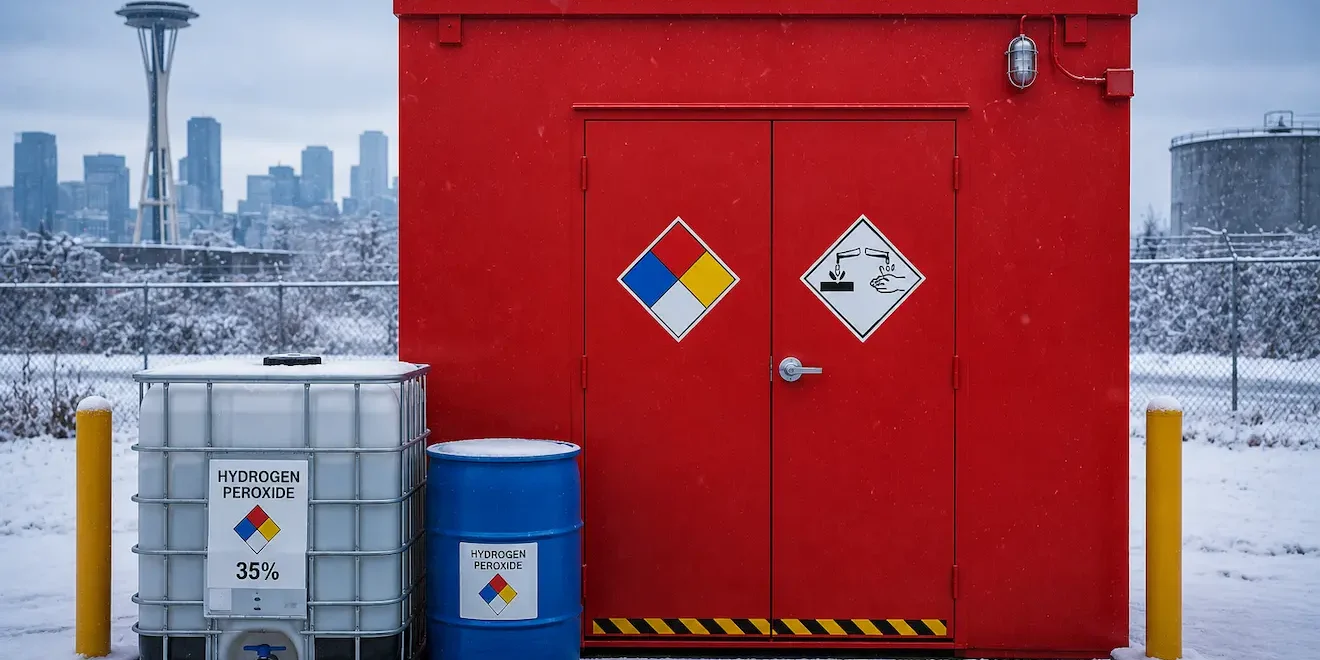
For industrial operations, the 30 to 50 percent range is where will hydrogen peroxide freeze in Seattle carries real operational weight. A Seattle operation storing 35 percent H₂O₂ in an outdoor enclosure without heat has a product that freezes during any cold snap below 12 degrees Fahrenheit.
Seattle’s recorded winter lows have reached the mid-teens to low 20s Fahrenheit in historically cold years. An unheated outdoor storage locker in Seattle in January is not a reliable environment for industrial hydrogen peroxide at those concentrations, and treating it as one is where storage failures originate.
When H₂O₂ partially freezes and then thaws, concentration shifts because water freezes preferentially, leaving the remaining liquid at higher concentration than the original solution. Higher concentration H₂O₂ reacts more aggressively with organic contamination and requires more restrictive handling procedures.
Will Hydrogen Peroxide Freeze in Seattle: What That Means for Storage Design
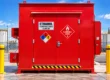
The storage design answer to will hydrogen peroxide freeze in Seattle for industrial concentrations above 15 percent is a climate-controlled enclosure. A building that maintains interior temperature above the product’s freeze point year-round, typically between 35 and 65 degrees Fahrenheit for stabilized industrial H₂O₂, protects both product integrity and storage safety.
Freeze-thaw cycling accelerates H₂O₂ decomposition by creating concentration gradients and subjecting container materials to thermal stress. For stabilized industrial hydrogen peroxide, repeated cycles reduce stabilizer package effectiveness over time and can increase reactivity with organic contaminants.
The will hydrogen peroxide freeze in Seattle question does not have a single yes-or-no answer across all concentrations, but for the 30 to 50 percent range common in industrial applications, the honest answer is yes, it can, and the storage infrastructure needs to account for that.
For operations that cannot provide a climate-controlled enclosure, the alternative is a documented protocol for moving product indoors before forecast cold weather events, with minimum temperature monitoring and an alert threshold set above the product’s freeze point. That approach requires consistent execution during the cold periods Seattle does experience, even if they are less frequent than in colder climates.
Acetone in the Same Facility: Flash Point and Storage Requirements
Many Seattle operations that store hydrogen peroxide also store acetone for cleaning, degreasing, laboratory use, or formulation. The flashpoint acetone carries is negative 4 degrees Fahrenheit, making it a Class IB flammable liquid under NFPA 30. Its freeze point is negative 139 degrees Fahrenheit, so while will hydrogen peroxide freeze in Seattle is a genuine storage concern, the equivalent question about acetone is not.
Acetone will not freeze in any realistic setting. It will produce ignitable vapors at every temperature Seattle will ever reach, including inside cool or unheated storage enclosures in the dead of winter.
Storing acetone and hydrogen peroxide in the same enclosure creates a compound hazard. H₂O₂ is an oxidizer. Acetone is an organic flammable liquid. Oxidizers in contact with organic flammable materials accelerate combustion, lower ignition thresholds, and in direct contact scenarios can trigger spontaneous exothermic reactions.
The correct approach is physical segregation: separate enclosures, separate secondary containment, and separate ventilation. Co-locating them under a shared chemical storage arrangement is a planning failure that neither NFPA 30 nor NFPA 400 anticipates being managed in a single enclosure.
Can You Put Acetone in a Plastic Container: What the Container Spec Requires
The acetone container question is one of the most common at facilities moving from small-scale to larger storage programs. Acetone dissolves polystyrene, ABS, and many acrylics. It permeates HDPE over time. Teflon is resistant and appropriate for fittings and seals. For regulated industrial quantities, NFPA 30 requires approved containers: UL-listed or FM-approved metal safety cans for small volumes and DOT-compliant metal drums for larger quantities.
The plastic compatibility question becomes secondary once you operate under NFPA 30 requirements, because the approved acetone container options for industrial storage are steel-based.
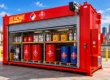
For quantities above the 25-gallon room limit or the 60-gallon safety cabinet limit, Seattle operations need a purpose-built fire-rated storage building. For the full regulatory framework governing acetone and other flammable chemicals storage requirements under OSHA and NFPA 30, that resource covers the flash point classifications, quantity limits, and construction specifications that apply to Class IB liquids in Washington State.
Seattle-Specific Storage Considerations for H₂O₂ and Acetone Operations
Seattle’s Pacific Northwest climate creates specific conditions for operations managing both H₂O₂ and acetone. The mild, damp winters produce ambient conditions that are consistently cool without being severely cold, which is favorable for H₂O₂ compared to the Midwest but still demands attention during cold snaps that push outdoor temperatures below industrial concentrations’ freeze points.
For any operation where will hydrogen peroxide freeze in Seattle is an active planning question and the stored concentration is above 15 percent, the brief but real cold events in Seattle’s January and February history are the design basis for storage enclosure temperature management.
For acetone, Seattle’s mild temperatures do not reduce the Class IB flammable liquid hazard, and will hydrogen peroxide freeze in Seattle sits alongside flashpoint acetone as two distinct but equally real chemical property questions that Seattle operations need to answer simultaneously. Adequate mechanical ventilation for an acetone storage space is a year-round requirement in the Pacific Northwest.
King County and Washington State enforce the IFC and NFPA 30 for chemical storage through local fire jurisdictions, including the Seattle Fire Department. Operations planning to store either product above applicable threshold quantities need to contact the local AHJ before placing storage infrastructure.
Getting Both Products Stored Correctly Before the Next Inspection
Whether the starting question is will hydrogen peroxide freeze in Seattle or whether acetone belongs in a plastic container, the underlying compliance issue is the same: do the storage conditions match the actual chemical properties of the products on-site? For H₂O₂, that means climate control adequate to prevent freezing at the stored concentration and physical segregation from organic flammable materials.
For acetone, it means a fire-rated enclosure with explosion-proof ventilation and approved metal containers. A compliance team review of both products together, rather than addressing each in isolation, is how Seattle operations avoid having a correctly stored product sitting next to an incorrectly stored one.
US Hazmat Rentals serves the Seattle and King County area with compliant chemical storage buildings for both oxidizer and flammable liquid applications. Talk to our compliance team before you buy or rent to confirm the right configuration for your specific products, concentrations, and site conditions. Schedule your consultation here.
FAQ
Will hydrogen peroxide freeze in Seattle operations need to worry about?
Will hydrogen peroxide freeze in Seattle is a real storage concern for operations using industrial concentrations above roughly 15 percent. A 30 percent solution freezes at approximately 14 degrees Fahrenheit and a 35 percent solution at approximately 12 degrees Fahrenheit. Seattle’s occasional winter cold snaps can reach those temperatures in unheated outdoor enclosures. Climate-controlled storage is the standard answer when will hydrogen peroxide freeze in Seattle lands on the 30 percent or higher concentration range.
Does freezing damage hydrogen peroxide?
Freeze-thaw cycling affects H₂O₂ stability by creating concentration gradients as water freezes preferentially, leaving the remaining liquid at higher concentration. For stabilized industrial hydrogen peroxide, repeated cycles reduce the stabilizer package effectiveness and increase reactivity with organic contaminants. Maintaining stable storage temperature above the freeze point avoids these effects.
What is the flash point of acetone and why does it matter in Seattle?
The flashpoint acetone carries is negative 4 degrees Fahrenheit. That means acetone produces ignitable vapor concentrations at every temperature Seattle will experience, including inside unheated storage buildings in winter. Adequate mechanical ventilation and explosion-proof electrical equipment are required in acetone storage areas year-round, not just during warm months.
Can you put acetone in a plastic container for industrial storage?
For regulated industrial quantities, acetone must be stored in NFPA 30-approved containers: UL-listed or FM-approved safety cans for small volumes and DOT-compliant metal drums for larger quantities. Acetone dissolves polystyrene and ABS and permeates HDPE over time. The approved acetone container options for industrial storage are steel-based, not general-purpose plastic.
Can acetone and hydrogen peroxide be stored in the same enclosure?
No. Acetone is a Class IB flammable liquid. Hydrogen peroxide is an oxidizer. Storing an oxidizer in the same enclosure as an organic flammable liquid creates a compound hazard that can lower ignition thresholds and produce exothermic reactions on contact. Separate enclosures with separate secondary containment and separate ventilation are required.
Does Seattle require a permit for chemical storage buildings holding acetone or H₂O₂?
Yes. Seattle and King County fire jurisdictions enforce the IFC and NFPA 30 for chemical storage. Operations storing acetone or hydrogen peroxide above applicable threshold quantities need a permit from the local AHJ before placing storage infrastructure. Contact Seattle Fire Department or the applicable King County authority before committing to a storage building configuration.